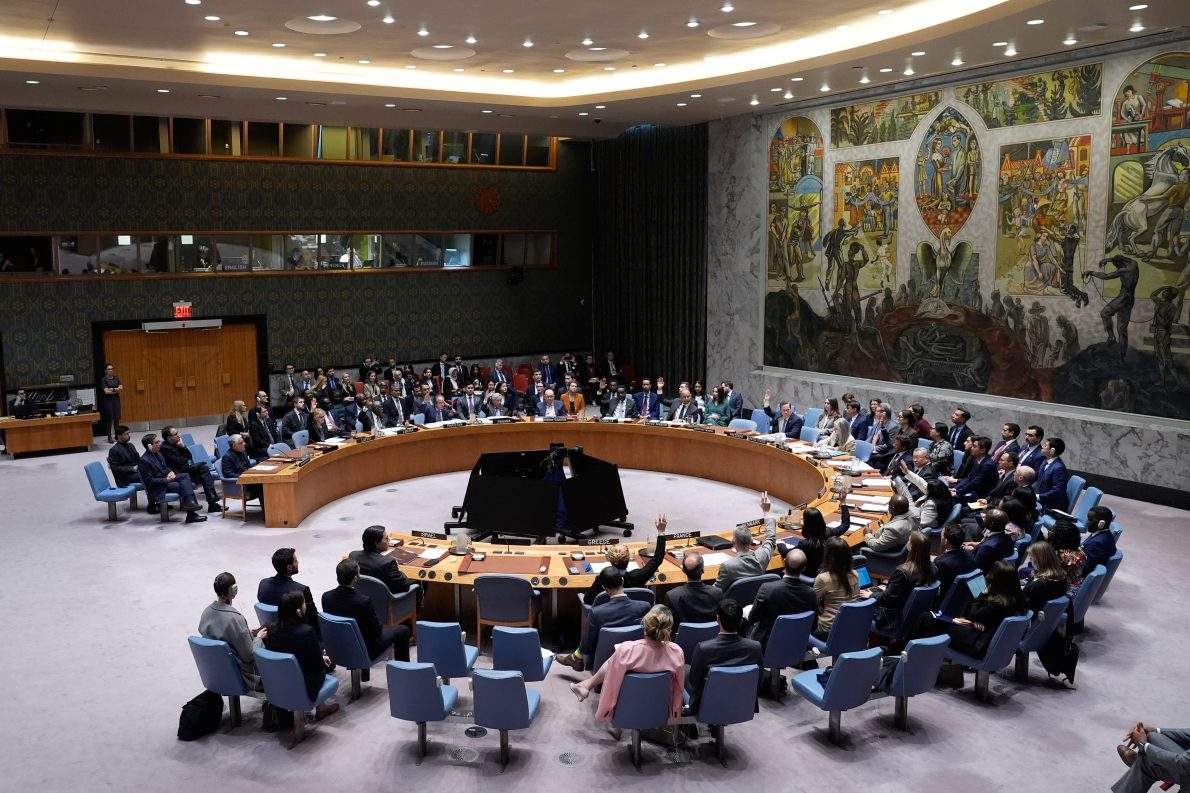
The global energy market just hit a brick wall at the United Nations. You might've seen the headlines about the latest Security Council standoff, but the reality is much grittier than a simple diplomatic disagreement. Russia and China just blocked a critical measure to reopen the Strait of Hormuz, and honestly, the fallout is going to hit your wallet sooner than you think. This wasn't just a vote. It was a calculated move to shift the balance of power in the Middle East while the West watches its energy security crumble.
When 20% of the world’s liquid petroleum flows through a single narrow chokepoint, any blockage is a nightmare scenario. We’re talking about roughly 21 million barrels of oil every single day. The failed resolution aimed to establish a multi-national maritime task force to clear the waterway and guarantee safe passage for tankers. Instead, the veto ensures the chaos continues. Moscow and Beijing didn't just say no to a resolution; they said yes to a prolonged global supply chain crisis.
The Broken Mechanics of the UN Security Council
The UN is supposed to prevent this kind of gridlock. It doesn't. The structure of the Security Council allows the "Permanent Five" to kill any substantive action, and we're seeing that power used as a blunt instrument. In this specific case, the draft resolution called for an immediate cessation of hostilities near the Larak and Ormuz islands and the deployment of neutral observers.
Russia’s UN ambassador argued that the resolution was "one-sided" and ignored the "sovereign rights" of regional actors. That’s diplomat-speak for protecting their allies. By keeping the Strait of Hormuz in a state of flux, Russia keeps global oil prices high. Since their own economy relies heavily on energy exports, a closed or dangerous Strait is actually a win for their bottom line. It’s cynical, but it’s effective.
China’s stance is a bit more complex. They’re the world’s largest oil importer. You’d think they’d want the taps open. But Beijing is playing a longer game. They want to diminish American influence in the Persian Gulf. By vetoing a Western-led security initiative, they're telling Middle Eastern nations that the U.S. can't guarantee safety anymore. They’re positioning themselves as the alternative mediator, even if it means paying a bit more at the pump in the short term.
Why the Strait of Hormuz is the World's Jugular Vein
If you look at a map, the Strait is a tiny sliver of water. At its narrowest, the shipping lanes are only two miles wide in either direction. It’s a geographical bottleneck that creates a massive strategic vulnerability. When tankers can't move, the world stops.
We saw this during the "Tanker War" in the 1980s, and we’re seeing a modern, more high-tech version of it now. Drones, sea mines, and rapid-attack craft have replaced traditional naval broadsides. The vetoed resolution would’ve authorized the use of advanced minesweeping technology and satellite tracking to protect commercial vessels. Without that, insurance premiums for shipping companies are skyrocketing.
I’ve talked to logistics experts who say some firms are seeing a 400% increase in "war risk" surcharges. Those costs don't just disappear. They get passed down to you. Every gallon of gas, every plastic product, and every piece of freight moved by truck or ship gets more expensive. This isn't just about geopolitics; it's about the cost of living.
The Strategy Behind the Veto
Russia and China aren't acting in a vacuum. They're coordinating. This veto represents a "no-limits" partnership in action. By blocking the reopening of the Strait, they force the U.S. and its allies into a difficult choice: either engage in a risky, unilateral military operation to clear the path or let the global economy bleed.
- Weaponizing Energy: Moscow knows that high oil prices put political pressure on Western leaders.
- Challenging Maritime Law: The veto undermines the United Nations Convention on the Law of the Sea (UNCLOS).
- Regional Re-alignment: Iran and other regional players see the veto as a green light to continue aggressive posturing.
The U.S. delegation called the veto "irresponsible and dangerous," but words don't clear shipping lanes. The failure of this measure means the "rules-based order" we often hear about is effectively dead in the water. If the UN can't agree to keep the most important oil artery in the world open, what can it do?
What This Means for Oil Prices and Inflation
Let's get into the numbers. Within hours of the veto, Brent Crude jumped by nearly $4 a barrel. Analysts at Goldman Sachs and JP Morgan have been warning that a sustained closure or even a "semi-blocked" status for the Strait could send prices well over $120.
It’s a domino effect. When oil goes up, the price of fertilizer goes up. When fertilizer costs more, food prices jump. We’re looking at a stagflationary shock that could last for months. The veto effectively institutionalized uncertainty. Markets hate uncertainty more than they hate bad news.
The U.S. has tried to tap into the Strategic Petroleum Reserve before, but that’s a band-aid, not a cure. You can’t drill your way out of a logistical blockade. The ships physically cannot move through the water because of the threat of kinetic strikes. This is a physical disruption, not just a supply-demand imbalance.
The Failure of Modern Diplomacy
It's tempting to think that another round of talks will fix this. It won't. The disagreement isn't about the wording of the resolution. It's about who gets to run the world. For decades, the U.S. Navy acted as the de facto guarantor of free trade in the Middle East. Russia and China are explicitly challenging that role.
They want a multipolar world where the West doesn't hold the keys to the engine room. By blocking this UN measure, they’ve proven that the Security Council is no longer a tool for global stability. It’s a theater for great power competition.
Don't expect a sudden breakthrough. The rhetoric is only getting sharper. The French and British delegations have expressed "deep regret," but they lack the naval assets to clear the Strait without massive American support. Meanwhile, the ships sit at anchor, waiting for a signal that might never come from the UN.
Navigating the New Economic Reality
You need to prepare for a period of extreme volatility. The energy sector is going to be a rollercoaster. If you're invested in traditional energy, you might see short-term gains, but the broader economic drag is a massive risk.
- Monitor the "Shadow Fleet": Watch how many non-Western tankers start moving through the area. Russia and China might have their own "safe passage" deals that don't apply to everyone else.
- Watch the Insurance Markets: If Lloyd's of London pulls coverage for the Strait, it's game over for commercial traffic.
- Check Regional Alliances: Keep an eye on how Saudi Arabia and the UAE react. If they move closer to the Moscow-Beijing axis for security, the shift in global power will be permanent.
The UN veto has effectively privatized the security of the Strait of Hormuz. It's no longer a global public good. It's a contested zone where only those with the right political connections—or the biggest guns—can pass. Start looking at your supply chains now. If your business or your lifestyle depends on cheap, reliable energy, the world just became a much more expensive place.
The era of easy transit is over. The veto made sure of that. Secure your own interests because the international community just proved it can't—or won't—do it for you.