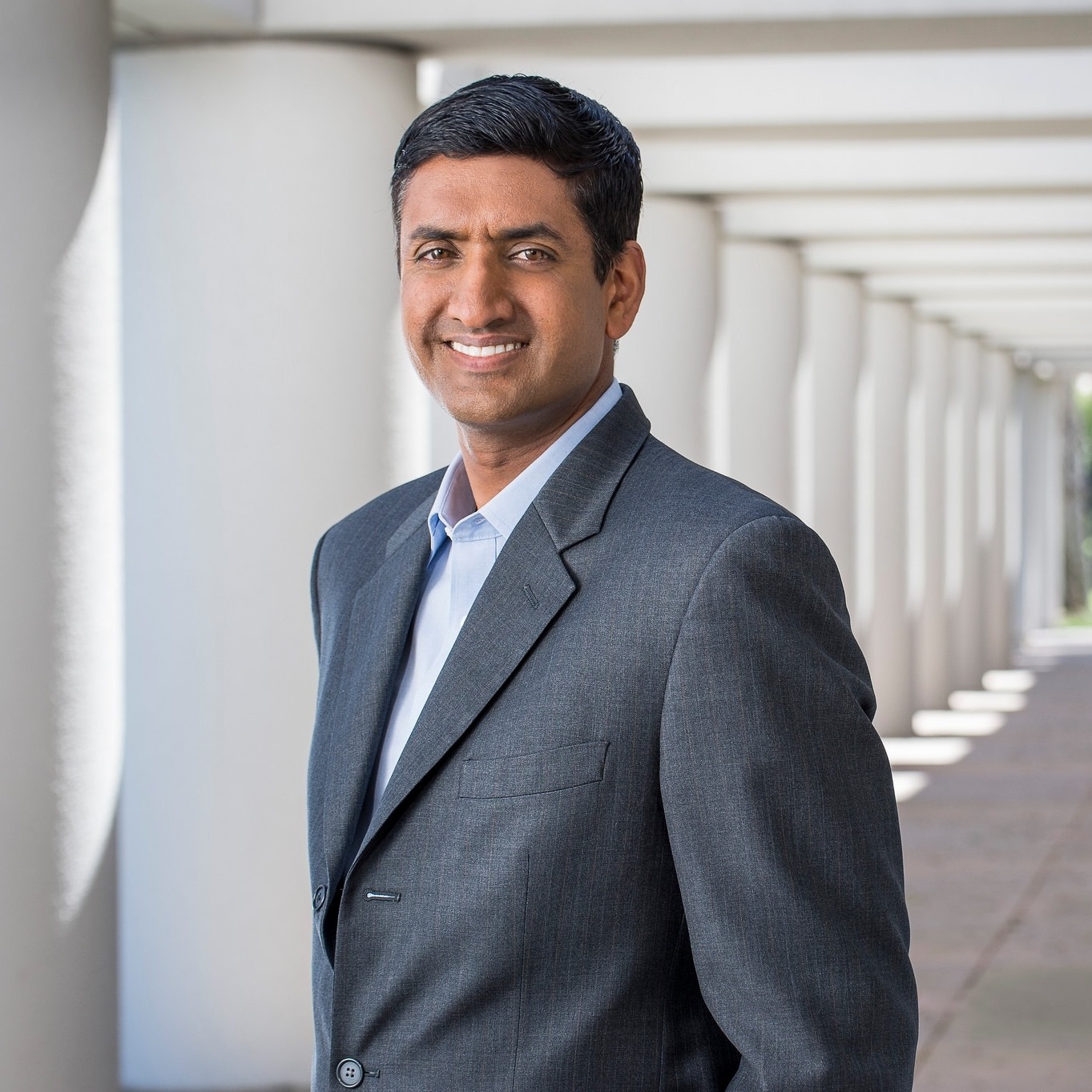
Washington usually moves at the speed of a glacier, but the recent alliance between Representative Ro Khanna and Representative Tim Burchett is throwing a wrench into the usual partisan gears. They aren't just talking about cutting costs. They're pushing for a massive, 50-state fraud probe that aims to uncover where billions of your tax dollars actually went.
It's a rare sight. You've got a progressive from Silicon Valley and a staunch conservative from Tennessee standing on the same side of the vault. They've realized that while they might disagree on how to spend the budget, they both hate seeing it stolen by scammers, foreign cartels, and sophisticated fraud rings. This isn't just about a few bad actors; it's about a systemic failure that allowed an estimated half a trillion dollars to vanish into thin air.
A bipartisan hunt for the missing billions
The scale of what Khanna and Burchett are looking at is mind-boggling. We aren't just talking about a couple of people lying on their taxes. We're looking at a coordinated, nationwide failure to protect federal programs. The Government Accountability Office (GAO) estimates the federal government loses up to $500 billion annually to fraud. To put that in perspective, that's more than the entire annual budget for many federal agencies.
Take the Minnesota nutrition scandal as a prime example. The "Feeding Our Future" scheme siphoned off over $240 million that was supposed to feed hungry kids. Instead, that money bought luxury cars and real estate. Khanna and Burchett are arguing that if this could happen in one state on such a massive scale, it’s almost certainly happening in all 50. They want a deep, state-by-state investigation to see how deep the rot goes.
Why the focus is shifting to all 50 states
Most fraud investigations are reactive. They wait for a whistleblower to speak up or a bank to flag a suspicious wire transfer. Khanna and Burchett want to change the math. By pushing for a probe across all 50 states, they're looking to identify patterns that show how these schemes spread across state lines.
- State-administered, federally funded: Many of the largest programs, like Medicaid and Unemployment Insurance, are run by states but paid for by D.C. This creates a massive oversight gap.
- Organized crime: This isn't just local petty theft. Federal law enforcement is tracking links between these fraud schemes and organized crime, including potential foreign influences.
- Identity theft: More than 1.4 million Social Security numbers were used in fraudulent pandemic applications. That's a national security issue, not just a financial one.
The technology gap and the DOGE connection
One of the big drivers behind this probe is the realization that the government’s tech is hopelessly outdated. While scammers are using AI and sophisticated botnets to file thousands of fake applications in seconds, federal agencies are often still relying on manual checks and 1970s-era COBOL systems.
Tim Burchett, as the chair of the Subcommittee on Delivering on Government Efficiency (DOGE), has been vocal about this. He’s pointed out that the federal government spends roughly $7 trillion annually across 2,400 programs. When you have that many moving parts, it’s easy for billions to go missing. Khanna, representing the tech hub of the world, understands the fix isn't just more people—it's better data.
They’re pushing for the tools developed by the Pandemic Response Accountability Committee (PRAC) to be used across the entire government. PRAC has already used machine learning to flag 15 million compromised IP addresses and bank accounts. Burchett and Khanna want that same "fraud engine" applied to every state-run program in the country immediately.
The real cost to you
It’s easy to get lost in the "billions" and "trillions," but this hits home in a very real way. Every dollar stolen by a fraudster is a dollar that isn't helping a veteran, fixing a bridge, or lowering the deficit. It also makes the system harder to use for honest people. Because of the rampant fraud, states have added layers of bureaucracy and "red tape" that make it a nightmare for someone who actually needs help to get it.
Khanna and Burchett are making the case that cutting out the fraud is the only way to make the government actually work again. It’s not about being "pro-welfare" or "anti-welfare." It’s about being pro-competence.
Breaking the partisan gridlock
You don't often see a Democrat and a Republican agree on much in 2026. The fact that they’ve come together for this 50-state probe tells you how serious the situation is. They've both realized that voters are tired of the finger-pointing while their money is siphoned off by criminals.
By framing this as a national security and efficiency issue, they’ve managed to bypass the usual bickering. They’re looking for specific, actionable reforms:
- Mandatory cross-checking: Requiring states to share data with the federal government to catch people applying for benefits in multiple states.
- Permanent oversight: Making the PRAC’s data analytics tools a permanent fixture of government oversight rather than a temporary pandemic measure.
- Harsher penalties: Pushing for more aggressive prosecution of the rings that organize these mass-fraud events.
What you can expect next
This isn't just a press release. You'll see more hearings and more letters to the GAO and the Department of Justice in the coming months. The goal is to force a systemic review of every state-administered program. If you're a state official in a place like Minnesota, California, or Tennessee, you’re likely already on notice.
The next step is for the GAO to deliver its comprehensive listing of federally funded, state-administered programs. This will be the roadmap for the 50-state investigation. From there, expect a series of "field hearings" where Khanna and Burchett take their oversight work on the road.
If you want to keep an eye on how your state is doing, you can check the updates on the House Oversight Committee's official page. They're regularly posting reports on where they’ve found the most significant vulnerabilities. Honestly, it’s worth a look to see just how much of your tax money is at risk.
Stop waiting for the government to fix itself from the top down. Pay attention to the state-level audits and the work these subcommittees are doing. The 50-state probe is only the beginning of what looks like a long overdue spring cleaning of the federal checkbook.