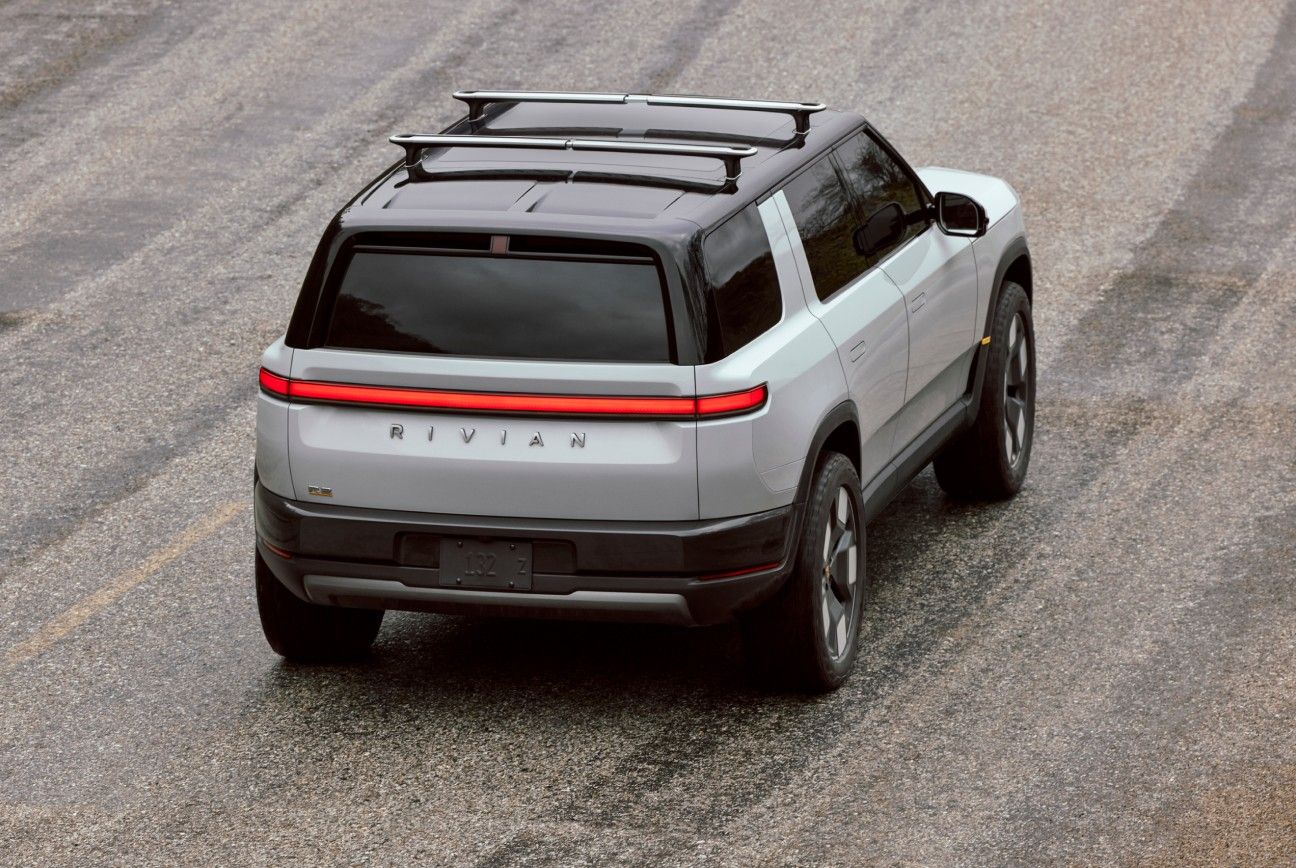
On April 22, 2026, the first production-ready Rivian R2 rolled off the assembly line in Normal, Illinois. This is the moment that defines whether RJ Scaringe’s venture becomes a permanent fixture of the American automotive industry or a cautionary tale of over-ambition. While the "milestone" headline suggests a victory lap, the reality on the factory floor is a high-stakes recovery operation. Just five days ago, an EF-1 tornado ripped through Building 2, the heart of R2 logistics. The fact that the line is moving at all is a testament to operational grit, but the path from this first unit to the 15,000 units needed by the fourth quarter is fraught with financial and physical bottlenecks.
The R2 is not just another SUV. It is the vessel for Rivian’s survival. For years, the company has burned through billions building the R1T and R1S—magnificent machines that carry price tags out of reach for the average household. The R2 is the pivot to the masses, or at least a version of them. However, the first units hitting the pavement this spring are not the $45,000 entry-level models that fueled the R2’s hype. They are the Performance Launch Edition variants, priced at $57,990.
The $13,000 Pricing Gap
There is a significant difference between a $45,000 accessible EV and a $58,000 luxury performance vehicle. By leading with the high-margin Launch Edition, Rivian is following the classic startup playbook: capture the early adopters and use their cash to subsidize the difficult ramp-up of cheaper models. But the market in 2026 is far more crowded than when the R1 first arrived.
Tesla’s Model Y remains a brutal competitor, often hovering around the $40,000 mark after various adjustments. Rivian’s decision to delay the true "base" R2 until late 2027 creates a dangerous window. They are asking customers to wait eighteen months for the price they were originally promised. In the interim, they must convince the market that 656 horsepower and a 330-mile range justify a nearly $60,000 investment in a mid-size frame.
Engineering Out the Waste
The R2 represents a total rethink of how Rivian builds cars. The R1 series was over-engineered, a common mistake for a company trying to prove its technical prowess. The R2 platform is a masterclass in subtraction.
- Die Casting: By using massive structural castings, Rivian has stripped 32% of the cost out of the chassis compared to earlier designs.
- Suspension Simplification: The complex, hyper-adjustable systems of the R1 have been replaced with a streamlined setup that costs 72% less to manufacture.
- Zonal Architecture: The wiring and computer systems have been consolidated, reducing weight and assembly time significantly.
These aren't just technical specifications. They are the only way Rivian reaches its goal of positive gross margins by the end of this year. The company is currently bleeding cash on every vehicle delivered. The R2 must be the tourniquet.
The Tornado and the Logistics Trap
The EF-1 tornado that struck on April 17 was a reminder of how fragile a single-site manufacturing strategy can be. Building 2 houses the logistics and parts storage specifically for the R2. While the roof collapse didn't destroy the assembly robots, it disrupted the precise flow of components required for a modern "just-in-time" production line.
Resuming production within five days is impressive, but "production" in these early stages often means hand-finished units and slow line speeds. The real test begins in June, when broader customer configuration invitations go out. If the logistics chain in Building 2 isn't fully stabilized, the projected jump from a few hundred units in Q2 to 7,000 in Q3 will remain a fantasy on a spreadsheet.
The Robotaxi Wildcard
Underpinning the R2’s production story is a $1.25 billion partnership with Uber. The R2 is slated to become the backbone of an autonomous robotaxi initiative starting in 2028. This provides Rivian with a guaranteed buyer for thousands of units, regardless of individual consumer sentiment. It also puts immense pressure on the R2's "Autonomy+" hardware suite.
The 11 HDR cameras and five-radar system on these first production models are not just for lane-keeping. They are the sensors that will eventually have to navigate urban environments without a driver. If the hardware proves unreliable in these early consumer versions, the Uber deal—and the vital capital that comes with it—could be at risk.
The Road to 2027
Rivian’s guidance of 62,000 to 67,000 total vehicle deliveries for 2026 assumes that the R2 ramp goes perfectly. Analysts at BNP Paribas are looking for 15,000 R2 units in the final three months of the year alone. That is a vertical climb.
Investors will get a clearer picture of the financial damage from the tornado and the cost of the R2 launch during the April 30 earnings call. For now, the sight of R2s leaving the line is a morale boost, but the hard math of mass production has only just begun. The company has finally built the car it needs to survive; now it just has to figure out how to build 100,000 of them without going broke.
Watch the delivery numbers in June. If the Launch Edition doesn't reach customers by the end of the second quarter, the 2026 targets will likely start to slide.