The mud of the Punjab does not care about New Delhi or Islamabad. When the summer heat hits ninety degrees by mid-morning, the earth cracks into geometric fractures, desperate for a drink.
Consider a farmer named Tariq. He is a composite of a thousand men living along the irrigation canals of Pakistan’s agricultural heartland, but his calloused hands and the anxiety keeping him awake at 3:00 AM are entirely real. Every drop of water that hydrates his rice stalks traveled hundreds of miles through the jagged peaks of Kashmir, crossing one of the most heavily militarized borders on earth before it ever reached his trench. For sixty-six years, an invisible legal shield called the Indus Waters Treaty ensured that the water kept flowing, regardless of how many wars the two nuclear-armed neighbors fought.
Now, that shield is fracturing.
When India moved to suspend the routine operations of the treaty, citing a need for fundamental modifications, the reaction in Islamabad wasn't just diplomatic alarm. It was an existential panic. Pakistan quickly labeled the move an act of water "weaponization." To understand why a technical disagreement over engineering parameters feels like a chokehold to millions of people downstream, you have to look past the bureaucratic press releases and stare directly into the river itself.
The Geography of Dependency
Geography is a cruel master. The Indus River system is a massive plumbing network where the faucets are located in Indian-administered territory, but the main basin opens up to sustain Pakistan.
In 1960, the World Bank brokered a deal that seemed mathematically elegant. India received exclusive rights to the three eastern rivers—the Ravi, Beas, and Sutlej. Pakistan was allocated the three western rivers—the Indus, Jhelum, and Chenab. It was a massive compromise. It meant that India, the upstream neighbor, agreed to let eighty percent of the water system flow right past its territory into a nation with which it shared a bitter, bloody history.
For decades, this arrangement was hailed as a miracle of modern diplomacy. The treaty survived the 1965 war. It survived the 1971 war. It even survived the Kargil conflict in 1999. Rockets could fly, but the water meters kept spinning, and the data kept being shared.
But treaties are human constructs, and human patience wears thin. Over the last decade, India began constructing a series of run-of-the-river hydroelectric projects on the western rivers, most notably the Kishanganga and Ratle dams. New Delhi points out that these projects do not store water; they merely spin turbines and send the current on its way, perfectly legal under the 1960 framework.
Pakistan sees it differently. To a nation entirely dependent on the predictability of these flows, even a temporary pause to fill a reservoir looks like a loaded gun. If you control the valve that regulates the speed of the river, you control the fate of the harvest downstream.
The Friction of Technology and Trust
The current crisis did not happen overnight. It is the result of a slow, grinding mechanical breakdown in communication.
Pakistan objected to the design of the Indian hydro projects, arguing that the deep gated spillways could be used to manipulate river flows during critical sowing seasons. India countered that these designs were necessary to prevent silt accumulation, a technical requirement to keep the turbines from being destroyed by glacial debris.
When the two sides could not agree, the dispute resolution mechanism of the treaty choked. Pakistan rushed to the Permanent Court of Arbitration in The Hague. India demanded a neutral expert. Suddenly, two different international legal bodies were reviewing the same river.
Imagine two neighbors trying to fix a leaky pipe on their property line. Instead of grabbing a wrench together, one calls a plumber and the other calls an architect. Both professionals show up, argue about the blueprints, and the water keeps leaking while the foundation of the house rots.
By suspending the treaty's regular meetings and demanding a complete overhaul, New Delhi signaled that the old way of doing business is dead. From India’s perspective, the treaty is a relic of a bygone era that fails to account for climate change, modern engineering capabilities, or the fact that Pakistan-based militant groups have repeatedly targeted Indian infrastructure. The sentiment in New Delhi has shifted from "we must honor the treaty" to "why should we honor a treaty that binds our hands while our neighbor remains hostile?"
The Invisible Stakes Downstream
Step away from the government offices and look at the telemetry data. The Indus basin is drying up. The Himalayan glaciers that feed these rivers are melting at unprecedented rates due to rising global temperatures.
This means that while the political rhetoric escalates, the actual volume of available water is shrinking. It is a terrifying calculus. You have a growing population, an agricultural sector that consumes over ninety percent of Pakistan's available freshwater, and a river system that is becoming increasingly volatile.
If India decides to maximize its usage under the treaty—or worse, simply ignore the restrictions during a period of geopolitical tension—the impact on the ground will not look like a sudden, dramatic drought. It will look like a slow-motion economic collapse.
First, the water pressure in the major canals drops. Farmers at the tail end of the system find their ditches completely dry. They turn to groundwater, pumping it up with diesel generators. But the water table is already falling, and the fuel costs money they do not have. The soil begins to accumulate salt because there isn't enough fresh river water to flush the nutrients through. Within a few seasons, fields that once produced vibrant green waves of basmati rice turn into pale, sterile crusts.
This is the human face of what bureaucrats call "strategic leverage." It is the transformation of a shared natural resource into a zero-sum geopolitical asset.
A System Under Strain
The real danger lies in the loss of predictability. Agriculture is not just about seeds and soil; it is about timing. A farmer needs to know that when he sows his wheat in November, the water will arrive in January. The Indus Waters Treaty provided that certainty for over half a century. It was an anchor in a chaotic relationship.
Without it, every infrastructure project becomes a potential act of aggression. Every flood becomes a suspected intentional release of water. Every drought becomes an accusation of theft.
The international community watches this standoff with growing unease. When two nuclear nations begin arguing over the lifeblood of their economies, the margin for error disappears. The old diplomatic consensus assumed that water was too sacred, too vital, to be used as a political bargaining chip. That consensus is evaporating under the heat of modern nationalism.
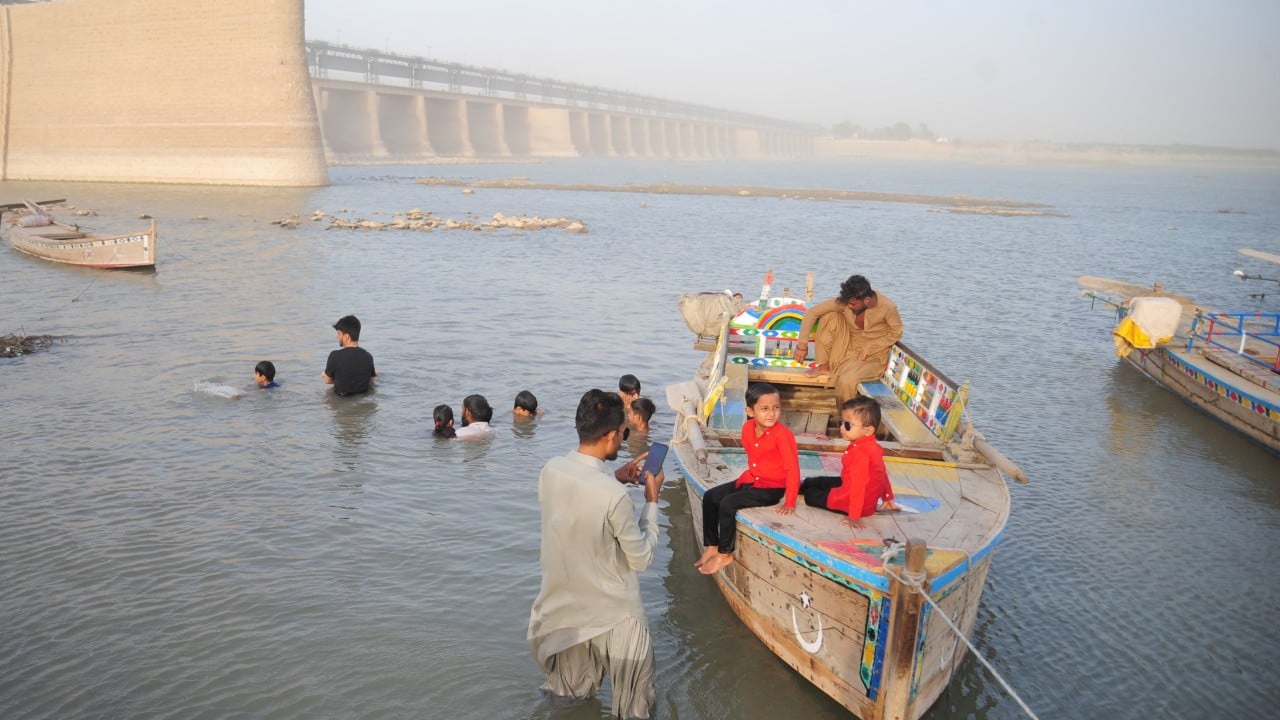
The canal that runs past Tariq’s village is quiet today. The water is a murky brown, carrying the silt of mountains he will never see. He watches the surface ripple, wondering if the men sitting in air-conditioned rooms a thousand miles away understand that a change in a line of code or a turn of a concrete valve can rewrite the future of his children. The river keeps moving, indifferent to the treaties written on paper, carrying the weight of two nations on its back.