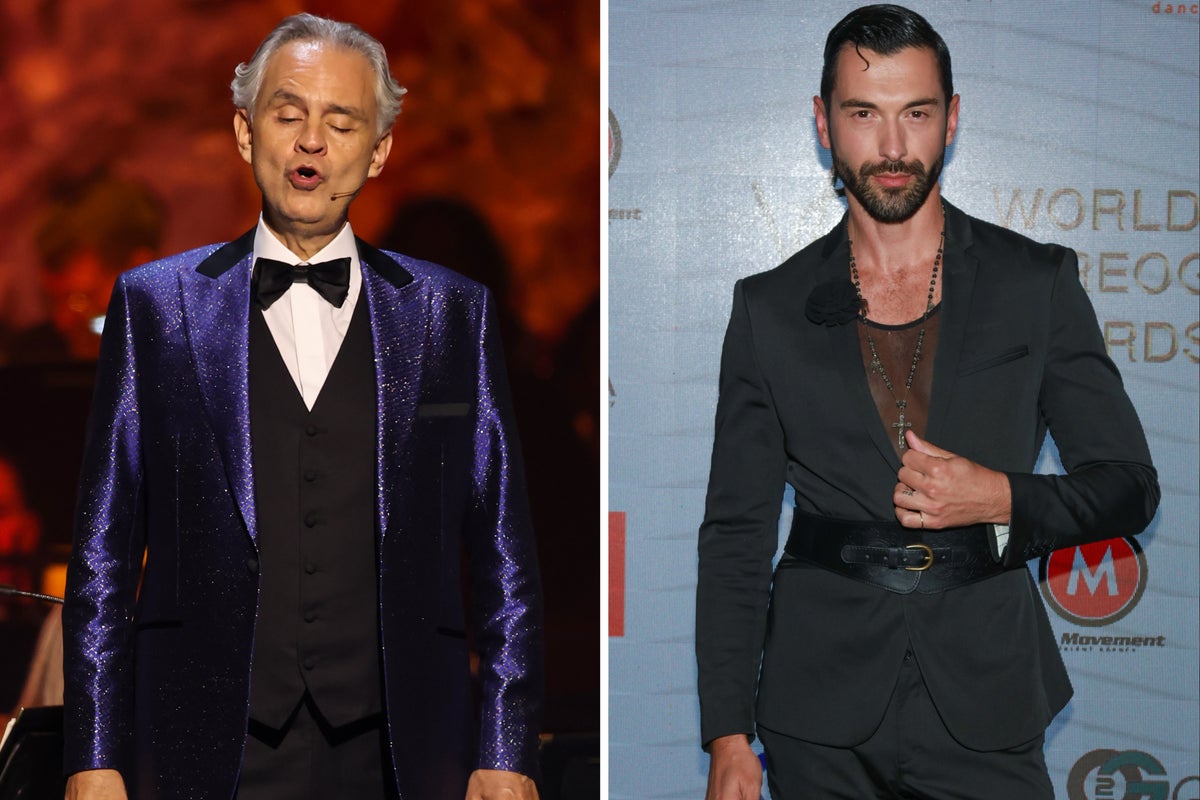
Live entertainment production operates within an intersection of high staging complexity, rigorous physical demands, and compressed operational timelines. When a catastrophic injury occurs during a major touring concert, the disruption extends far beyond immediate medical treatment. It triggers a cascading failure across contractual obligations, professional opportunity costs, and long-term career momentum.
Analyzing the reported incident involving a dancer who sustained severe injuries during an Andrea Bocelli concert, and subsequently missed a position on a Dancing With The Stars spinoff, requires moving past tabloid narratives. We must dissect the systemic vulnerabilities inherent in high-profile stage performances, the economics of professional dance contracts, and the mechanics of opportunity cost in performance-based industries.
The Operational Anatomy of Live Concert Staging
Live concert environments present high variance and low error tolerance. Unlike controlled soundstages used for television production, touring concert venues—ranging from arenas to open-air amphitheaters—are assembled rapidly under strict union or tour-specific deadlines.
The physical environment features multiple competing risk vectors:
- Spatial Constraints: Dancers operate on temporary stages often shared with full orchestras, choir risers, heavy lighting trusses, and dynamic audio equipment.
- Lighting and Visibility Extremes: Rapidly shifting theatrical lighting, smoke effects, and pyrotechnics systematically degrade spatial awareness, increasing collision and fall probabilities.
- Time Compression: Rehearsal windows on-site are frequently restricted to hours rather than days, forcing performers to map complex choreography onto unfamiliar spatial surfaces under fatigue.
When stage safety protocols fail to account for these dynamic variables, the physical toll on performers is immediate. In professional dance, the margin between a sustainable landing and a career-altering trauma is measured in millimeters and milliseconds.
The Economic Impact Matrix of Career Interruption
A catastrophic injury alters a performer's financial trajectory through distinct economic phases. Evaluating this impact requires examining direct costs, lost opportunity costs, and structural depreciation of human capital.
Direct and Indirect Costs
Immediate medical intervention represents only the baseline of financial exposure. For high-level performers, the loss of earning capacity creates an acute deficit. Unlike standard corporate employment governed by long-term disability structures, professional dancers often operate under short-term, project-based contractor agreements.
The Opportunity Cost Function
The primary economic damage in the reported case stems from missing a high-visibility television placement. In the entertainment economy, television exposure acts as a compounding multiplier for a performer's market value.
Television appearances function as brand accelerators that drive:
- Commercial Valuation: Elevated rates for brand endorsements, modeling, and private choreography contracts.
- Teaching and Masterclass Revenue: Global demand for instructional workshops correlates directly with mainstream television visibility.
- Audition Conversion Rates: A permanent spot on a premier franchise lowers future acquisition costs for casting directors, securing high-tier principal roles rather than ensemble slots.
Missing a Dancing With The Stars spinoff due to physical incapacitation does not merely represent lost wages for a single season. It represents the forfeiture of a structural career upgrade, shifting the performer's trajectory downward from a high-yield growth curve to a rehabilitation and recovery baseline.
Legal and Liability Frameworks in Touring Productions
Holding major touring acts and production companies accountable for stage injuries involves navigating complex liability structures. Concert tours typically utilize multi-tiered subcontracting models. The primary artist management entity contracts with production promoters, who in turn hire staging companies, lighting designers, and local labor crews.
Establishing liability requires proving a breach of the standard of care. In high-risk choreography, plaintiffs must demonstrate that the production company failed to provide a reasonably safe workplace. This includes evaluating whether stage surfaces complied with friction coefficients required for athletic movement, whether adequate rehearsal time was allocated to identify environmental hazards, and whether safety briefings addressed known staging defects.
Touring entities mitigate these risks through extensive waiver agreements and localized insurance policies. However, gross negligence or structural safety violations bypass standard liability shields, shifting the dispute into protracted civil litigation where damages must be mathematically modeled. Courts and expert witnesses calculate these damages using historical earnings data, projected career lifespan in a physically demanding discipline, and the quantified loss of future commercial opportunities like television contracts.
Strategic Risk Mitigation for Performance Professionals
To survive in an industry where physical assets are directly tied to economic output, performers and their representation must implement rigorous risk-management protocols.
Contractual provisions must move beyond standard hourly rates to include:
- Guaranteed Performance Windows: Securing compensation models that protect baseline income during mandatory injury rehabilitation periods tied to production negligence.
- Comprehensive Insurance Audits: Ensuring production-provided coverage matches the high-risk nature of specialty choreography, covering specialized physical therapy not standard in basic health plans.
- Contingency Career Planning: Diversifying skill sets into adjacent pillars such as choreographic direction, movement coaching, and creative production management, mitigating single-point-of-failure vulnerability.
The intersection of live concert spectacles and high-level dance will continue to generate friction as staging becomes increasingly ambitious. Protecting human capital in this ecosystem demands structural transparency, rigorous safety enforcement on tour sites, and financial instruments that insulate performers from catastrophic career disruption. Future production models must integrate safety engineering as a core operational metric rather than a secondary compliance check.


