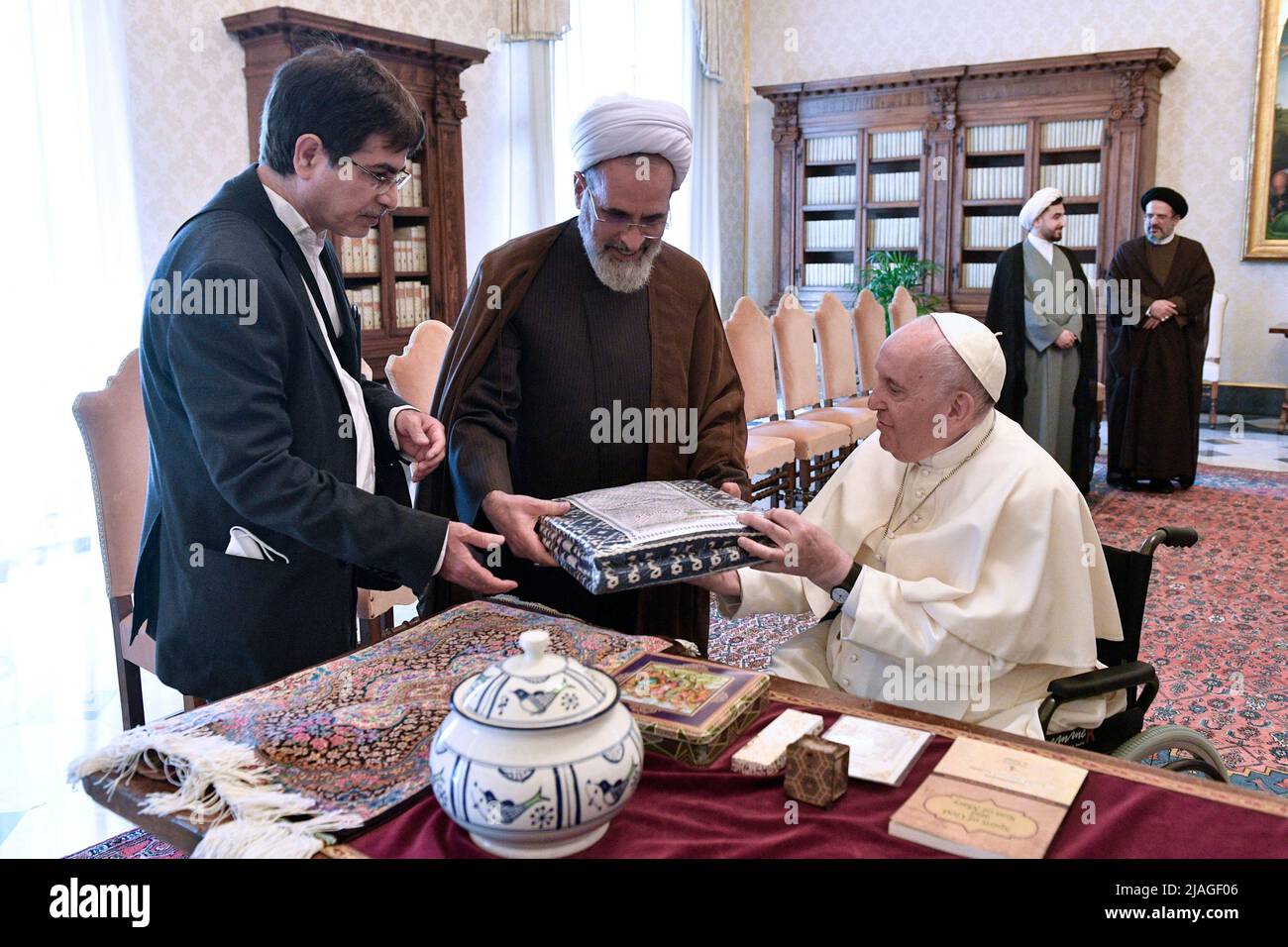
The internal machinery of the Iranian state has shifted. While international headlines focus on regional skirmishes and nuclear enrichment, the quiet elevation of Alireza Arafi to the Leadership Council marks a calculated hardening of the regime’s core. This is not merely a personnel change. It is a strategic fortification of the clerical elite designed to ensure that the eventual transition of power remains within a strictly controlled ideological vacuum. Arafi, a man who sits at the intersection of the theological seminaries and the state’s executive oversight, is now positioned as a primary architect of Iran’s future.
Recent reports from the Iranian Students' News Agency (ISNA) confirmed Arafi’s appointment, but the brief bulletins fail to capture the gravity of the move. To understand why Arafi matters, one must look at the vacuum he is filling and the specific brand of hardline loyalty he brings to the table. He is the ultimate insider. As the head of the country’s seminaries and a member of both the Guardian Council and the Assembly of Experts, he holds the keys to both the ideological training of the next generation and the legal vetting of the current one. Don't miss our earlier post on this related article.
The Architect of Clerical Conformity
Alireza Arafi is not a populist. He does not seek the public adoration that once trailed figures like Rouhani or even the polarizing Ahmadinejad. His power is bureaucratic and theological. For years, Arafi has overseen the Al-Mustafa International University, an institution that serves as the primary vehicle for exporting the Islamic Republic's revolutionary brand of Shia Islam across the globe. Under his watch, the university became more than a school; it became a soft-power engine.
His promotion to the Leadership Council signals that the Supreme Leader, Ali Khamenei, is prioritizing "purification" over pragmatism. Arafi represents the "Second Step of the Revolution," a doctrine aimed at purging Western influence and tightening the grip of the clerical establishment on every facet of Iranian life. He has spent his career ensuring that the seminaries in Qom produce loyalists rather than scholars who might question the absolute authority of the Velayat-e Faqih. If you want more about the history of this, Al Jazeera offers an informative breakdown.
The Leadership Council itself acts as a shadow cabinet, a body that steers the long-term direction of the state. By placing Arafi here, the regime is signaling to both domestic rivals and foreign observers that there will be no "thaw." The windows are being bolted shut.
A Buffer Against Civil Unrest
The Iranian state is currently haunted by the specter of the "Woman, Life, Freedom" protests. The establishment realized that its traditional methods of control—brute force and internet blackouts—while effective in the short term, are fraying at the edges. They need a more sophisticated ideological defense.
Arafi is the man for this task. He has been vocal about the need to "update" the regime’s propaganda without diluting its rigidity. He views the cultural sphere as a battlefield. His appointment is a direct response to the perceived "cultural invasion" from the West. By integrating him into the highest levels of decision-making, the regime is betting that Arafi can bridge the gap between the aging revolutionary guard and a youth population that is increasingly disconnected from the events of 1979.
He understands the mechanics of the state better than most. He knows which levers to pull to ensure that the Friday prayer leaders across the country are speaking from the same script. This level of synchronization is vital for a regime that feels its grip on the public imagination slipping.
The Succession Game
The most critical aspect of Arafi’s rise is the looming question of who will succeed the 85-year-old Supreme Leader. The Assembly of Experts is the body officially tasked with choosing the next leader, but the real decision-making happens in smaller, more opaque circles. Arafi is now a permanent fixture in those circles.
He is often mentioned as a "dark horse" candidate for the top job itself, or at the very least, a kingmaker. Unlike more visible candidates who have been bruised by political scandals or administrative failures, Arafi’s record is one of quiet, effective institutional control. He has no public failures because he operates in the shadows of the clerical bureaucracy.
If the goal is to find a successor who will not deviate an inch from the current path, Arafi is the perfect specimen. He is a technocrat of the soul. He manages the clergy with the same cold efficiency that a CEO might manage a multinational corporation.
The Global Implications of a Hardened Qom
Foreign policy analysts often make the mistake of separating Iran’s domestic clerical shifts from its international posturing. This is a fallacy. The appointment of a figure like Arafi has immediate consequences for how Iran interacts with the world.
Arafi’s worldview is one of "Resistance Economics" and ideological self-sufficiency. He is not interested in the nuances of the JCPOA or the niceties of European diplomacy. His focus is on the "Axis of Resistance." Because he has spent years building networks through Al-Mustafa University, he has deep, personal ties to clerical and militia leaders in Iraq, Lebanon, and Yemen.
His presence on the Leadership Council ensures that the ideological justification for regional expansionism remains a pillar of Iranian policy. He provides the theological "fatwa" for the strategic "missile." When Arafi speaks about "Islamic civilization," he is not talking about history; he is talking about a future where Iranian influence is the dominant force in the Middle East, unchallenged by Western liberal values.
The Erosion of the Republican Element
The "Islamic Republic" has always been a tense marriage between the "Islamic" (theocratic) and the "Republic" (theoretically democratic). Arafi’s rise represents the final triumph of the former over the latter.
For decades, there was a faction within the government that argued for a degree of engagement with the outside world. These "reformists" and "moderates" have been systematically dismantled. Arafi’s appointment is one of the final nails in that coffin. He does not believe in the republican element as anything more than a necessary facade to maintain a veneer of legitimacy.
The Council is now a monolithic block. There is no longer any internal debate about the direction of the country. The only remaining questions are about the speed of the transition toward a more overt religious autocracy. This lack of internal friction might make the regime more decisive, but it also makes it more brittle. Without the "vent" of moderate politics, public frustration has nowhere to go but the streets.
Why This Matters for the West
Western intelligence agencies should be looking closely at Arafi’s specific movements within the Council. If he begins to take a more active role in the Supreme National Security Council, it indicates that the clerical establishment is taking direct control of military strategy.
Arafi is also a specialist in "ideological vetting." This means we can expect a further purge of the Iranian diplomatic corps. The "smiling faces" of Iranian diplomacy are being replaced by grim-faced ideologues who view every negotiation as a zero-sum game.
There is a tendency in Washington and Brussels to hope for a "Gorbachev moment" in Iran—a leader who emerges from the system to dismantle it. The elevation of Alireza Arafi is the clearest sign yet that the system is proactively preventing that from ever happening. They are building a firewall around the Supreme Leadership.
The Bureaucracy of Faith
Arafi’s power stems from his ability to manage the "Bonyads" and the religious endowments that control a massive portion of Iran’s economy. These are not just charities; they are multi-billion dollar conglomerates that operate outside the oversight of the parliament.
By sitting on the Leadership Council, Arafi can ensure that these funds are directed toward the "Second Step" projects. This includes everything from massive infrastructure in holy cities to the funding of cyber-warfare units. He understands that for the ideology to survive, it must be well-funded. He is the bridge between the treasury and the pulpit.
The Calculated Risk of the Hardline Turn
The regime is doubling down. By promoting Arafi, they are signaling that they have no intention of compromising with their own people or the international community. It is a high-stakes gamble.
They are betting that institutional cohesion is more important than public consent. If they can keep the clerical, military, and economic elites in a tight, loyal circle, they believe they can weather any storm. Arafi is the glue that holds these disparate elites together.
But history is rarely kind to systems that become this rigid. By removing all dissenting voices, the Leadership Council is creating a feedback loop where they only hear what they want to hear. Arafi might be a master of the bureaucracy, but a bureaucracy cannot fix a broken social contract.
The appointment of Alireza Arafi is a clear message. The era of internal negotiation is over. The regime has chosen its path, and it is one of absolute ideological purity and institutional fortification. Those waiting for Iran to change from within will be waiting for a very long time, as the men now in charge have dedicated their lives to ensuring that change is impossible.
Monitor the Al-Mustafa alumni networks for the next phase of Iranian regional influence.