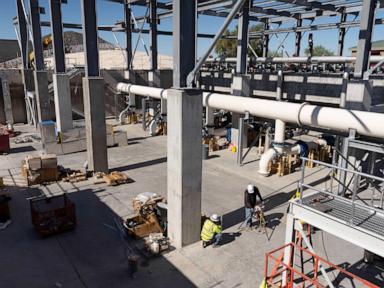
Every few years, zombie infrastructure crawls out of its bureaucratic grave. A stalled mega dam, bleeding red ink and mired in decade-long delays, suddenly catches a second wind. A fresh tranche of international capital drops into the ledger, financial media prints glossy press releases about green energy rebirths, and politicians cut ribbons for a concrete monolith that economics abandoned twenty years ago. The consensus narrative celebrates this as a triumph of persistence, a grand engineering marvel dragged across the finish line to power developing economies.
That consensus is a dangerous fantasy.
Pouring fresh capital into prehistoric mega dam projects is not green policy. It is financial self-harm, propped up by sunk cost fallacies and outdated energy economics. When institutional lenders throw good money after bad into these massive hydrological anchors, they are ignoring the harsh reality of modern power generation.
I have spent two decades watching governments and development banks light money on fire in remote river valleys. I have sat in boardrooms where analysts quietly admitted that projected cost overruns would swallow local GDPs whole, only to watch them sign off on the next funding phase because admitting failure is a career-ending offense in public finance.
Let us look past the PR gloss. Mega dams are financial black holes. The historical data compiled by Oxford researchers shows that large-scale dams suffer an average cost overrun of ninety-six percent, while routinely taking twice as long to build as promised. By the time concrete meets bedrock, inflation, interest rate spikes, and geological surprises have turned the initial budget estimate into a punchline.
Yet, the institutional appetite remains insatiable. Why do bankers and state planners keep chasing these dinosaurs? Because massive capital outlays create massive opportunities for patronage, large-scale contracting, and bureaucratic expansion. A distributed network of wind farms and solar arrays does not require a ribbon-cutting ceremony in a remote gorge. It does not allow for billions in centralized procurement contracts. It lacks the theatrical grandeur that failing administrations use to project strength.
The standard argument in favor of these colossal structures rests on a neat piece of intellectual laziness: baseload power. The refrain goes that solar and wind are intermittent, so you need a colossal wall of concrete holding back billions of tons of water to guarantee steady electricity.
This argument ignores the evolution of modern energy grids. Grid stability no longer requires monolithic, centralized hydro projects that alter entire ecosystems, displace hundreds of thousands of people, and trap silt until the reservoir chokes on its own sediment. Modern storage technology, regional grid interconnectivity, and demand-response architecture render these giant walls obsolete before the last turbine is even bolted down.
Furthermore, climate change has completely rewritten the hydrological playbook. You cannot build a twenty-first-century energy strategy on historical rainfall patterns that no longer exist. Glacial retreat, erratic monsoons, and extended droughts mean that mega dams frequently operate well below capacity. You end up with a multi-billion-dollar monument that cannot generate electricity during dry years, precisely when power is most urgently needed. It is a single point of failure on a continental scale.
Consider the environmental toll, not from a bleeding-heart perspective, but from a purely economic one. Trapping organic matter behind a massive wall of stagnant water turns the reservoir into a methane factory. When you flood vast tracts of forest and farmland, vegetation rots without oxygen, releasing greenhouse gases at rates that can rival fossil fuel plants. The carbon footprint of a tropical mega dam is often quietly swept under the rug by project developers who calculate emissions based solely on the operational phase while ignoring the initial inundation shock.
Then there is the sediment trap. Rivers are not just water pipes; they are conveyor belts of nutrient-rich silt that feed downstream deltas, agricultural floodplains, and coastal fisheries. Block that flow, and you starve the downstream economy. You watch agricultural yields drop, coastlines erode into the sea, and commercial fisheries collapse. The economic gains from the electricity generated upstream are routinely erased by the economic losses suffered downstream. It is robbing Peter to power Paul, and losing money on both ends of the transaction.
Defenders of these projects love to point to long-term amortization schedules, claiming that over fifty or a hundred years, the asset pays for itself. This assumes a static economic and technological environment. It assumes that solar photovoltaic costs will not continue to plummet, that battery storage will not achieve parity, and that localized micro-grids will not render centralized transmission lines financially unviable. Betting fifty years of fiscal health on a mid-twentieth-century industrial model is like mortgaging your house to buy a fleet of steam locomotives because you are skeptical of internal combustion engines.
We need to stop treating development bank funding as an endorsement of economic viability. Too often, these institutions function as life support systems for political vanity projects. They lend to governments that cannot secure private capital for a reason: private investors actually look at the risk-adjusted returns, while multilateral lenders are insulated from market discipline by sovereign guarantees and bureaucratic inertia.
If you want to power emerging economies, decentralized systems win every single time. They can be deployed modularly, scaled to match actual demand growth, and financed incrementally without risking national insolvency. They do not require displacing entire communities, destroying regional ecosystems, or waiting fifteen years for a single turbine to spin.
The next time you read about a resurrected dam project securing fresh millions, do not look for the engineering triumph. Look for the exit strategy of the contractors who got paid to build it, and the taxpayers who will spend the next three generations paying for it.
The era of the mega dam is dead. We are simply paying for the funeral.