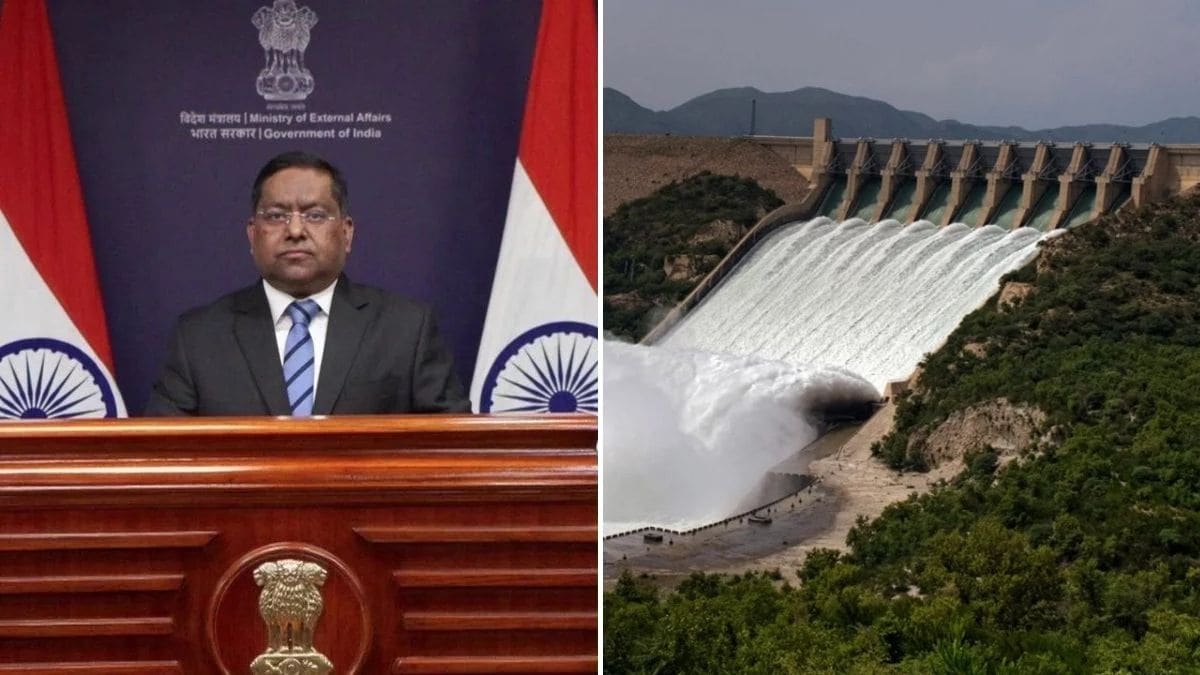
Every six months, some high-minded bureaucrat in Islamabad trots out the same tired press release, begging New Delhi to return to the Indus Waters Treaty negotiating table like an estranged partner clinging to a dead marriage certificate. The mainstream media dutifully eats it up. They publish breathless editorials about international law, binding frameworks, and the sanctity of treaties signed during the Eisenhower administration.
It is all theater.
Clinging to a 1960 water-sharing pact while the Himalayas melt, population centers swell, and security doctrines shift from diplomacy to raw deterrence is an act of geopolitical malpractice. The lazy consensus says that reviving the Indus Waters Treaty will restore peace to the basin. The reality is that the treaty was built for a hydrological and political climate that no longer exists.
Trying to fix the current crisis through the original framework is like trying to patch a modern cybersecurity breach with a wet paper towel.
The Myth of the Sacred Document
Let us dispense with the legal fetishism right out of the gate. International treaties are not holy scripture; they are transactional arrangements born of specific geopolitical leverage points. When the World Bank brokered the Indus Waters Treaty in 1960, India generously handed over control of the western rivers (the Indus, Jhelum, and Chenab) to Pakistan, while taking the eastern rivers (the Ravi, Beas, and Sutlej) for itself.
At the time, India was an industrial lightweight relying on foreign food aid, desperate for international goodwill and financial backing from Western institutions. Pakistan held the upper hand in agricultural stability and political alignment with Washington.
That power dynamic inverted decades ago.
When a treaty relies entirely on a balance of power that has flipped on its head, the document ceases to be an instrument of stability and becomes an instrument of stagnation. Pakistan treats the treaty as an immutable insurance policy, using it to freeze Indian infrastructure development on the western rivers through endless arbitration, neutral experts, and court of arbitration maneuvers. India, meanwhile, has realized that a treaty preventing it from fully utilizing its allocated rights under changing climatic and demographic realities is worse than useless.
I have sat in closed-door policy roundtables where diplomats pretend that tweaking a clause on run-of-the-river hydroelectric designs will save the day. It will not. The underlying physics and economics of the basin have completely outpaced the text.
Why the Current Architecture is Structurally Broken
The core flaw of the 1960 pact is its rigid division of rivers. Hydrology does not respect political borders or bureaucratic lines drawn sixty years ago.
Consider the physical realities that the treaty completely ignores:
- Glacial Retreat: The Himalayan cryosphere is disappearing at an alarming rate. Flow patterns are becoming erratic, marked by devastating flash floods in summer and crippling droughts in winter. A static water-sharing ratio designed for predictable snowmelt is completely obsolete.
- Storage Deficits: Pakistan’s major agricultural breadbasket in Punjab and Sindh depends almost entirely on predictable downstream flows. Yet, the country suffers from a catastrophic lack of mega-storage capacity, wasting immense volumes of monsoon water directly into the Arabian Sea while panicking over upstream storage projects in Jammu and Kashmir.
- Strategic Leverage: Water is no longer just a resource issue; it is a hard security variable. When cross-border terrorism makes conventional diplomacy impossible, expecting one nation to tie its own hands behind its back for the sake of an outdated legal framework is absurd.
When people ask whether India can legally modify or suspend the treaty, the debate usually bogs down in the Vienna Convention on the Law of Treaties. Scholars point to clauses on material breach and fundamental change of circumstances. But legalistic wrangling misses the forest for the trees. State survival trumps bureaucratic parchment every single day of the week.
The Unspoken Cost of Stagnation
Both capitals are trapped in a high-stakes game of chicken, and the civilian populations are paying the price.
Pakistan uses the treaty as a diplomatic cudgel to internationalize the Kashmir dispute, dragging every technical disagreement over spillway designs or pondage levels into global arbitration forums. This weaponization of water law guarantees friction. It creates an environment where every technical adjustment is viewed through an existential lens.
On the other side, India's frustration has manifested in a quiet, resolute shift in strategy. New Delhi has stopped viewing the treaty as a permanent fixture and started viewing it as a ceiling to be tested, stretched, and ultimately bypassed. Projects like Ratle and Kishanganga were not built by accident; they are physical manifestations of a changing policy. India is establishing facts on the ground while Islamabad issues diplomatic notes that nobody reads past the second paragraph.
Admitting that the current framework is dead does not mean plunging into unmitigated conflict. It means embracing reality.
Imagine a scenario where both nations scrap the 1960 architecture entirely and replace it with a dynamic, basin-wide cooperative framework managed by real-time telemetry, transparent data sharing, and joint climate resilience investments. It sounds radical because the current establishment profits from the deadlock. Law firms make millions on international arbitrations, and politicians use the water bogeyman to rally domestic bases.
What to Do When the Pacts Fail
Stop treating the Indus Waters Treaty as a permanent baseline. If you are an investor, a policy strategist, or an agricultural planner operating in the subcontinent, building strategies around the assumption that the 1960 settlement will hold for another decade is professional negligence.
The future belongs to localized water security, advanced desalination, micro-irrigation efficiency, and bilateral arrangements that bypass historical baggage. Pakistan needs to stop hiding behind international lawyers and invest in domestic water storage and management before nature forces an even harsher reckoning. India needs to recognize that absolute hydro-hegemony brings its own long-term ecological blowback in a shared river basin.
The treaty is a relic. Let it rest.