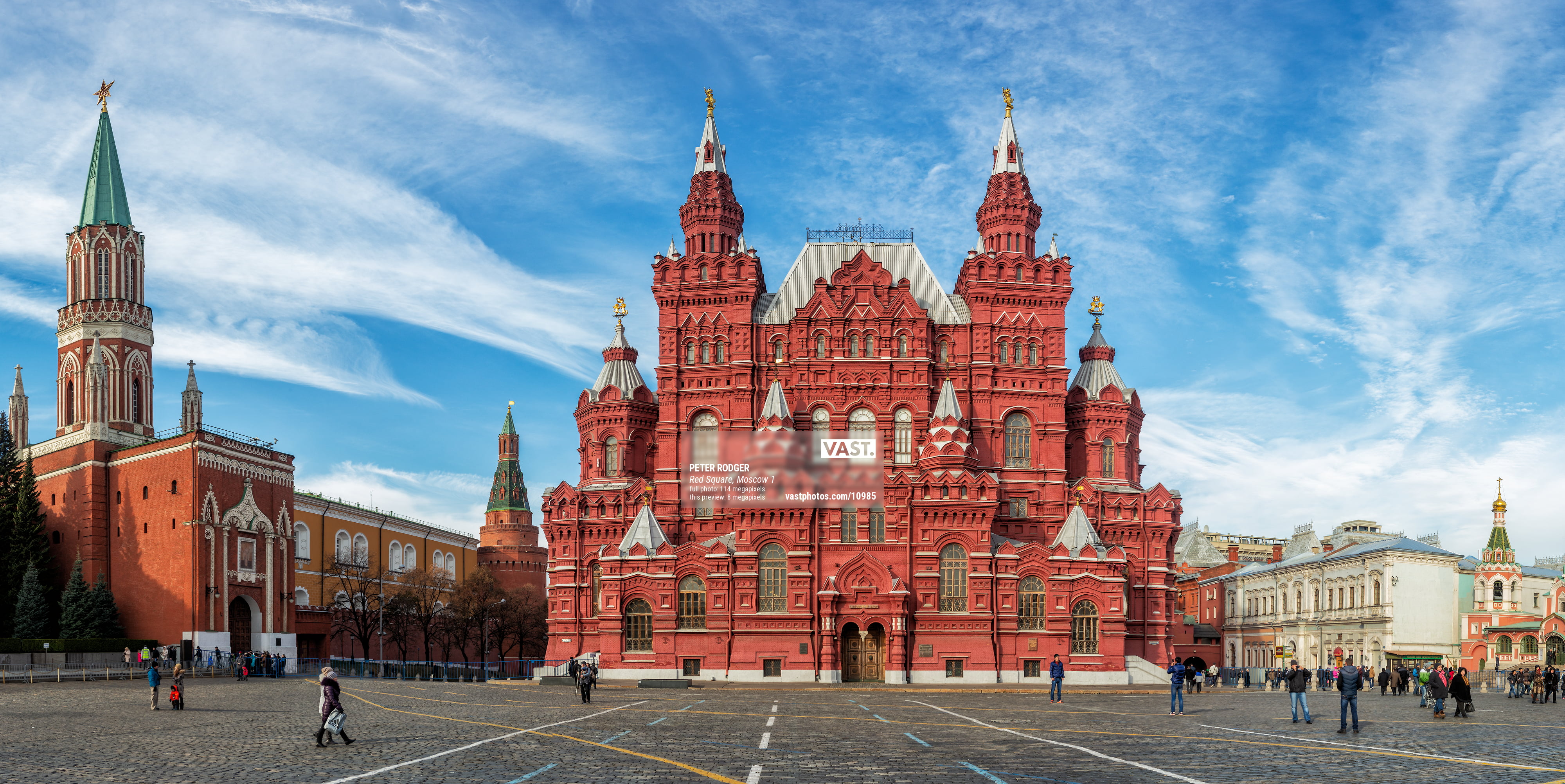
Western media is obsessed with the "missing" tanks. They look at a single T-34 trundling across the Red Square cobbles and scream "depletion." They see the absence of the sprawling, multi-mile columns of heavy armor and whisper "instability."
They are fundamentally misreading the room.
The narrative—pushed by outlets like Reuters and echoed across the echo chambers of Washington and London—is that a "scaled-back" Victory Day parade is a symptom of a regime in its death throes, terrified of its own shadow and desperate to hide its losses in Ukraine.
This is lazy analysis. It’s the product of analysts who value aesthetics over logistics and symbolism over strategy. If you think the Kremlin is "embarrassed" by a lone tank, you don't understand how Russian domestic propaganda actually functions, and you certainly don't understand the current state of their war economy.
The Myth of the Embarrassed Autocrat
The common consensus suggests Putin is hiding his hardware because he’s "running out." Let's dismantle that. Russia isn't running out of tanks; it has shifted from a "display economy" to a "utilitarian economy."
In 2021, the parade was a showroom. In 2026, the parade is a distraction. Every T-90M or T-14 Armata that isn't on Red Square is either on a flatbed heading toward the Donbas or sitting in a repair depot being up-armored with electronic warfare suites. Sending a battalion of modern tanks to circle a square in Moscow for the sake of Western photographers is a luxury a nation in a high-intensity war of attrition cannot afford.
The "missing" tanks aren't a sign of scarcity; they are a sign of total commitment.
By parading a lone T-34—the legendary steel heart of the Great Patriotic War—the Kremlin isn't saying "this is all we have left." It is saying "we are back in 1943." It is a deliberate, calculated aesthetic of austerity designed to signal to the Russian population that the country is once again in an existential struggle. It bridges the gap between the grandfathers who took Berlin and the grandsons currently in the trenches.
The Western press calls it "pathetic." The Russian nationalist sees it as "focused."
The Security Paranoia Fallacy
The second pillar of the "weakness" narrative is the cancellation of the "Immortal Regiment" marches and the tightening of security. The pundits claim this proves Putin is afraid of his own people—that he fears a crowd of citizens holding photos of the dead might turn into a riot against the current war.
This ignores the reality of modern drone warfare.
In a world where cardboard drones can fly from the border to the Kremlin, a mass gathering of hundreds of thousands of people in the heart of the capital is a logistical nightmare, not a political one. If a single Ukrainian-launched FPV drone hit a crowd in Moscow on May 9, the political fallout for the Kremlin would be catastrophic—not because it would spark a revolution, but because it would shatter the "protection" contract Putin has with the middle class.
Canceling the march isn't an admission that the people are restless. It’s an admission that the front line is now 500 miles wide and reaches into the clouds above Moscow. It’s a move of cold, hard pragmatism. To frame it as "fear of dissent" is to project Western liberal fantasies onto a security apparatus that has already successfully neutralized almost all organized internal opposition over the last four years.
The 1.5% Logic: Why the Math Favors the Attritionist
We love to talk about the "crippling" sanctions. Yet, the Russian economy has transitioned into a war footing that would make European bureaucrats weep. While the West waits for a "collapse" that never comes, the Russian defense industry is running three shifts.
The "People Also Ask" section of the internet is full of queries like "Is Russia’s military collapsing?" and "How many tanks does Russia have left?"
You’re asking the wrong questions.
The question isn't how many tanks they have; it's how many they can lose compared to how many the West can replace.
The scaled-back parade is a visual representation of this math. By not showing the hardware, Russia avoids giving the West a fresh "count." It maintains a level of strategic ambiguity. If you show 20 T-14s, the world knows you have at least 20. If you show zero, you force the NATO intelligence community to rely on satellite imagery of storage bases, which are notoriously difficult to verify in terms of "operational readiness."
The Tactical Superiority of Low Expectations
There is a profound advantage in being underestimated. For two years, the "consensus" has been that Russia is a week away from running out of missiles, a month away from economic default, and a year away from total military collapse.
By leaning into the "scaled-back" imagery, the Kremlin feeds this delusion.
When you convince your enemy you are weak, you encourage them to overextend. You encourage them to believe that one more "game-changing" shipment of Western missiles will end the conflict. Meanwhile, the Russian side continues to build depth—Surovikin lines, massive minefields, and a drone production capacity that now dwarfs much of the EU combined.
I’ve seen analysts in London and D.C. blow through millions in grant money trying to prove that the lack of an air flyover in Moscow means the VKS (Russian Air Forces) is grounded. It’s nonsense. The planes aren't flying over the Kremlin because they are busy dropping FAB-1500 glide bombs on fortified positions in eastern Ukraine.
Would you rather have a parade or a breakthrough at the front? The Kremlin chose the latter.
Dismantling the "Global Isolation" Narrative
The Reuters piece and its ilk often point to the guest list—or lack thereof—at these parades as proof of Russia's isolation. "Only leaders from former Soviet republics attended," they sneer.
Again, they missed the point.
Russia isn't trying to win a popularity contest in Brussels. It is consolidating the "Global South" and the "Near Abroad." The presence of leaders from Kazakhstan, Uzbekistan, and Kyrgyzstan isn't "sad"—it’s essential. These are the countries facilitating the "parallel imports" that keep the Russian economy humming. These are the routes through which Western chips and components still flow into Russian missile factories.
The parade isn't for us. It’s for them. It’s a signal to the regional powers that Russia remains the undisputed gravity well of Eurasia, regardless of what the G7 thinks.
The Actionable Truth: Stop Watching the Red Square
If you want to know the health of the Russian state, stop looking at the number of soldiers marching past Lenin’s Tomb.
Instead, look at:
- The Central Bank of Russia's interest rate maneuvers. They are managing a war economy with more agility than most Western banks managed a housing bubble.
- The proliferation of "Lancet" drone footage. This is the real "parade"—a constant stream of evidence showing the destruction of high-value Western assets.
- The turnover rate of the Uralvagonzavod factory. This is the heartbeat of the war.
The Victory Day parade is a piece of theater. In the past, it was a high-budget Marvel movie designed to intimidate. This year, it was a gritty, low-budget indie film designed to build resolve.
To call it a "failure" because it lacks the glitter of previous years is to mistake the costume for the actor. The actor is still there, he’s just wearing fatigues now instead of a dress uniform, and he’s much more dangerous because he’s stopped caring if you’re impressed.
The West is looking for a sign of surrender in the lack of pomp. They will find only the silence of a country that has stopped performing and started producing.
Stop looking for the tanks in Moscow. They are exactly where they need to be.