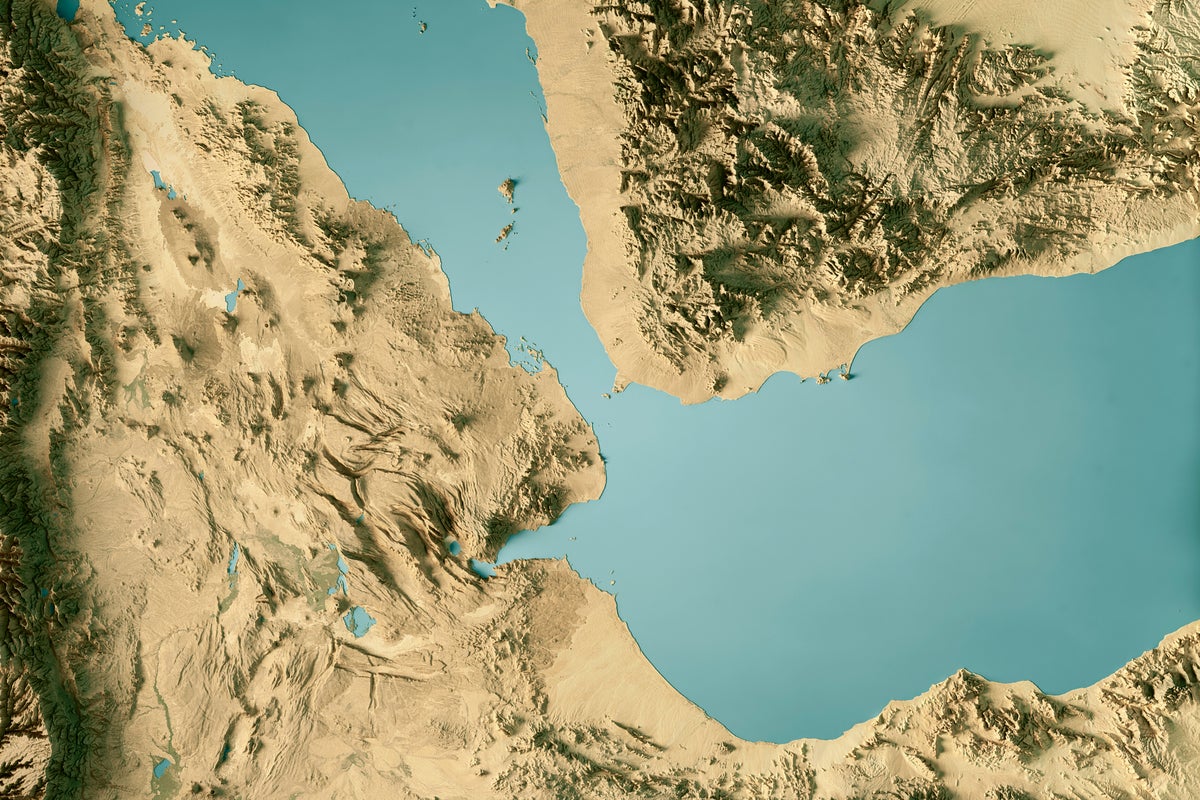
The Bab al-Mandab Strait is a twenty-mile-wide strip of water that acts as the carotid artery of global trade. When it is constricted, the entire body of the world economy feels the oxygen thinning. Recent Houthi missile and drone strikes on commercial vessels aren't just localized skirmishes or regional theater. They represent a fundamental breakdown in the maritime security model that has underpinned cheap, fast delivery for the last half-century. While most analysts focus on the immediate spike in insurance premiums, the deeper reality is more grim. We are witnessing the death of the "efficiency-first" shipping era.
The math is simple and brutal. Roughly 12% of global trade and 30% of container traffic passes through this narrow gate between Yemen and Djibouti. When Houthi rebels force the world’s largest shipping lines—Maersk, MSC, and Hapag-Lloyd—to divert around the Cape of Good Hope, they add 3,500 nautical miles to the journey. This isn't just a longer scenic route. It is a logistical nightmare that burns through fuel, wastes weeks of time, and creates a massive shortfall in available shipping containers.
The Illusion of Secure Waters
For decades, the West operated under the assumption that the high seas were a neutral, protected commons. The U.S. Navy and its allies provided a security blanket that allowed companies to build just-in-time supply chains. You could order components from Shenzhen and expect them in Rotterdam with surgical precision. That certainty has evaporated.
The Houthi movement, backed by Iranian intelligence and hardware, has proven that expensive carrier strike groups are poorly matched against $20,000 "suicide" drones and ballistic missiles launched from mobile trucks. This is asymmetric warfare in its purest form. A group with a fraction of the Pentagon's budget can effectively shutter a route that carries $1 trillion worth of goods annually.
What the initial reports missed is the psychological shift among ship captains and owners. It isn't just about the physical risk of a hit. It is the legal and financial impossibility of operating without coverage. When London-based underwriters designate the Southern Red Sea a "high-risk area," the cost of hull war insurance can jump tenfold in a single week. For a mid-sized tanker, that can mean an extra $100,000 per voyage before a single drop of fuel is burned.
Why the Suez Canal is Becoming a Ghost Town
The Suez Canal is the prize at the end of the Red Sea. Without safe passage through the Bab al-Mandab, the canal becomes a dead end. This is a disaster for Egypt, which relies on canal tolls for roughly $9 billion in annual revenue. But for the rest of us, the pain is found in the "Container Gap."
Shipping is a cyclical, highly orchestrated dance. If a ship takes 14 days longer to reach Europe from Asia, it is also 14 days late starting its return trip. This creates a vacuum at Asian ports. Empty containers don't return to where they are needed, leading to shortages that drive up the price of every box on the water. We saw a version of this during the 2021 blockage by the Ever Given, but that was a week-long accident. This is a deliberate, indefinite siege.
The Energy Crisis Beneath the Surface
While consumer goods dominate the headlines, the energy markets face a more volatile threat. The Red Sea is a primary transit point for Liquefied Natural Gas (LNG) from Qatar heading to Europe. Since the Russian invasion of Ukraine, Europe has swapped pipeline gas for sea-borne LNG. By forcing these tankers around Africa, the Houthis have essentially placed a surcharge on heating European homes.
Oil prices haven't spiked to $150 a barrel yet, mostly because global demand is sluggish and the U.S. is pumping record amounts of crude. However, the "risk premium" is now baked into the price. Every time a drone hits a tanker, a few more dollars are added to the cost of a barrel, not because of a supply shortage, but because of the fear of one.
The Failure of Operation Prosperity Guardian
The multinational naval coalition led by the United States, dubbed Operation Prosperity Guardian, was supposed to restore confidence. It hasn't. The reasons are both technical and political.
Defending a slow-moving cargo ship against a swarm of drones is like trying to swat mosquitoes with a sledgehammer. Using a $2 million interceptor missile to take down a drone that costs as much as a used Honda Civic is a losing game of attrition. Eventually, the defender runs out of missiles or money.
Furthermore, the coalition is fractured. Regional powers like Saudi Arabia and the UAE are hesitant to join publicly for fear of escalating their own long-standing conflicts with Houthi forces. Without a unified front, the naval presence is a reactive force, chasing ghosts in the water while the shipping industry votes with its feet and takes the long way around.
The Hidden Winners of Maritime Chaos
In every crisis, someone finds a way to profit. In this case, it is the shipping lines themselves. Despite the higher fuel costs and longer routes, the massive surge in freight rates often outweighs the expenses. When capacity is tight, carriers can charge three or four times the standard rate for a 40-foot container.
We are seeing a repeat of the pandemic-era profit booms where shipping giants recorded their most profitable years in history while the global economy stalled. The losers are the retailers—and ultimately the consumers—who have to absorb the "Red Sea Surcharge." If you wonder why inflation remains sticky despite high interest rates, look at the freight charts.
The Hardware of Modern Piracy
The Houthis aren't just guys in skiffs with AK-47s. They are utilizing sophisticated anti-ship cruise missiles and unmanned underwater vehicles (UUVs). This is the first time in history that a non-state actor has used ballistic missiles to strike moving targets at sea.
This technological leap changes the risk assessment for every narrow waterway on the planet. If the Houthis can do this in the Red Sea, what stops other groups from attempting the same in the Strait of Malacca or the Strait of Hormuz? The blueprint for disrupting global capitalism has been published, and it is remarkably cheap to execute.
The Reshoring Reality Check
For years, CEOs talked about "reshoring" or "friend-shoring" their manufacturing to avoid geopolitical risks. The Red Sea crisis has turned these boardroom theories into urgent requirements. Relying on a supply chain that passes through a series of narrow, contested "choke points" is no longer a viable strategy for a stable business.
However, moving a factory from Vietnam to Mexico or Poland takes years and billions of dollars. In the meantime, the global economy is stuck in a state of high-cost limbo. We are moving toward a fractured trade system where the world is divided into "safe zones" and "war zones," with the price of goods reflecting which path they traveled.
The Logistics of Desperation
Some companies are attempting to bypass the sea entirely by using rail links through Central Asia or expensive air freight. Air cargo demand has spiked as electronics and high-fashion brands scramble to get their spring collections into stores on time. But a plane can only carry a fraction of what a mega-container ship holds. It is a drop of relief in an ocean of delay.
The rail alternative—the "Middle Corridor" through Azerbaijan and Georgia—is plagued by limited capacity and bureaucratic hurdles. There is no easy fix. There is no "backdoor" to the Suez Canal that can handle the volume of the world's appetite for stuff.
A New Era of Permanent Risk
The most significant takeaway from the Red Sea crisis is that the "peace dividend" of the post-Cold War era is officially over. The freedom of navigation is no longer a given; it is a luxury that must be fought for daily.
If you are waiting for things to go back to "normal," you are misreading the situation. The Houthi strategy has proven too successful to be abandoned. Even if a ceasefire is reached tomorrow, the vulnerability of the route has been exposed. Every insurance company, shipping executive, and government treasurer now knows that the world's most vital trade route can be held hostage by a few well-placed missiles.
This realization will keep prices high long after the drones stop flying. The cost of global trade just went up, and it isn't coming back down. Companies that fail to diversify their routes and bring production closer to home will find themselves at the mercy of the next group that decides to turn a narrow strait into a firing range.
Direct your attention to the upcoming quarterly reports of major retailers. Watch the "logistics and distribution" line item. That is where the reality of the Red Sea conflict is being written in red ink. If you want to know how the global economy is actually doing, stop looking at the stock market and start tracking the GPS coordinates of the world’s cargo fleet. The detour around Africa is the new standard.