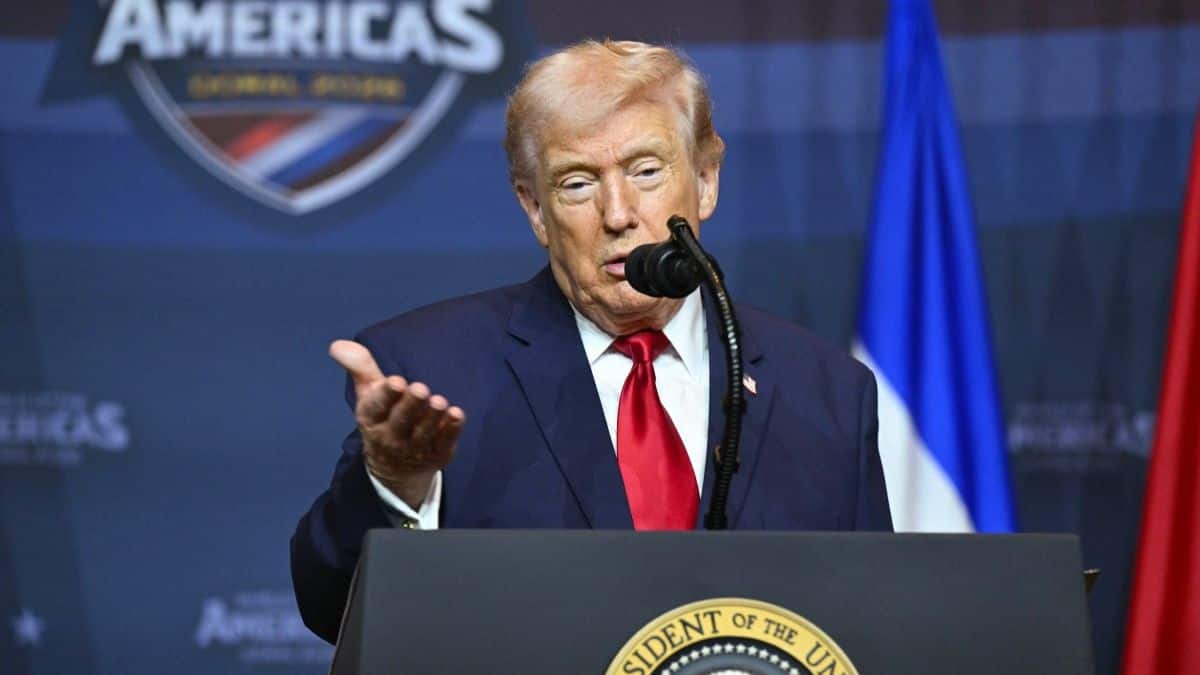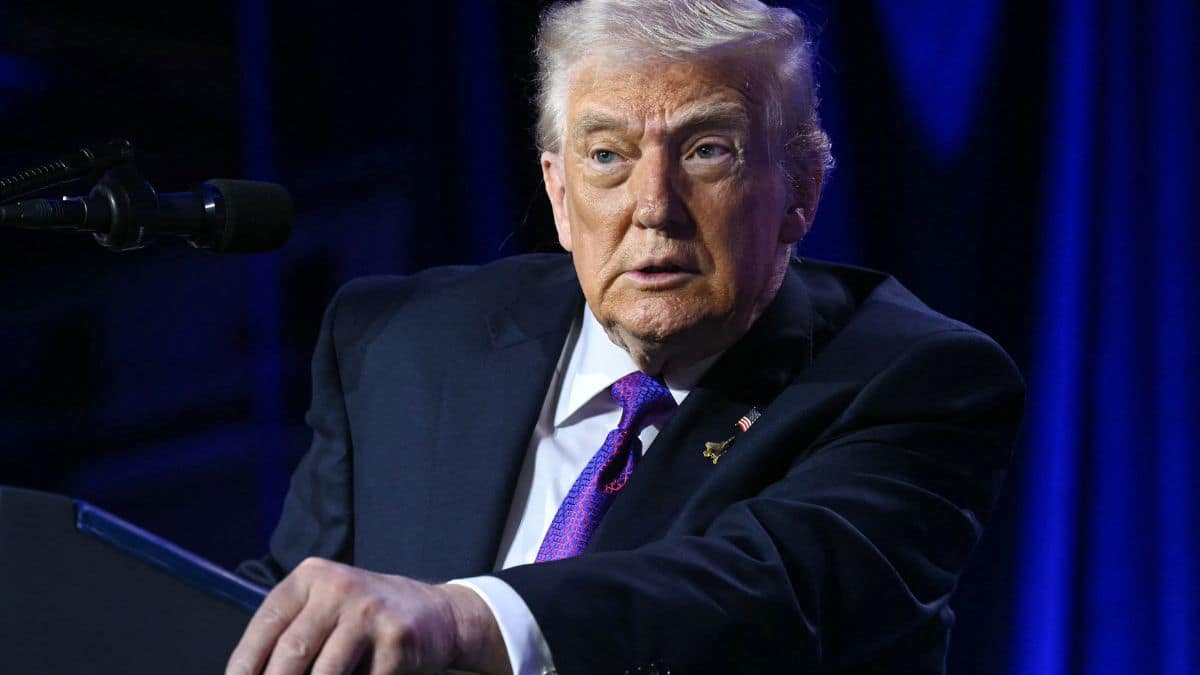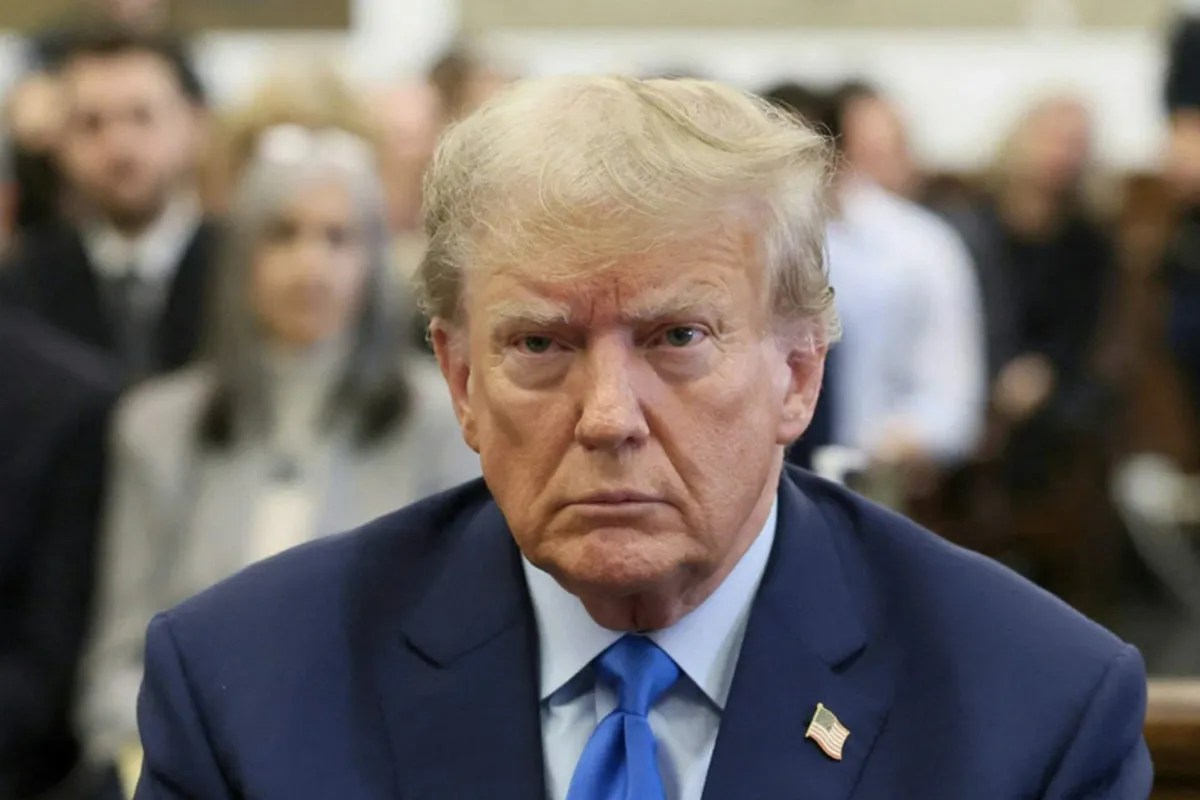
The air in the Situation Room doesn’t just feel heavy; it feels historical. It is a specific kind of stillness, the sort that precedes a lightning strike or a tectonic shift. When Donald Trump leans into a microphone to deliver a "last warning" to Iran, the words aren't just vibrations in the air. They are physical weights dropped into an already overflowing scale of global tension. The message was blunt: if Iran blocks the path—specifically the vital maritime arteries of the Middle East—the retaliation will be twenty times more forceful than anything they have ever witnessed.
Numbers like "20 times" are easy to type. They are harder to visualize. To understand what that actually looks means stepping away from the teleprompter and looking at the Strait of Hormuz through the eyes of a merchant sailor.
Imagine a young deckhand on a massive crude carrier. He is thousands of miles from home, sipping lukewarm coffee, watching the sunrise over the Persian Gulf. To him, the "path" isn't a geopolitical concept. It is his workplace. It is a narrow stretch of water, barely 21 miles wide at its tightest point, through which one-fifth of the world’s liquid energy flows every single day. If that gate slams shut, the coffee in his hand, the fuel in your car, and the stability of the global market don't just fluctuate. They shatter.
The Anatomy of a Threat
The President’s rhetoric isn't merely about ego. It is about a calculated doctrine of disproportionate response. In the past, international diplomacy operated on a "tit-for-tat" basis. You move a pawn, I move a pawn. You seize a tanker, I sanction a bank. But the current posture from Washington has abandoned the chessboard for something more primal.
By promising a twenty-fold increase in violence, the administration is attempting to overwrite the cost-benefit analysis of the Iranian leadership. The logic is simple: if the cost of closing a shipping lane is the total annihilation of your domestic infrastructure, is the gesture worth the price?
But logic is a fragile thing in the Middle East.
Consider the Iranian commander on the other side of that water. He isn't looking at a spreadsheet. He is looking at decades of sanctions, a bruised national identity, and a religious conviction that often views martyrdom as a victory rather than a defeat. When he hears a threat of "20 times the force," he doesn't see a deterrent. He sees a challenge. He sees a reason to dig the tunnels deeper and make the missiles faster.
The Invisible Stakes of the Strait
Why does a narrow strip of blue water in a distant desert matter to a family in suburban Ohio or a factory worker in Vietnam?
The global economy is a nervous system. The Strait of Hormuz is the brainstem. If the flow of oil is restricted, the pain isn't localized; it travels at the speed of light. Within hours of a confirmed blockage, insurance premiums for every ship in the ocean skyrocket. Within days, gas stations halfway across the world begin changing their signs. Within weeks, the price of plastic, fertilizer, and electricity begins to squeeze the breath out of small businesses.
This isn't a hypothetical metaphor. In 1988, during the "Tanker War," the U.S. Navy and Iran engaged in Operation Praying Mantis. It was the largest American surface engagement since World War II. It started with a single mine—a rusted ball of explosives—that nearly broke the back of the USS Samuel B. Roberts. The American response was swift and devastating, sinking half of Iran’s operational fleet in a single day.
That was a 1:1 response in the eyes of many.
Now, the President is promising a 1:20 ratio.
The Human Element in the Crosshairs
We often speak of "attacks" and "targets" as if we are discussing a video game. We forget the heat. We forget the sound of metal tearing under the pressure of a supersonic kinetic strike.
If a "20-fold" attack were to be carried out, it wouldn't just be hitting empty hangars or desert dunes. It would mean the systematic dismantling of power grids, communication hubs, and the very things that keep a modern society breathing. It means a father in Tehran wondering why the lights went out and if they are ever coming back on. It means an American pilot, barely twenty-four years old, banking a billion-dollar jet into a sky filled with anti-aircraft fire, knowing that the "path" he is fighting for isn't just a trade route. It is a lifeline.
The President’s "last warning" is a high-stakes gamble on the power of deterrence. If the deterrent works, there is a quiet sigh of relief in the Situation Room. If it fails, the escalation isn't a ladder. It's a cliff.
There is a certain irony in how we discuss these moments. We analyze the rhetoric, we debate the legality, and we calculate the military capabilities. But we rarely talk about the silence. The silence of a city after the power is gone. The silence of an ocean after the engines have stopped. The silence of a diplomat who has run out of things to say.
The path through the Strait of Hormuz is more than a corridor for crude. It is a mirror. It reflects our dependence on a fragile world and our willingness to break it in order to save it. When Trump says "20 times," he isn't just issuing a threat. He is defining the cost of an era where diplomacy is a distant memory and the only language left is the thunder of a thousand missiles.
The sailor on the deck of the tanker doesn’t care about the ratio. He just wants to go home. He watches the horizon, looking for the first signs of smoke or the first glint of a steel hull, waiting to see if the world’s most powerful nation is as good as its word. The path is still open for now. But the shadows on the water are growing longer every hour.
Consider what happens next: the next move isn't on a map. It's in a mind.
The real problem lies elsewhere, not in the weapons we can count, but in the intentions we cannot. When a leader draws a red line that deep and that dark, he leaves no room for retreat. For either side.
The message was sent. The "last warning" has been delivered. Now, we wait to see if the world can survive the answer.
Imagine the sound of twenty times the force. It isn't a roar. It is a roar that never ends.