The Mediterranean breeze doesn’t care about geopolitics. In Tyre, a coastal city in southern Lebanon, the air smells of salt, roasted coffee, and the faint, metallic tang of dust kicked up by concrete rubble. A family sits on a balcony that has survived three separate conflicts. Below them, the streets are quiet, but it is the tense, brittle quiet of a theater right before the curtain rises. They are watching the news on a cracked smartphone screen, tracking a conversation happening thousands of miles away in Washington, D.C.
To the global media, this is a headline about diplomatic maneuvering, a chess match between a newly inaugurated American president and an entrenched Israeli prime minister. But on the ground, diplomacy isn't an abstract concept. It is the force that decides whether the roof stays over your head tomorrow morning.
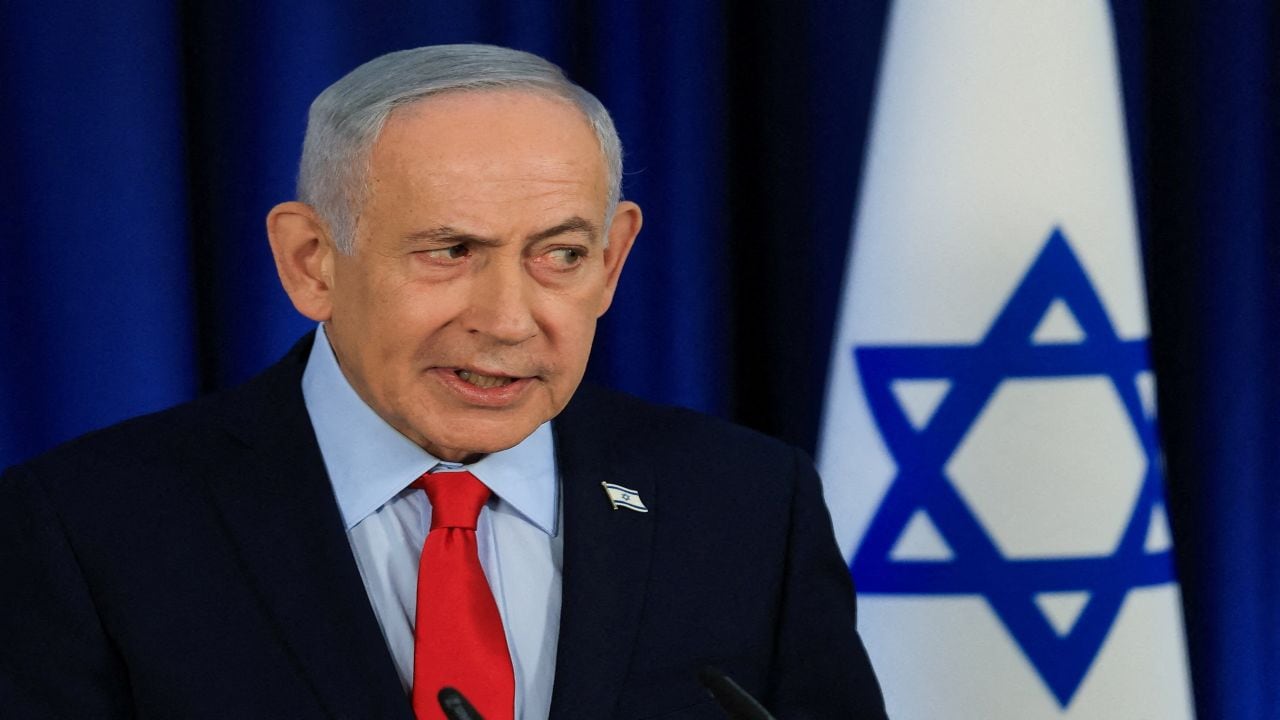
The dry facts of the matter are straightforward. Benjamin Netanyahu spoke with Donald Trump. The message from Jerusalem was unyielding: regardless of any ceasefire negotiations or regional grand bargains involving Iran, Israel reserves the right to strike threats inside Lebanon. It sounds like standard wartime rhetoric. It isn't. It represents a fundamental shift in how borders, sovereignty, and security are being redefined in the modern Middle East.
To understand why this conversation matters, we have to look past the official press releases and examine the invisible architecture of deterrence.
The Ghost in the Room
For decades, international diplomacy operated under a specific illusion. The idea was simple: if you get two warring parties to sign a piece of paper, the ink creates a shield. United Nations resolutions were treated as physical barriers. We saw this with UN Resolution 1701, which was supposed to keep the area south of Lebanon’s Litani River free of armed groups except for the Lebanese army and UN peacekeepers.
It failed.
The failure wasn't sudden. It happened in the dark. It happened through tunnels dug into limestone, through civilian trucks carrying wrapped crates across the Syrian border, and through the slow, steady accumulation of precision-guided hardware. Imagine living in a house where the locks on the doors are perfectly intact, but someone has spent ten years slowly replacing the floorboards with trapdoors. That is the reality Israel watched develop along its northern border.
When the dam broke, the illusion shattered. The thousands of rockets fired into northern Israel over the past years weren't just weapons; they were proof that international guarantees had expired.
Now, Netanyahu is telling Trump that Israel will no longer rely on the old playbook. The new strategy isn't about maintaining a fragile status quo. It is about active prevention. For the average Israeli evacuated from a ghost town like Metula or Kiryat Shmona, this isn't about aggression. It is about the simple, human desire to go home without wondering if a drone will crash through the kitchen ceiling while they are making breakfast.
But look at the other side of the ledger.
For a Lebanese civilian in Beirut or Nabatiyeh, this policy means living under a permanent question mark. It means knowing that even if a grand peace treaty is signed in a gilded room in Europe or the United States, the sky above them could open up at any moment. It strips away the comfort of a definitive end. War, in this new paradigm, is no longer an event with a start and a finish date. It becomes a chronic condition.
The Iranian Pivot
The timing of this communication is everything. Tehran is currently signaling a willingness to talk, hinting at potential negotiations regarding its nuclear program and regional influence. In the traditional diplomatic playbook, when a major power shows a willingness to negotiate, everyone else is supposed to freeze their positions to allow the diplomats room to breathe.
Netanyahu’s message to Trump effectively throws that playbook out the window.
Consider the mechanics of how regional proxy warfare works. Iran operates not through direct confrontation, but through an extended nervous system of allied militias, with Hezbollah in Lebanon acting as the crown jewel. If Washington enters talks with Tehran, there is always a fear in Jerusalem that Lebanon will be treated as a bargaining chip. The worry is that the West might accept a superficial calm in Lebanon to secure a larger, more elusive deal on Iran’s centrifugal infrastructure.
By drawing this line with Trump early, Israel is attempting to decoupling the local threat from the global negotiation. The message is clear: You can talk to Tehran about enrichment percentages, but we will handle the rockets on our border ourselves.
This creates an immediate test for the incoming American administration. Trump has historically favored the "dealmaker" approach, preferring massive, sweeping agreements that redefine relationships between nations. But the Middle East has a habit of chewing up grand strategies and spitting out the pieces. You cannot easily build a grand regional architecture when one of the main actors insists on reserving the right to demolish parts of the scaffolding whenever they see a threat forming.
The Weight of the Unseen
What does this mean for the coming months?
The reality is messy, confusing, and deeply unsettling for anyone looking for a clean resolution. We are entering an era of hot peace. Even if the current heavy fighting subsides, the structural instability remains.
Imagine a pressure cooker where the valve is broken. You can turn down the heat under the stove, but the internal pressure never truly drops to zero. That is Lebanon today. The country is buckling under an economic collapse that was devastating even before the bombs started falling. Its state institutions are hollowed out. The official Lebanese army is ill-equipped to enforce the kind of total demilitarization that Israel demands.
So, the burden of enforcement falls back onto intelligence agencies and airstrikes.
This brings us to the human cost of a "preventative strikes" policy. When a military operates on the principle that it will strike whenever a threat begins to materialize, the definition of a threat inevitably broadens. A truck moving at night. A newly dug trench near a border village. A warehouse whose lease suddenly changed hands. In the eyes of a military commander tasked with preventing the next October 7th, these are not ambiguities; they are targets.
But to the people living around those targets, it means the boundary between civilian life and military infrastructure has completely evaporated.
The Unbroken Circle
The sun begins to set over the Mediterranean, casting long, orange shadows across the scarred coastlines of both Lebanon and northern Israel.
In a reinforced shelter in a northern Israeli kibbutz, a grandmother packs a bag with toys, wondering if the sirens will sound tonight, or if the quiet will hold just long enough for her grandchildren to sleep through the night. She wants the army to do whatever it takes to ensure those hills across the border are clear. She wants certainty.
Fifty miles north, a young man walks through the ruins of his neighborhood in the southern suburbs of Beirut, kicking aside a piece of shrapnel. He wants the sovereignty of his country respected. He wants to know that a foreign power cannot decide, based on intelligence he will never see, that his street is a legitimate target. He wants dignity.
Both of them are trapped in the same loop. The conversation between a prime minister and a president-elect won't resolve this fundamental tension. It merely codifies it. It acknowledges that the old rules are dead, that international borders are no longer shields, and that for the foreseeable future, security will not be found in signed treaties, but in the cold, unblinking eye of a drone loitering in the cloudless sky.