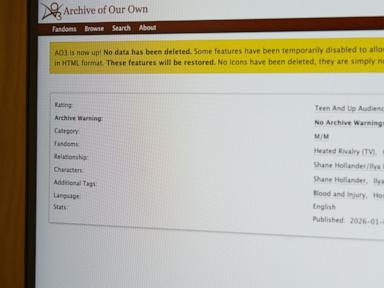
When a major user-generated content repository suffers a critical security incident, the resulting downtime is rarely a simple server reboot. The prolonged, phased restoration of a leading fan fiction archive illustrates a fundamental tension in modern platform engineering: balancing the immediate user demand for access against the exhaustive forensic verification required to ensure database integrity.
Most surface-level coverage of platform outages focuses on user sentiment—celebrating the return of a beloved service while treating the technical recovery as a black box. That framing misses the operational reality. Rebuilding trust and infrastructure after a breach requires navigating a strict sequence of containment, cryptographic verification, and staged load testing. Understanding how these platforms recover reveals the hidden vulnerabilities of community-run archives and the economic calculus of non-commercial digital infrastructure.
The Structural Vulnerability of Community Archives
Online platforms dedicated to transformative works and spinoff stories occupy an unusual position in the internet ecosystem. Unlike commercial social networks funded by venture capital and ad-tech, major fan fiction repositories typically operate as non-profits or lean, donation-funded organizations. This governance model shapes their technical architecture and incident response capabilities in three distinct ways.
First, legacy codebases create compound technical debt. Many foundational archives were built over a decade ago using monolithic frameworks. While stable under normal operating conditions, monolithic architectures complicate incident isolation. When an intrusion or denial-of-service vector hits a single endpoint, the blast radius often threatens the entire application layer, forcing administrators to take the whole domain offline rather than degrading specific microservices.
Second, resource asymmetry favors attackers. Malicious actors utilize automated botnets and distributed infrastructure to probe for vulnerabilities or exhaust server bandwidth. A community-funded platform relies on a finite pool of volunteer engineers and paid system administrators. During an active security event, this small team must simultaneously manage crisis communications, execute forensic log analysis, and re-architect firewall rules.
Third, data sensitivity is higher than external observers assume. Fan fiction platforms do not typically store credit card numbers or government identification, leading casual observers to underestimate the stakes of a breach. In reality, these databases hold pseudonymous identities linked to personal email addresses, private reading histories, and unpublished drafts. For users in restrictive jurisdictions or marginalized communities, deanonymization carries severe real-world consequences. Protecting this metadata requires treating a breach with the same rigor as a financial institution.
Deconstructing the Phased Restoration Model
When a platform announces it is "nearing full return" after a security incident, it is executing a calculated, multi-stage recovery protocol. Bringing a high-traffic database back online all at once invites cascading failures—both from lingering security holes and from the "thundering herd" problem, where millions of users attempt to reconnect simultaneously.
Phase 1: Forensic Containment and Cold Backup Verification
Before a single line of public-facing code is redeployed, engineers must establish a clean baseline. This involves severing external network access, revoking all existing administrative credentials, and rotating cryptographic keys.
The critical bottleneck in this phase is verifying that backups were not tainted prior to the incident being detected. If an attacker maintained persistent access for weeks before triggering an alarm, the most recent automated snapshots might contain backdoors or corrupted database tables. Engineers must audit system logs backward to identify "patient zero"—the exact timestamp of initial compromise—and restore from a snapshot predating that event. Any user-generated content created between the clean snapshot and the shutdown must then be carefully quarantined, sanitized, and re-ingested, or else lost entirely.
Phase 2: Read-Only Mode and Cache Warming
The first visible sign of life for users is almost always a degraded, read-only state. Allowing users to browse existing stories while disabling logins, comments, and new uploads serves two engineering objectives:
- Attack Surface Reduction: Disabling write operations eliminates the primary vectors for SQL injection, cross-site scripting (XSS), and unauthorized database modification. The platform temporarily functions as a static content delivery network (CDN).
- Cache Population: High-traffic archives rely heavily on in-memory caching layers (such as Redis or Memcached) to serve popular pages without querying the underlying relational database. During an outage, these caches are flushed. Returning in read-only mode allows the system to gradually rebuild its cache hit ratio under real traffic conditions before introducing the heavy computational load of database writes.
Phase 3: Authenticated Write Restoration and Rate Limiting
Restoring full functionality—user authentication, bookmarking, and chapter publishing—represents the highest-risk inflection point. When authentication endpoints reopen, platforms face an immediate spike in credential-stuffing attacks as bad actors test leaked password lists against the newly restored login portal.
To survive this phase, system administrators implement aggressive rate limiting and web application firewall (WAF) rules. Users may experience temporary captchas, forced password resets, or throttled search functions. These are not signs of a broken recovery; they are deliberate friction mechanisms designed to keep database Input/Output Operations Per Second (IOPS) within safe thresholds while filtering out automated scraping traffic.
The Network Effects of Platform Downtime
A prolonged outage does not exist in a vacuum. When a primary hub for transformative works goes dark, it triggers measurable behavioral shifts across the broader entertainment ecosystem.
- Traffic Fragmentation and Dark Social Migration: Deprived of their central repository, readers and writers migrate to secondary platforms—Discord servers, encrypted messaging apps, and microblogging sites. While this preserves community cohesion in the short term, it fragments the archival record. Stories shared via ephemeral chat channels lack the tagging, indexing, and long-term preservation mechanisms of a dedicated archive.
- The Rebound Surge: Unlike commercial platforms where downtime causes permanent user churn, community archives often experience a post-outage engagement spike. Because the platform functions as an irreplaceable cultural commons rather than a replaceable utility, pent-up demand translates into record traffic once write permissions are restored. Writers upload backlogged chapters simultaneously, creating a secondary wave of server strain that tests the newly hardened infrastructure.
- Trust Calibration: User celebration upon a platform's return is conditional. The community's willingness to forgive downtime depends entirely on transparent post-mortem reporting. Platforms that publish detailed, jargon-free explanations of what failed and how it was fixed convert a security crisis into long-term institutional trust. Those that offer vague corporate platitudes suffer slow erosion in creator confidence.
Operational Limitations of Post-Incident Hardening
Even a textbook recovery leaves structural vulnerabilities exposed. Security is an ongoing operational cost, not a one-time engineering milestone, and several hard constraints limit how secure a community-driven platform can ever become.
First, strict security degrades usability. Implementing mandatory multi-factor authentication (MFA), aggressive IP blocking, and strict content security policies protects user accounts, but it also locks out legitimate users relying on VPNs, shared devices, or legacy browsers. Platform operators must constantly calibrate the false-positive rate of their security rules against the accessibility needs of a global user base.
Second, DDoS mitigation remains expensive. While basic caching absorbs standard traffic spikes, defending against sophisticated Layer 7 Distributed Denial of Service attacks requires enterprise-grade edge routing. For non-profit platforms, allocating capital to continuous enterprise security contracts directly reduces the budget available for core feature development and server expansion.
Third, the human element remains unpatchable. No amount of database encryption or firewall hardening prevents social engineering attacks targeting volunteer moderators or system administrators. As long as human operators hold privileged access to manage content disputes and infrastructure, credential compromise remains a persistent threat vector.
Strategic Imperatives for Digital Archives
For platform operators managing high-volume, community-driven repositories, surviving a security incident requires shifting from reactive firefighting to structural resilience. Relying on user goodwill to weather multi-day outages is not a sustainable strategy.
Operators must decouple their presentation layer from their core database infrastructure. By implementing edge-cached static fallbacks, a platform can ensure that its existing catalog remains readable even when the primary database is locked down for forensic maintenance. Simultaneously, organizations must formalize incident communication protocols—establishing off-platform status pages and pre-drafted transparency templates—so engineering teams can focus entirely on containment rather than public relations during the critical first hours of a breach. Security in the non-commercial web is ultimately an exercise in architectural containment: assuming breach is inevitable, and designing systems so that a single point of failure never silences the entire archive.