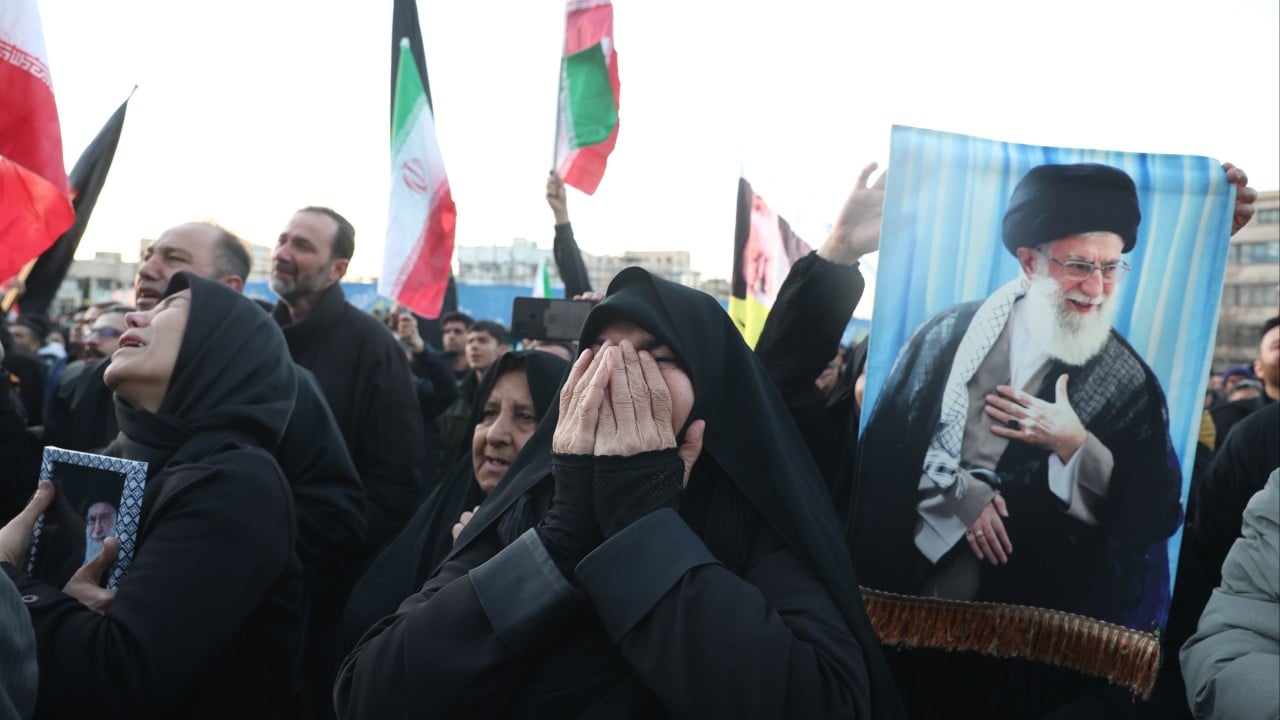
The shadow that hung over Tehran for thirty-seven years has finally lifted, but it hasn’t brought clarity. With the confirmed death of Ali Khamenei on February 28, 2026, following a massive Israeli-led strike, the Islamic Republic is staring at its most dangerous identity crisis since 1989. For years, Western analysts treated the succession like a slow-motion chess match. Now, the board has been kicked over, the pieces are scattered, and the "experts" are scrambling to figure out if the regime can even survive the transition.
You’ve probably heard a few names tossed around—Mojtaba Khamenei, Alireza Arafi, or maybe a dark horse from the judiciary. But the truth is more chaotic. The death of Ebrahim Raisi in that 2024 helicopter crash didn't just kill a president; it killed the only pre-packaged transition plan the regime actually had.
The Empty Chair and the Three-Man Shadow Cabinet
Right now, Iran is technically being run by a committee. Under Article 111 of the Iranian Constitution, when a Supreme Leader dies, a Provisional Leadership Council takes over. This isn't a long-term fix; it’s a holding pattern.
This council currently consists of:
- Masoud Pezeshkian: The President.
- Gholam-Hossein Mohseni-Ejei: The Chief Justice.
- Alireza Arafi: A cleric from the Guardian Council.
They have one job: keep the lights on until the Assembly of Experts—an 88-member body of elderly clerics—votes on a permanent successor. This vote requires a two-thirds majority, and honestly, the room is going to be a shark tank. The Assembly is currently chaired by 92-year-old Mohammad-Ali Movahedi Kermani, which tells you everything you need to know about the "youthful energy" driving these deliberations.
Why Mojtaba Khamenei is a High-Risk Bet
If you’re looking for the "legacy" candidate, it’s Mojtaba Khamenei. He’s Ali Khamenei’s second son, and he’s been running the "Office of the Supreme Leader" (the Beit) like a private fiefdom for over a decade. He has the keys to the treasury and, more importantly, the cell phone numbers of every top commander in the Islamic Revolutionary Guard Corps (IRGC).
But there’s a massive problem. The 1979 Revolution was built on the explicit rejection of hereditary rule. Toppling a Shah only to install a "Sultan" is a PR nightmare that even the most hardened hardliners are worried about.
If Mojtaba takes the throne, it’s a signal that the "Republic" part of the Islamic Republic is officially dead. It would likely trigger massive protests from a public that already spent 2022 and 2025 chanting "Mojtaba, may you die and never see the leadership." He’s the IRGC’s favorite because he’s a known quantity, but he’s the people’s lightning rod.
The Rise of Alireza Arafi
While the world watches the Khamenei family, Ayatollah Alireza Arafi has quietly become the establishment's safest pair of hands. He was recently named the interim Supreme Leader for the transition period, and that’s not an accident.
Arafi is the "Company Man." He heads the nationwide seminary system, sits on the Guardian Council, and has spent his entire career being hand-picked by Khamenei for sensitive roles. He doesn't have the baggage of a famous last name, and he lacks an independent political base. For the IRGC, that’s a feature, not a bug. They want a leader they can manage, not a visionary who might get in the way of their business interests.
The Wildcards and the Shadow of a Military Junta
Don't count out Gholam-Hossein Mohseni-Ejei. As the Chief Justice and a former Intelligence Minister, he knows where all the bodies are buried. Literally. He has the "national security" credentials that other clerics lack, which is a massive advantage in a country currently exchanging missile fire with Israel.
Then there’s the "Junta" theory. Many seasoned observers believe the clerics are now just a decorative front. The IRGC already controls the economy, the borders, and the missiles. They might decide that a weak, elderly cleric like Arafi or even a divided Assembly of Experts is the perfect cover for a de facto military government.
The Successor Shortlist at a Glance
- Mojtaba Khamenei (56): The Insider. Strong IRGC ties, but risks "monarchy" accusations.
- Alireza Arafi (67): The Bureaucrat. Deep institutional trust, low public profile.
- Mohseni-Ejei (69): The Enforcer. Hardline, security-focused, veteran of the "deep state."
- Hassan Khomeini (53): The Reformist Ghost. Grandson of the original founder, popular with the youth, but effectively barred from power by the current elite.
What Happens Next
The Assembly of Experts is supposed to meet "immediately." In reality, they're likely waiting for a signal from the IRGC commanders. If a consensus isn't reached in the next 40 days of mourning, expect the internal factionalism to spill into the streets.
The real power struggle isn't happening in the mosques of Qom; it’s happening in the briefing rooms of the Revolutionary Guard. They need a leader who can project enough religious authority to keep the "system" legitimate while letting the military handle the war with Israel and the domestic dissent.
If you’re watching this play out, keep your eyes on the IRGC's public statements. If they start praising "clerical unity" and "continuity," Arafi is your man. If they stay silent while Mojtaba’s face starts appearing on state TV more frequently, the "dynasty" play is in motion.
The transition is no longer a theoretical exercise. It’s a live-fire drill. The next few weeks will decide if the Islamic Republic evolves into a full-blown military dictatorship or collapses under the weight of its own contradictions.
To stay ahead of the curve, monitor the official announcements from the Assembly of Experts Secretariat and watch for any sudden movements of IRGC units around Tehran, which usually signals a "consensus" is being enforced.


