Two hours in the Kremlin. Then a military tarmac outside Dublin. If you're trying to figure out why US envoys met Volodymyr Zelensky right after Vladimir Putin signaled zero willingness to bend, look past the diplomatic handshakes. The real story isn't about an imminent peace treaty—it's about who gets a seat at the table and what happens when Washington tries to broker a deal without moving Moscow's red lines.
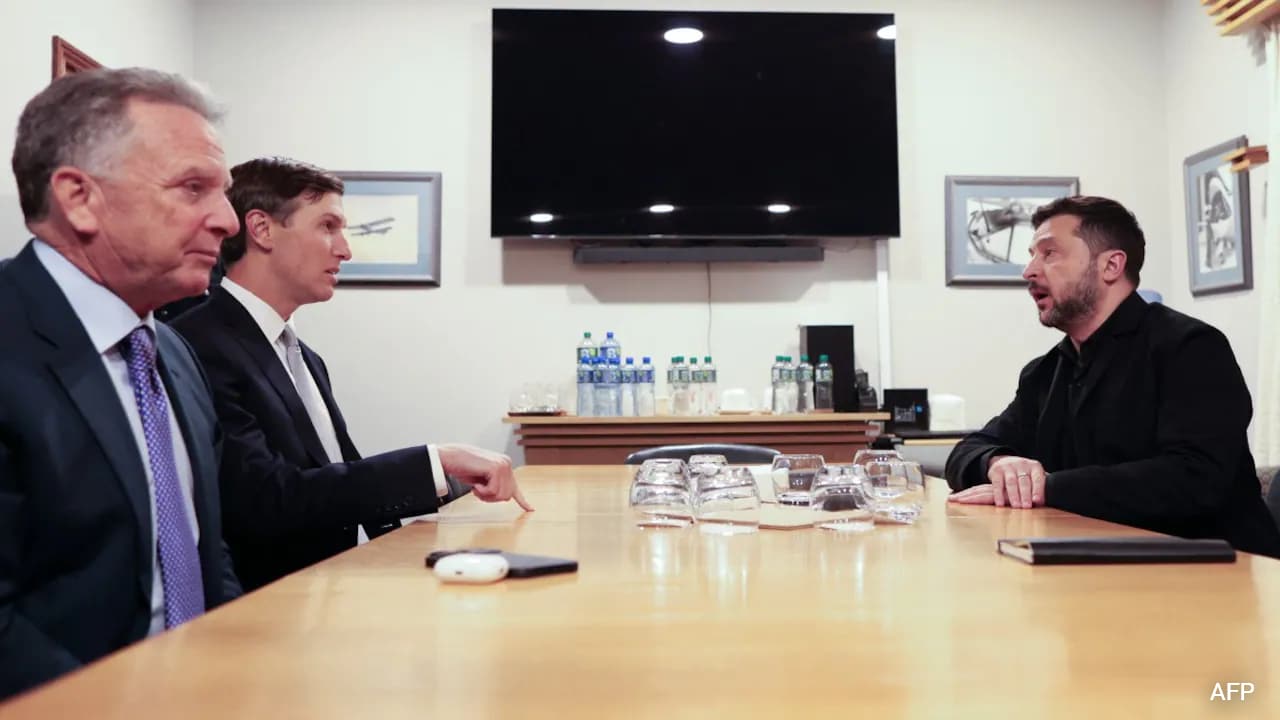
On November 12, 2026, President Donald Trump’s special envoys—Steve Witkoff and Jared Kushner—touched down at Casement Aerodrome in Baldonnel, west of Dublin, to brief Ukrainian President Volodymyr Zelensky. They'd just flown straight from Moscow after two days of U.S.-mediated talks in Abu Dhabi. And the message they carried from the Kremlin wasn't subtle. Putin had flatly rejected watering down his territorial demands and warned that any European peacekeeping troops sent to Ukraine after a ceasefire would become "legitimate targets". Meanwhile, you can read related stories here: The Five Seconds After the Sirens Fade in Washington.
Yet Zelensky stepped out of that Dublin meeting sounding strangely optimistic. Why? Because behind the wall of Russian intransigence, three concrete shifts actually took place—alongside a massive complication on the battlefield that barely made the front page.
Why US Envoys Met Zelensky After Putin Refused to Budge
Most wire reports framed the Dublin summit as a dead end. Putin said no to troop deployments. Putin insisted any settlement must lock in Russia's border across the four Ukrainian regions Moscow claimed to annex in 2022, even though Russian forces still don't fully control them. Case closed, right? To see the bigger picture, we recommend the excellent analysis by Associated Press.
Not quite. Shuttle diplomacy rarely works in straight lines, especially when the mediators are real estate executives rather than career Foreign Service officers. Witkoff and Kushner weren't flying from Abu Dhabi to Moscow to Dublin expecting Putin to sign a surrender document. They were testing what pieces of a framework could survive contact with reality.
Here's what actually came out of that 48-hour sprint:
- Europe finally got invited into the room. For months, European leaders watched nervously from the sidelines as Washington and Moscow discussed continental security without them. In Moscow, Witkoff and Kushner pressed Putin to accept European participation in the next round of negotiations. Putin agreed—with a catch.
- The largest prisoner swap of the war took shape. Both sides lined up an exchange expected to bring home more than 1,000 Ukrainian captives before the winter holidays. Zelensky called it a "real result," and honestly, in a conflict approaching its fifth year, getting a thousand people out of captivity isn't small potatoes.
- A contested humanitarian proposal surfaced. Putin floated a joint Russian-Ukrainian demining and humanitarian mission in Kostiantynivka, an eastern Ukrainian city sitting right in the teeth of the fighting. Ukrainian officials view that with deep skepticism, knowing Moscow often uses localized "humanitarian" corridors to freeze tactical gains.
So when you hear that US envoys met Zelensky after Putin signaled no compromise, understand the split screen. On core sovereignty and territory, Moscow didn't give an inch. On process and prisoner releases, the gears actually turned.
The Catch Inside Putin's Concession on Europe
Let's talk about that European seat at the table, because this is where Washington's strategy gets tricky.
During the European Political Community summit in Dublin—which drew leaders from more than 40 nations alongside NATO Secretary-General Mark Rutte—anxiety over being sidelined was palpable. Kushner acknowledged afterward that Washington "cannot conclude this deal without the Europeans being at the table". Zelensky echoed that, telling reporters Europe would join the next round as a full negotiating team rather than an outside observer.
Sounds like a win for transatlantic unity. Except both Moscow and Washington attached a condition that has European capitals scrambling: Europe has to pick a single representative to speak for the continent.
Think about European Union politics for five seconds. Getting 27 EU member states—plus non-EU players like the UK—to agree on one person to negotiate continental security with Vladimir Putin is like asking a committee to design a racehorse. Kremlin spokesman Dmitry Peskov immediately mocked the idea, saying Europeans "squabble like spiders in a jar" and ostracize anyone who talks to Moscow.
He's wrong about their motives, obviously. European leaders aren't stalling out of spite; they're alarmed because Putin wants to use these talks to rewrite Europe's entire security architecture and push NATO troops back from Russia's borders. French President Emmanuel Macron warned in Dublin that Europe needs a "clear and united vision" before walking into that room. Until Brussels, Paris, Berlin, and London settle on who holds the microphone, Putin's concession remains mostly theoretical.
What the Headlines Missed About Starshield and the Front Line
While cameras focused on the tarmac in Baldonnel, Zelensky dropped a technical bombshell that tells you way more about Ukraine's actual leverage than any diplomatic communiqué.
Right after meeting Witkoff and Kushner, Zelensky revealed that Ukrainian forces were experiencing fresh restrictions on Starshield—the military-grade version of SpaceX's Starlink satellite network. According to Zelensky, a Ukrainian military investigation found that speed limits capping Ukrainian drones at 161 kilometers per hour (100 mph) weren't random technical glitches. They were deliberate restrictions affecting the entire front line and hampering Ukraine's ability to intercept Russian drones.
Stop and connect those dots.
In modern warfare, cutting a drone's top speed in half blinds your air defense and stalls your strike capability. And that restriction hit right as Trump's envoys were shuttling between Abu Dhabi, Moscow, and Dublin. Around the same period, Washington had also waived certain Russian sanctions, struck a deal to import Russian diesel, and asked Kyiv to hold off on attacking Russian oil refineries—prompting Zelensky to publicly demand Patriot missile systems in exchange for a one-month pause on refinery strikes.
If you're sitting in Kyiv, the message from Washington feels contradictory:
- American envoys tell you they're pushing hard for a durable peace and European security guarantees.
- At the exact same time, pressure mounts on Ukraine's battlefield tools and energy infrastructure—especially with Russian strikes knocking out gigawatts of power generation heading into winter.
That tension explains why Zelensky keeps talking about a "window of opportunity" before 2027. He isn't banking purely on Kremlin goodwill. He's watching the political calendar—specifically Democrats taking control of the U.S. House in January 2027 following the midterm elections, alongside upcoming French presidential balloting. Kyiv is buying time, protecting its territorial red lines, and trying to lock in European backing before Washington's posture shifts again.
Why Russia Still Refuses to Discuss Energy Ceasefires
One detail from the post-Dublin briefings deserves way more scrutiny: Russia refused to discuss sparing Ukraine's power grid.
Even as negotiators floated prisoner swaps and follow-up online consultations between Kyiv, Washington, and European officials, Moscow kept winter energy infrastructure completely off-limits. For Putin, freezing Ukrainian cities in the dark isn't collateral damage—it's his primary negotiating lever. Why trade away your cheapest coercive tool when you believe time is on your side?
Meanwhile, Putin's demand that Ukraine surrender all of the Donbas and the other annexed territories runs straight into a brick wall in Kyiv. Zelensky has stated repeatedly that Ukraine won't sign away land in exchange for a piece of paper. Even if U.S. negotiators float formulas trading territorial concessions for Western security guarantees, Zelensky has made clear that any major compromise requires confirmation from NATO and EU allies—and ultimately a decision from the Ukrainian public itself.
You can't force a democratic leader to sign a deal his own population and military will reject on sight. Any ceasefire built on handing Russia cities it couldn't even capture on the battlefield wouldn't end the war; it would just give Moscow an operational pause to rearm while triggering a political crisis inside Ukraine.
How to Read the Next Round of Ukraine Peace Talks
If you're following these negotiations closely—whether for geopolitical analysis, energy market exposure, or policy tracking—stop judging progress by whether someone uses the word "breakthrough." Watch three concrete indicators instead:
- Who Europe names as its envoy. If EU leaders and the UK actually agree on a single negotiator for the next four-party session, talks are getting serious. If they keep sending rotating delegations, Moscow will continue stalling.
- Whether Starshield restrictions and air-defense deliveries loosen up. Keep an eye on U.S. Department of Defense aid announcements and statements from the Ukraine Defense Contact Group. Battlefield capability determines negotiating leverage way more than summit communiqués do.
- Execution of the 1,000-person prisoner exchange. If the swap happens cleanly before the end of the year, the Abu Dhabi backchannel has real traction. If it collapses over last-minute disputes, expect winter escalation to override diplomacy until spring.
Track those three signals directly through primary briefings from the Office of the President of Ukraine and official readouts rather than reacting to every anonymous leak from Moscow or Washington. Until Putin faces a cost high enough to reconsider his territorial demands—or European troops are backed by ironclad security commitments—shuttle diplomacy will keep moving between capitals without closing the distance between them.