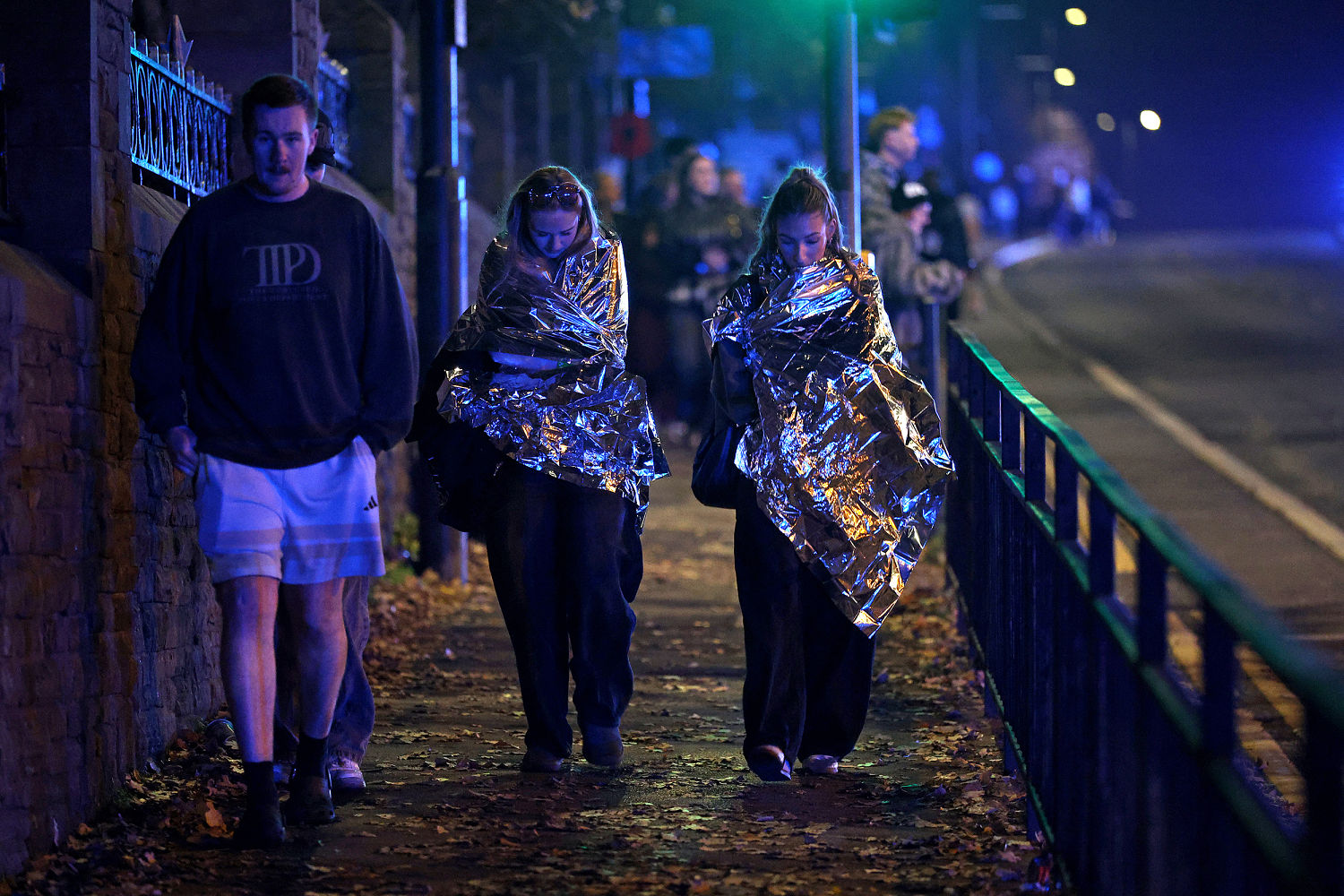
Standing shoulder-to-shoulder in a dark arena when people suddenly start coughing, covering their faces, and rushing for the exits is one of the fastest ways a night out turns terrifying. That exact scenario played out during U.S. rapper Don Toliver’s concert, forcing a sudden crowd evacuation after an unknown substance was released inside the venue.
When headlines break about an "unknown substance" clearing out a hip-hop show, the internet immediately jumps to wild theories. People speculate about everything from chemical attacks to pyrotechnic malfunctions before local police or venue management even finish their initial sweep. Honestly, having worked around live event operations and crowd safety protocols for years, I can tell you that the reality behind these incidents is usually far more specific—and points to massive blind spots in how indoor arenas handle modern concert security. For a different view, check out: this related article.
Breaking Down the Don Toliver Concert Evacuation
The incident unfolded mid-show during Don Toliver's performance, cutting the music and triggering an immediate clearance of the venue floor and stands. Concertgoers reported sudden respiratory irritation—coughing, watery eyes, and a sharp, stinging sensation in the throat—shortly before security and emergency responders stepped in to empty the building.
Once authorities cleared the floor, emergency medical teams evaluated affected fans outside while hazardous materials units and local police investigated the source. In indoor music venues, an unidentifiable airborne irritant leaves venue operators with zero margin for error. You don't wait around to run a lab test when thousands of people are packed into an enclosed space with recirculating air. You clear the room first and ask questions later. Further insight on this matter has been shared by E! News.
What makes this situation stand out isn't just the disruption to Don Toliver's tour schedule. It's how quickly an isolated release of a substance—whether pepper spray, bear mace, or a tampered vape cartridge—can paralyze an entire arena. One person acting recklessly in a dense general admission pit creates a localized cloud that rapidly spreads through the venue's ventilation system, turning a localized nuisance into a mass evacuation event.
Why Unknown Substance Alerts Happen More Often at Modern Concerts
If you feel like you're reading about concert evacuations more frequently than you did a decade ago, you aren't imagining things. Live music venues are dealing with a specific set of operational challenges right now, and standard metal detectors simply don't catch everything.
The Pepper Spray and Mace Problem in General Admission Pits
In almost every indoor concert evacuation involving an "unknown substance" that causes immediate eye and throat irritation, investigators eventually trace the source back to personal defense sprays like pepper spray or oleoresin capsicum (OC) spray. Sometimes someone deploys it during a fight in the pit. Other times, a canister attached to a keychain gets crushed in a mosh pit and discharges accidentally.
Here's the problem with security screening. Walk-through magnetometers are calibrated to detect dense metals like firearms and large knives. A small, mostly plastic canister of pepper spray tucked into a bag or waistband often slips right past standard checkpoint scanners unless security conducts thorough physical bag checks. Once that spray hits the air in a packed, sweaty crowd, body heat and upward air currents carry the aerosolized particles straight into the upper tiers.
High-Potency Vapes and Confined Ventilation
Another factor venue managers deal with constantly is the sheer volume of concentrated vaping devices inside closed arenas. While standard nicotine or cannabis vapes don't trigger mass evacuations, illicit or adulterated cartridges containing synthetic irritants or chemical solvents can produce harsh, noxious fumes that mimic a chemical leak.
When hundreds of people exhale vapor simultaneously in an arena whose HVAC system is struggling to keep up with body heat, air quality drops fast. A single bad cartridge in a tight pocket of the crowd causes immediate coughing fits, which triggers panic among people nearby who assume the worst.
The Psychology of Crowd Contagion
Crowd safety researchers, including experts like Dr. Keith Still who has spent decades studying crowd dynamics, emphasize that physical danger in a venue is rarely just about the hazard itself. It's about how information—and fear—moves through a crowd.
At a high-energy rap show like Don Toliver’s, the crowd is already compressed, loud, and visually disoriented by strobe lights and stage fog. When ten people near the front suddenly drop to their knees coughing, the people twenty feet behind them can't see why. They only see panic. Within seconds, that fear ripples outward, creating a secondary hazard that is often far more dangerous than the substance itself: a disorganized rush toward bottlenecks.
What Venue Security Actually Gets Wrong
Most major arenas follow a baseline security playbook written twenty years ago. They focus heavily on perimeter fencing, ticket scanning, and weapons detection. Those things matter, obviously. Yet they completely miss the realities of modern indoor crowd management.
First, communication during emergencies is consistently terrible. At too many shows, when an incident happens in the pit, the performer keeps singing for two or three minutes because nobody on the security radio network has a direct line to the front-of-house sound engineer or stage manager. Killing the music, bringing up the house lights, and putting a calm, authoritative voice on the PA system is the single fastest way to prevent a crowd crush during an evacuation. Delays cost critical seconds.
Second, air handling systems aren't integrated into emergency protocols. Modern arenas have sophisticated HVAC systems capable of flushing indoor air or isolating specific zones. Yet in most venues, the facilities engineer who controls the airflow isn't sitting in the security command post during a concert. By the time someone radios facilities to crank up the exhaust fans, the irritant has already circulated through the entire bowl.
Third, bag policies are enforced inconsistently. Venues love to advertise strict clear-bag rules, which sound great on paper. In practice, when doors open late and a line of three thousand fans is wrapping around the block in the cold, security supervisors routinely tell gate staff to "speed it up." Wands get waved faster, bags get glanced at instead of searched, and small aerosol canisters walk right through the front doors.
How to Protect Yourself When a Venue Evacuates
You can't control what other concertgoers bring into an arena, and you can't fix a venue's HVAC setup from the floor. You can control how you position yourself and how you react when things go sideways.
If you're attending a high-energy indoor show, take thirty seconds when you first walk in to locate two exits—not just the main concourse tunnel you walked through, because everyone else will run straight back to that exact spot. Look for the secondary emergency exit doors along the perimeter walls.
If you suddenly smell something sharp, metallic, or spicy, or if people around you start coughing for no obvious reason, don't wait to see what happens. Cover your nose and mouth with the inside of your shirt collar—not your bare hands—and move laterally away from the center of the crowd before heading toward an exit. Moving sideways gets you out of the direct flow of a crowd surge while still moving you toward clean air.
Keep your hands up near your chest in a loose boxer's stance if the crowd gets tight. This simple posture protects your ribs and preserves a few inches of breathing space even if people press in from behind.
Once you get outside the building, keep walking at least a block away from the exit doors. Stopping right outside the gates to film on your phone or wait for friends blocks the path for thousands of people still trying to get out behind you, and it prevents paramedics and fire crews from reaching the entrance. Pick a specific landmark down the street with your group before the show starts so you aren't relying on overloaded cell networks to find each other when an evacuation clears the building.