The Hong Kong Investment Corporation just posted a fourteen percent net internal rate of return for 2025, bringing in over six billion Hong Kong dollars in total investment income. This represents an increase of one hundred and seventy-five percent compared to the previous year. On paper, this is an extraordinary victory for a government-backed investment vehicle that was only established a few years ago. The state-run fund, managing an initial pool of sixty-two billion Hong Kong dollars, is celebrating these figures as proof that its slow-burning investment strategy is working. Yet, behind the triumphant headlines lies a far more complex and risky story of state-directed capitalism trying to replace a departed generation of global venture capital.
Sovereign wealth operations are rarely simple. For a more detailed analysis into similar topics, we recommend: this related article.
When the local administration grouped several existing municipal funds under a single corporate umbrella in late 2022, the goal was not just to make money. It had a dual mandate to secure financial returns while simultaneously anchoring high-value technology industries within the city. This strategy represents a radical departure from the historic laissez-faire economic model that transformed the former British colony into a global financial hub. By directly picking winners in sectors like quantum computing, biotechnology, and commercial aerospace, the city is betting that public capital can build a brand-new industrial core from scratch.
The True Anatomy of the Fourteen Percent Return
Understanding where these massive returns actually came from requires looking past the aggregate figures. The corporation's annual report reveals that a significant portion of its gains came from early-stage listings and biotech valuations. Out of more than two hundred backed projects, ten portfolio companies have gone public in Hong Kong, while thirty more are actively preparing their listings. For additional information on this issue, detailed coverage is available on MarketWatch.
This pipeline is not entirely organic.
+------------------------------------------+-----------------------+
| Financial Metric                         | Reported Value (2025) |
+------------------------------------------+-----------------------+
| Total Investment Income                  | HK$ 6.4 Billion       |
| Year-on-Year Growth Rate                 | 175%                  |
| Net Internal Rate of Return (IRR)        | 14%                   |
| Total Initial Deployable Capital         | HK$ 62 Billion        |
| Total Cumulative Backed Projects         | 200+                  |
+------------------------------------------+-----------------------+
The local stock exchange has introduced specific listing rules, such as Chapter 18C, designed specifically to allow pre-revenue specialist technology companies to list. Critics argue that these public listings are being heavily facilitated by the same government apparatus that funds the companies in the first place. When a state fund backs a company, directs it to list on a state-run exchange, and utilizes state-backed market makers to support the listing, the resulting valuation boost can look spectacular on an annual balance sheet.
Paper wealth is highly volatile.
In the venture capital world, a high internal rate of return is only as good as the cash exits it eventually generates. If these newly listed entities face thin trading volumes and falling share prices once lock-up periods expire, the current double-digit gains could evaporate. The fund has kept the exact names of many of its top-performing private holdings close to its chest, citing commercial sensitivity. This lack of granular disclosure makes it difficult for outside analysts to verify if these gains are sustainable or merely the result of generous internal valuation models applied to early-stage rounds.
Replacing the Absent Western Capital
The backdrop to this state-funded investment push is a dramatic shift in the region's capital makeup. For decades, the city served as the primary gateway for American and European venture capital flowing into mainland Chinese technology startups. Rising geopolitical tensions, regulatory shifts in Washington, and economic restructuring in Beijing have largely brought that era to a close.
The money dried up.
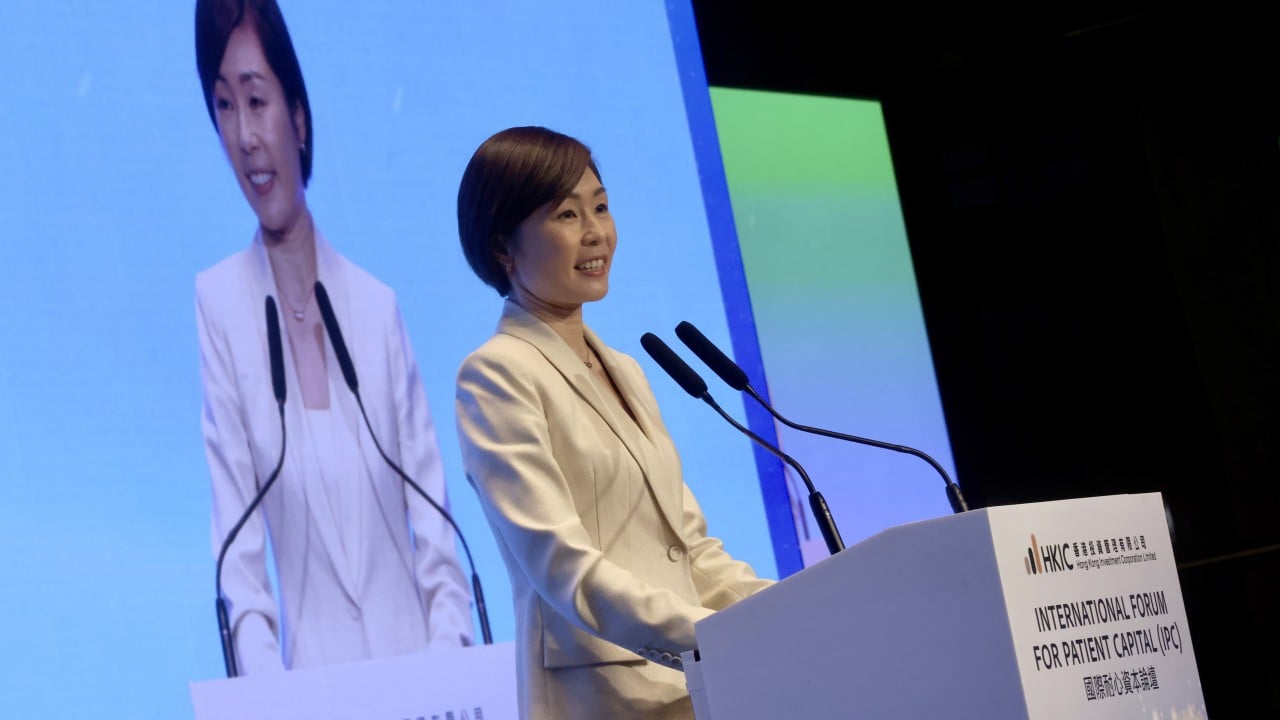
Private equity funding in the region has dropped significantly from its peak years. The local investment corporation was conceived as a vital backstop to fill this massive funding void. By stepping in as an anchor investor, the fund aims to signal safety to other regional investors, particularly those based in the Middle East and Southeast Asia. The chief executive, Clara Chan Ka-chai, has made it clear that the fund is looking to coordinate more closely with international sovereign wealth funds to co-invest in local projects.
This strategy is a double-edged sword.
Private venture capitalists are driven by a single, uncomplicated goal: maximizing financial returns within a fixed fund lifecycle. A state-run fund burdened with a dual mandate must balance financial success with political and social objectives. It must ensure its portfolio companies create local jobs, establish research facilities in the city, and align with broader national development policies. This complex set of requirements can sometimes force companies to make operational decisions that are politically compliant but commercially suboptimal, potentially dragging down long-term competitiveness.
The Strategic Push into Frontier Science
According to its latest reports, the corporation is shifting its focus deeper into highly complex, capital-intensive technologies. This includes investing heavily in next-generation artificial intelligence, brain-computer interfaces, commercial space exploration, and quantum computing.
These are not short-term bets.
                  ┌─────────────────────────────────────────┐
                  │       HKIC Portfolio Allocation         │
                  └────────────────────┬────────────────────┘
                                       │
         ┌─────────────────────────────┼─────────────────────────────┐
         ▼                             ▼                             ▼
┌──────────────────┐          ┌──────────────────┐          ┌──────────────────┐
│  Hard & Core Tech│          │  Biotech/Health  │          │ New Energy/Green │
│  (RISC-V, Semi)  │          │  (Therapeutics)  │          │  (Sustainability)│
└──────────────────┘          └──────────────────┘          └──────────────────┘
Developing a viable commercial aerospace company or a brain-computer interface requires hundreds of millions of dollars in capital expenditure before a single dollar of commercial revenue is ever generated. The investment corporation is positioning itself as the ultimate provider of patient capital, willing to wait a decade or more for these bets to mature.
While private capital fleeing riskier sectors might shy away from such long horizons, a government-backed entity has the unique luxury of time. However, this approach carries a high risk of technology obsolescence. In fields like quantum computing, a technology path chosen today could easily become obsolete in five years, rendering massive capital deployments entirely worthless.
The fund is also placing a significant bet on RISC-V technology.
RISC-V is an open-source chip architecture that has become central to China's efforts to build self-sufficiency in semiconductor design, especially in light of strict Western export controls on proprietary chip designs. By funding the development of the RISC-V ecosystem in Hong Kong, the corporation is directly participating in the global technology race. This is a highly strategic move, but one that firmly places the fund in the crosshairs of ongoing global trade disputes.
The Geographic Focus and Spatial Integration
A key pillar of the corporation's plan involves integrating its investments with physical infrastructure projects inside the territory. Specifically, the fund is directing capital toward the Northern Metropolis. This massive development project near the border with mainland China is being built to serve as the city's new technology hub.
Spatial planning is now tied to investment strategy.
The goal is to ensure that companies receiving government funding do not just keep a nominal paper address in the central business district. Instead, they are expected to set up physical laboratories, advanced manufacturing lines, and regional headquarters within these newly developed northern zones.
This approach mimics successful industrial policy models seen in places like Singapore or Shenzhen, where state capital and physical land planning work in tandem to build industrial clusters. The challenge lies in execution. Building physical tech parks takes years, and there is always a danger of constructing highly expensive, empty infrastructure if the underlying companies fail to scale up or if talent cannot be attracted to live and work in these new areas.
Sovereign Risks and the Valuation Mirage
The underlying issue for any sovereign-backed venture fund is the pricing of risk. When a government entity dominates the local investment scene, it can inadvertently crowd out genuine private investors. If private venture funds see that the state is willing to fund companies at high valuations, they may simply walk away, leaving the state as the sole financier of its own technology ecosystem.
A closed loop is dangerous.
For the ecosystem to remain healthy, these companies must eventually prove they can win customers and raise capital outside of their home market. The corporation's plan to set up an offshore yuan venture capital fund is an attempt to address this issue. This offshore fund is designed to help Chinese technology firms expand into international markets using yuan-denominated capital.
It is an ambitious strategy to internationalize both local technology and the mainland currency simultaneously. Yet, the success of this offshore push will depend entirely on how foreign markets receive these state-backed firms. In an era marked by rising protectionism and intense scrutiny of state-connected capital, global expansion is no longer a simple matter of having a superior product.
The double-digit returns reported for 2025 are undoubtedly a welcome boost for the administration's economic policies. They suggest that the initial phase of pooling resources and making strategic bets has generated solid momentum. But the real test of this experiment lies ahead. It will not be measured by internal rates of return on paper, or by the number of tightly controlled listings on the local exchange. The ultimate measure of success will be whether these heavily funded enterprises can survive on their own feet in the highly competitive global market, without relying on a continuous supply of public capital.