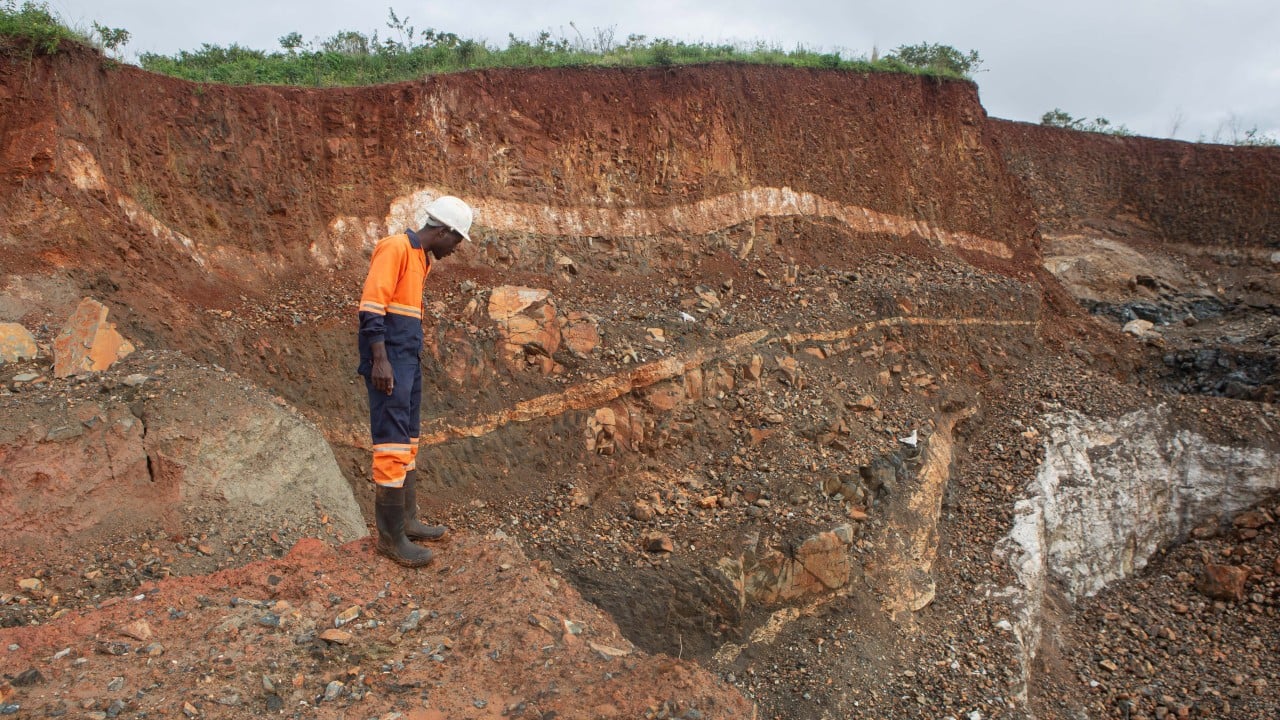
Zimbabwe upended the global battery supply chain when the government accelerated its planned resource nationalization strategy, introducing an immediate, sweeping embargo on the export of all raw minerals and lithium concentrates. The surprise directive caught major international mining cartels off guard by moving up a deadline originally slated for January 2027. State officials justified the intervention by citing persistent revenue leakages and under-declaration of mineral values by multinational firms. By abruptly cutting off the outbound flow of unrefined spodumene, Harare is betting everything on a high-stakes ultimatum: global tech and automotive supply chains must build advanced chemical processing refineries directly inside Zimbabwe, or they will lose access to Africa's largest lithium reserves entirely.
For decades, resource-rich African nations have fallen victim to the same economic trap. Raw ore is dug out of the ground, loaded onto ships, and sent across the ocean. The true economic value, high-paying engineering jobs, and manufacturing tax bases are created elsewhere—predominantly in China, Western Europe, and North America. Zimbabwe’s sudden policy shift attempts to shatter this dynamic by legislative force. It is an aggressive play to capture the industrial core of the global green energy transition rather than remaining its quarry.
The Chemistry of Resource Nationalism
To appreciate why Zimbabwe’s policy is causing panic in international boardroom meetings, one must understand the stark economic chasm between pulling rocks from the earth and manufacturing battery chemicals.
When a mining company excavates hard-rock lithium, it extracts a mineral called spodumene. Through basic crushing and flotation techniques at the mine site, this raw ore is upgraded into a spodumene concentrate, usually yielding between 5% and 6% lithium oxide ($Li_2O$). Historically, this concentrate was the final product shipped out of Zimbabwean ports like Beira or Durban.
The real money, however, lies in the next phase of metallurgical transformation. Converting spodumene concentrate into lithium sulfate ($Li_2SO_4$), and ultimately into battery-grade lithium carbonate ($Li_2CO_3$) or lithium hydroxide ($LiOH$), requires sophisticated chemical engineering, massive energy inputs, and specialized infrastructure.
| Material Stage | Approximate Value Per Ton | Processing Required |
|---|---|---|
| Raw Lithium Ore | $50 - $100 | Basic Excavation |
| Spodumene Concentrate (5-6%) | $1,500 - $2,000 | Crushing & Flotation |
| Lithium Sulfate (Intermediate) | $5,000 - $8,000 | Pyrometallurgical Roasting & Acid Leaching |
| Battery-Grade Carbonate/Hydrooxide | $15,000 - $25,000+ | High-Purity Chemical Precipitation |
By forcing a hard stop on concentrate shipments, Harare wants to capture that middle and upper tier of the pricing matrix. The state implemented a tiered export tax system specifically engineered to penalize raw exports while rewarding domestic chemical refinement. Under this framework, unrefined ore faces a 10% penalty tax, and spodumene concentrate faces an identical 10% levy. Conversely, advanced intermediate chemical products face a 0% export tax.
The policy pressure is already yielding structural adjustments. Major multinational consortiums have poured billions of dollars into Zimbabwean hard-rock assets over the last few years, making the country a vital pillar of global supply. Zimbabwe accounts for roughly 15% of the total spodumene imported into China. Companies that built these supply networks to feed integrated chemical refineries in mainland Asia suddenly found their captive supply chains severed.
Infrastructure Realities vs Political Mandates
Passing a decree in a capital city is simple. Building a chemical industrial complex in an economy plagued by systemic infrastructure deficits is a completely different challenge.
Refining lithium concentrate into battery-grade chemical components requires massive, uninterrupted electrical power and highly specialized chemical reagents. Zimbabwe’s domestic power grid has historically struggled with severe generation shortfalls, frequently forcing heavy industries to rely on expensive diesel generation or direct power import agreements from neighboring countries.
Furthermore, the processing of spodumene involves high-temperature roasting in industrial kilns, followed by complex acid leaching processes. This demands a reliable supply chain of chemical consumables, including high-purity sulfuric acid and sodium carbonate. Currently, most of these industrial inputs must be imported, adding significant logistical friction and cost to domestic operations.
Despite these headwinds, the sheer scale of the country's mineral wealth is forcing compliance. Major operators are shifting their investment capital toward domestic beneficiation plants out of sheer necessity. A primary example is the recent development at the Arcadia asset near Harare, which achieved a significant industry milestone by successfully exporting its first industrial shipment of locally processed lithium sulfate.
The facility represents a $400 million capital investment specifically designed to bridge the gap between raw mining and chemical refinement. Other dominant mining enterprises in the region, including operations at Bikita, Kamativi, and the Sabi Star project, are facing similar government ultimatums. They must present definitive, binding timelines to construct domestic chemical processing units or face strict export quotas that will idle their mining capacity.
The Global Price Ripple
The timing of the export ban has added intense volatility to a global market already reacting to structural supply shifts. Throughout late 2024 and early 2025, global lithium prices experienced a sustained correction due to temporary oversupply and a momentary cooling in Western electric vehicle adoption rates. Spodumene prices had bottomed out near multi-year lows, compressing profit margins for miners worldwide.
However, the abrupt suspension of Zimbabwean shipments acted as an immediate supply shock. By removing a substantial volume of vertically integrated material from the spot market, the embargo triggered a rapid tightening of available supply. Chinese chemical converters, suddenly deprived of their anticipated internal feedstocks, were forced onto the open merchant market to secure replacement tonnage.
This sudden structural deficit helped catalyze a sharp trend reversal. Market analyst forecasts for spodumene and lithium carbonate have been revised upward, driven by the realization that resource nationalism is no longer a theoretical risk, but an active operational disruption. The first-quarter financial metrics released by the Minerals Marketing Corporation of Zimbabwe demonstrated the immediate fiscal impact of this strategy. Total national mineral sales surged close to the $1 billion threshold, with the value of domestic lithium transactions skyrocketing by more than 100% year-on-year, even as overall volumetric growth remained modest.
Balancing Enforcement and Economic Capital
The ultimate success of Zimbabwe's industrial gamble depends on its ability to navigate a delicate regulatory balance. If the state enforces its export restrictions with absolute rigidity without addressing underlying systemic bottlenecks, it risks choking off the very capital inflows needed to build out the downstream industry.
Industrial operators require massive capital expenditure to build chemical plants. If project economics are undermined by power failures, logistical delays at border crossings, or arbitrary regulatory adjustments, international boards may freeze further investment. There is also the persistent challenge of illicit cross-border trade. When legal export avenues are heavily restricted or penalized, the economic incentive for informal smuggling increases, demanding rigorous, transparent institutional enforcement along border checkpoints to ensure mineral wealth enters the official state treasury.
Moreover, global battery technology is not static. While lithium-ion chemistries remain the undisputed standard for modern automotive and utility-scale energy storage, alternative technologies like sodium-ion and solid-state variations are progressing through commercial development cycles. If lithium-producing nations make raw material extraction prohibitively complex or expensive, they accelerate the global automotive industry's incentive to diversify into alternative chemical platforms.
Zimbabwe has chosen a path of aggressive state intervention to force its way up the global industrial ladder. By turning off the raw mineral tap, the country has proven it can move global commodity markets and compel major multinational corporations to construct domestic processing infrastructure. The coming years will determine whether this aggressive strategy successfully builds a sustainable, high-value manufacturing economy, or serves as a cautionary tale of regulatory overreach outrunning industrial reality.