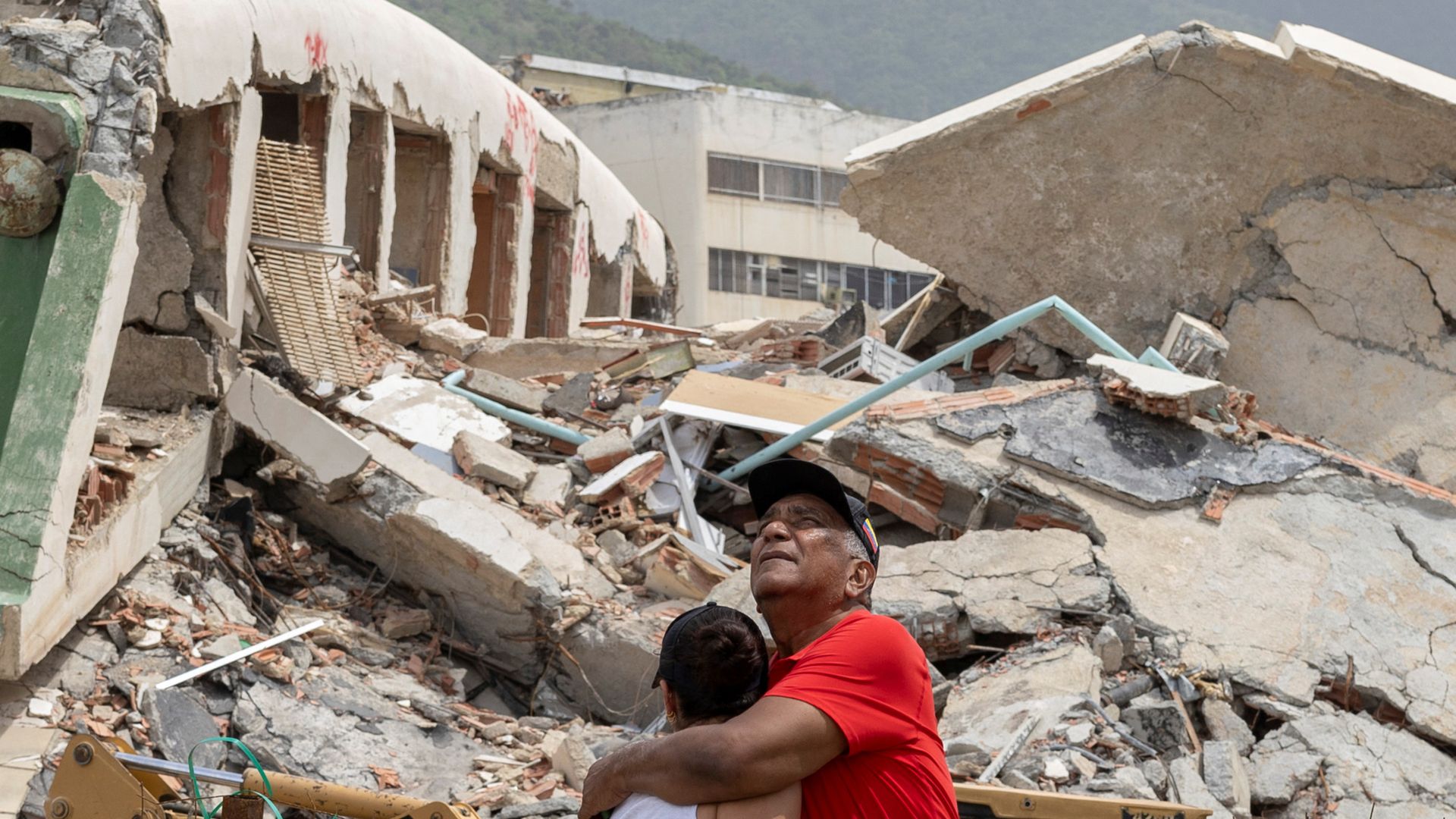
The death toll from the catastrophic twin earthquakes that struck northern Venezuela has climbed past 4,333, exposing a structural crisis far deeper than mere tectonic misfortune. On the evening of June 24, a rare seismic phenomenon known as a doublet—a magnitude 7.2 earthquake followed just 39 seconds later by a magnitude 7.5 convulsion—shattered the coastal state of La Guaira and the capital city of Caracas. More than 19,000 displaced people are now sleeping in open-air camps, plazas, and stadiums, while the United Nations estimates that a staggering 50,000 individuals remain missing beneath the debris.
While National Assembly President Jorge Rodríguez and interim leader Delcy Rodríguez scramble to secure international funding, the absolute obliteration of over 180 high-rise buildings and tens of thousands of homes cannot be blamed solely on the Caribbean and South American plate boundaries. The raw seismic energy was immense. But the underlying engine of this tragedy is decades of industrial decay, systemic corruption, and a complete evasion of structural building codes.
The Anatomy of a Modern Ruins State
To understand why modern multi-story apartment blocks flattened into neat sandwich layers of concrete, one has to examine what went into them. Venezuela sits atop the Bocono fault system, an active network fully capable of generating major tremors. Seismologists knew the risk. Yet, the physical infrastructure of the nation was systematically hollowed out long before the earth split.
The core vulnerability traces back to the domestic production collapse of basic building materials. For decades, the nationalized heavy industries responsible for manufacturing cement, iron, and structural steel operated at fractions of their historic capacities. When a state stops producing proper construction-grade materials, contractors cut corners.
Sand was mixed with substandard cement. Structural steel rebar was spaced too far apart or omitted entirely from load-bearing columns. The results were thousands of nominal concrete buildings that possessed no structural ductility. When the first 7.2 tremor hit, it cracked the brittle foundations. When the 7.5 shock followed 39 seconds later, the weakened pillars sheared instantly. The buildings did not sway; they dropped.
The Mirage of Emergency Infrastructure
Government officials have designated 40 plots of land, totaling roughly 584,000 square meters, on inland plains to build 25,000 new homes. They promise immediate placement in apartments that were already under construction before the disaster. This public relations pivot masks an ugly reality. The domestic state capacity to execute a civil engineering project of this scale is effectively non-existent.
Hospitals in the affected zones faced immediate blackouts because the electrical grid was already failing before June 24. Water systems, unmaintained for years, ruptured immediately, leaving rescue workers without the pressure required to suppress dust or provide basic hydration to survivors. The state has urged citizens to track missing relatives using VenApp, a digital portal previously utilized for political surveillance, highlighting a profound disconnect between bureaucratic survival and genuine disaster response.
The international community faces an ethical logjam. The Venezuelan administration has appealed directly to Britain to release billions of dollars in frozen gold reserves held in the Bank of England to bankroll the reconstruction. However, because foreign governments do not formally recognize the current political structure in Caracas, the legal status of those funds remains frozen.
The Rebuilding Friction
Foreign aid from nations like Türkiye has begun arriving, providing temporary medical tents and basic supplies. But temporary tents do not solve a $37 billion infrastructure deficit. Moving tens of thousands of survivors from coastal ruins to inland plains requires massive logistical coordination, functioning heavy machinery, and transparent supply lines.
Without a fundamental overhaul of how construction is regulated and how resources are distributed, the proposed new settlements risk repeating the exact structural flaws that led to the June 24 collapse. Building rapidly on new land without rigorous engineering oversight simply sets the stage for the next seismic cycle. The tragedy in La Guaira proved that when a nation's institutional foundations crumble, its physical structures are never far behind.