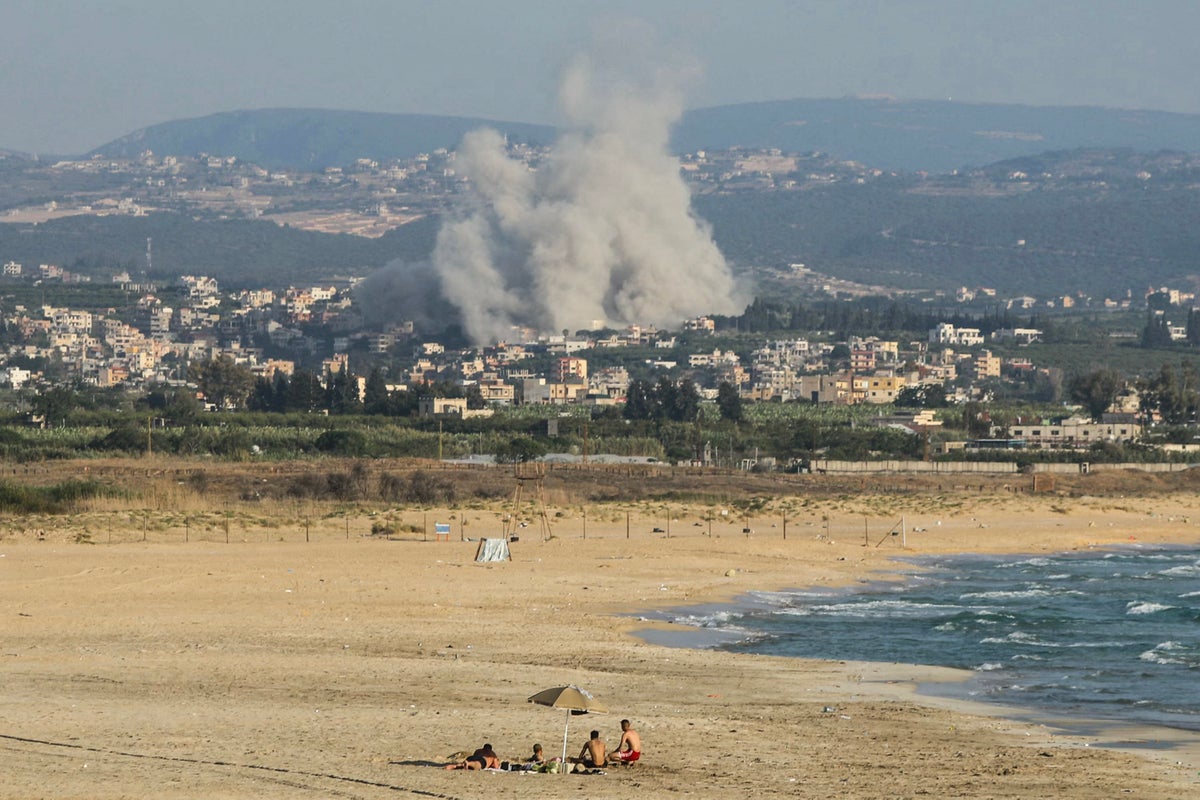
The white-hot friction between Washington and Jerusalem reached a boiling point this week when President Donald Trump declared he could wrap up a definitive peace treaty with Iran in just two or three days. This bold timeline comes directly on the heels of a massive Iranian ballistic missile barrage aimed at Israel, an escalation that threatened to smash the fragile April ceasefire. Trump dismissed the military display as an insignificant scuffle that has been going on for thousands of years, publicly warning Israeli Prime Minister Benjamin Netanyahu that he has no choice but to fall in line because Washington calls all the shots.
Yet the bravado radiating from the Oval Office masks a structural disconnect. The administration is treating a highly volatile, multi-front regional proxy war as a standard transactional corporate restructuring. While Vice President JD Vance pushes forward with secret diplomatic channels to finalize a grand bargain with Tehran, the ground reality in the Middle East is actively rewriting the script. Netanyahu is not a middle manager waiting for directives from a corporate headquarters in Washington. He is a survival-driven political actor facing existential threats, domestic legal peril, and an unyielding defense establishment that views any Western accommodation of Iran as a direct threat to Israeli survival.
The primary query dominating global capitals is straightforward. Can a US-Iran peace deal actually hold when the region’s primary military power openly defies the logic behind it? The answer is no, not under the current parameters.
The Illusion of Absolute American Leverage
The friction point between Trump and Netanyahu exploded out into the open following a leaked telephone conversation. The president reportedly delivered a blistering, profanity-laced tirade, reminding the Israeli prime minister that his political survival was tethered directly to American backing. Trump’s public follow-up to the Financial Times left no room for ambiguity. He asserted that Israel would simply have to swallow whatever terms Washington dictates.
This view rests on an outdated geopolitical assumption that absolute military and financial dependency translates into absolute operational control.
Historically, Israel has consistently demonstrated a willingness to nod politely to American diplomatic initiatives while covertly or overtly executing its own security doctrines. During previous structural negotiations regarding Iran's nuclear program, Israel regularly launched unilateral kinetic operations, including targeted assassinations of scientists and cyber sabotage, specifically timed to disrupt Western diplomatic momentum.
Netanyahu’s domestic calculus further complicates the assumption of American leverage. He leads a fragile coalition government backed by hardline nationalist factions that view any concession to Tehran as an act of capitulation. For Netanyahu, defying a US president is often an effective domestic political strategy, framing him as the lone defender of the Jewish state against a naive international community. When Trump publicly orders Israel to stand down and refrain from retaliating against a salvo of ballistic missiles, he presents Netanyahu with an impossible choice. Submitting to Washington means risking the collapse of his government at home, while defying the White House risks isolating Israel from its vital geopolitical patron.
The Flawed Architecture of the Three Day Deal
The administration’s rush to secure a signature within days ignores the intricate mechanics required to make an international accord functional. According to leaked details of the ongoing talks, the proposed agreement hinges on two core pillars.
- Iran must agree to a strict moratorium on its nuclear development program and hand over its enriched uranium stockpile.
- In exchange, the US will dismantle its crushing economic blockade and drop opposition to regional transit initiatives.
This framework treats the entire Middle Eastern conflict as a bilateral dispute between Washington and Tehran. It deliberately separates the nuclear issue from the sprawling web of regional proxy conflicts that actually drive the daily violence.
[Tehran Central Command]
       │
       ├─► Hezbollah (Lebanon Front) ───► Continual Friction with IDF
       ├─► Houthi Rebels (Red Sea)   ───► Maritime Chokepoint Disruption
       └─► Syrian Paramilitaries    ───► Strategic Border Escalation
Iran’s newly installed Supreme Leader, Mojtaba Khamenei, has made a permanent Israeli regional ceasefire a non-negotiable precondition for any lasting deal with Washington. Tehran cannot simply deactivate its proxy network without undermining its own internal defense architecture. The Islamic Revolutionary Guard Corps uses these groups as a forward defense layer. Forcing them to disarm completely would strip Tehran of its primary asymmetric leverage against Western conventional military superiority.
Conversely, the US strategy seeks to force regional compliance by expanding the Abraham Accords, dangling the prospect of normalized Arab-Israeli relations and massive economic investments to convince Jerusalem to accept the deal. This approach overlooks the reality that economic incentives cannot neutralize deep-seated security anxieties. A brand-new high-speed rail network or a multi-billion dollar trade pact means very little to an Israeli defense establishment watching Iranian-backed militias entrench themselves along its northern border.
The High Stakes Gamble of the Naval Blockade
The administration’s backup plan should these rapid negotiations fail reveals the underlying fragility of the entire diplomatic push. Trump has stated that if the talks fall apart on their merits, the US will either launch targeted commando raids against remaining Iranian military installations or maintain an indefinite, total naval blockade in the Gulf of Oman.
The US Central Command has already demonstrated its willingness to enforce this strict posture. American naval forces recently intercepted and disabled an unladen oil tanker, the Palau-flagged M/T Marivex, as it attempted to breach the blockade and enter an Iranian port.
               [Persian Gulf]
                     │
             (Strait of Hormuz)  ◄── Iran Threatens Fees/Closure
                     │
             [Gulf of Oman]      ◄── US Navy Enforces Blockade
Enforcing an absolute maritime embargo is an incredibly resource-intensive military operation that carries an immense risk of miscalculation. Iran has already heavily militarized the Strait of Hormuz and floated plans to cooperate with regional neighbors like Oman to charge transit fees for all commercial shipping passing through the vital waterway.
If Washington attempts to convert a temporary economic squeeze into a permanent maritime siege, Tehran will almost certainly respond with asymmetric retaliatory measures. This would not look like a conventional naval engagement. Instead, it would involve swarms of low-cost loiter munitions, sea mines, and targeted drone strikes against commercial shipping infrastructure throughout the Persian Gulf. A single successful strike on a major international terminal, similar to the recent drone attack that briefly shuttered Kuwait's international airport, could instantly destabilize global energy markets and send insurance premiums for commercial vessels skyrocketing.
The Secret Channels Driving the Timelines
The frantic pace of the current diplomacy is driven by an awareness that the window for a managed settlement is rapidly closing. Vice President JD Vance has quietly signaled to international interlocutors that the US will pursue this nuclear framework regardless of Israel's official stance, recognizing that a protracted war of attrition serves neither American economic interests nor long-term global stability.
On the other side of the table, Iranian Parliament Speaker Mohammad Bagher Qalibaf has clarified that Tehran’s engagement is strictly focused on securing baseline structural security and sanctions relief, completely ruling out any broader normalization of relations with the West.
This narrow convergence of immediate interests is what Trump believes he can capitalize on over a weekend of intense dealmaking. The White House wants an exit strategy from a costly regional deployment, while Iran desperately needs to resuscitate its choking domestic economy. But a diplomatic document signed under these conditions is a house built on sand. It relies entirely on the assumption that both sides can control their respective allies on the ground.
The fundamental flaw in this top-down diplomatic approach is the belief that regional realities can be altered by sheer executive will. The direct exchange of fire between Israel and Iran this week proved that both actors possess the capability and the domestic incentive to bypass Washington's red lines whenever they deem it necessary. While Israel has temporarily paused its retaliatory strikes following a direct public demand from the White House, Netanyahu explicitly warned that any future fire from Tehran would be met with overwhelming, disproportionate force.
A piece of paper signed in Washington or Geneva will not change the structural realities of the Middle East. If the underlying security anxieties of Israel are brushed aside, and if Iran’s regional proxy network remains fully operational, any signed agreement will merely serve as a brief intermission before an even larger conflict. Washington can claim it calls all the shots, but the leaders dodging missiles on the ground will always retain the final veto.