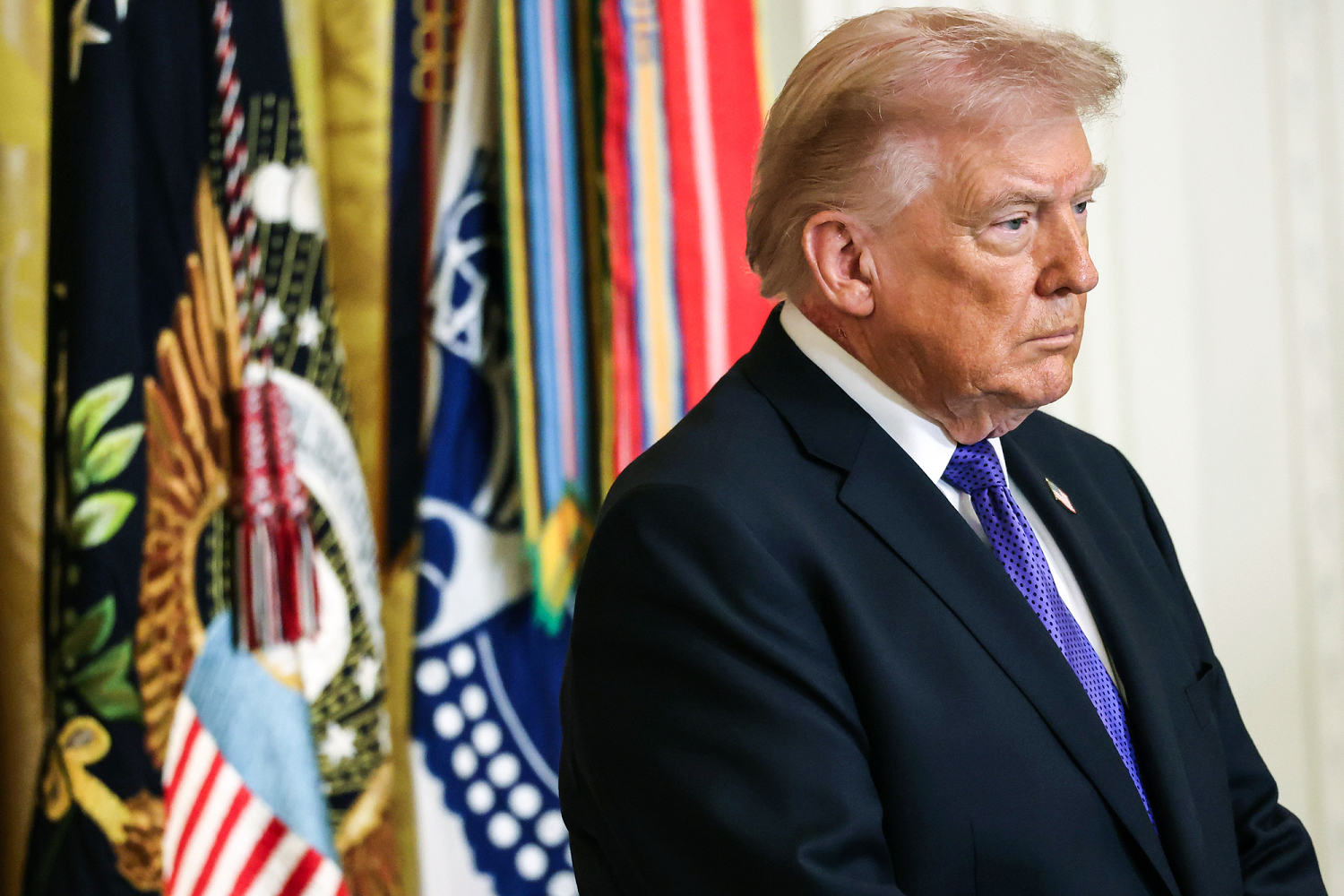
Donald Trump spent years telling you he was the only guy who could keep America out of "stupid" foreign quagmires. He built a whole political identity on being the "peace president" who would bring the troops home and stop the bleeding of American treasure. But here we are in March 2026, and the missiles are flying over Tehran. Operation Epic Fury isn't just a surgical strike; it’s a full-scale military campaign with no clear exit ramp and a commander-in-chief who now says wars can be fought "forever."
If you're feeling a sense of whiplash, you aren't alone. The disconnect between the campaign rhetoric and the current reality in the Middle East is staggering. Trump hasn't just entered a war; he’s rewritten his own playbook. The "America First" doctrine, which once meant staying out of other people's fights, has morphed into a policy of preemptive regime change under the guise of "maximum deterrence."
Why the Endless War Promises Evaporated
The shift didn't happen overnight, but the speed of the escalation has caught even seasoned diplomats off guard. During his 2024 campaign, Trump repeatedly slammed the "war-mongering" establishment. He promised he’d never go to war with Iran because he was the "ultimate dealmaker" who could get a better nuclear agreement than Barack Obama ever could.
But as the internal situation in Iran deteriorated through 2025, the calculation changed. Massive anti-regime protests across Iran, fueled by a collapsing economy and the crashing rial, created a vacuum. Instead of sticking to the isolationist script, the Trump administration saw a window of opportunity. The "dealmaker" decided that the best way to get a deal was to break the other side's back.
It’s a classic case of mission creep on steroids. What started as "pressure" became "annihilation." Secretary of Defense Pete Hegseth recently told the media to stop "screaming" about endless wars, arguing that this generation "knows better." It’s a bold claim when the administration simultaneously refuses to put a hard date on when the bombing stops.
The Killing of Khamenei and the Goal of Regime Change
Everything changed on February 28, 2026. A joint U.S.-Israeli strike didn't just hit a nuclear facility; it killed Supreme Leader Ayatollah Ali Khamenei and dozens of top Iranian officials. This wasn't an accident. It was a decapitation strike intended to trigger a total collapse of the Iranian government.
Trump’s objectives, as stated from his Truth Social posts and White House briefings, have shifted from "stopping a nuclear bomb" to:
- Annihilating the Iranian Navy.
- Destroying all ballistic missile launch sites.
- Forcing a "peaceful merger" of the IRGC with "Iranian patriots."
- Total regime change.
The problem with regime change is that it’s rarely a "four to five week" process, despite Trump’s optimistic projections. History is littered with "quick" operations that turned into decade-long occupations. By targeting the very top of the Iranian leadership, the U.S. hasn't just ended a threat; it has created a chaotic power vacuum in a country of 88 million people.
The Massive Miscalculation of Iranian Resilience
The White House seemed to bet on the Iranian people rising up and welcoming the strikes as a liberation. While there is plenty of internal dissent in Iran, foreign bombs have a funny way of uniting a population—or at least its most radical elements.
Instead of folding, the "radical core" of the Iranian security establishment is doubling down. We’ve already seen retaliatory strikes against U.S. bases in Qatar, Saudi Arabia, and Kuwait. Three American service members have already been killed. Oil prices are swinging wildly, and Qatar has even paused natural gas exports after their facilities were targeted.
Trump claims the war will actually lower oil prices in the long run. Honestly, that sounds like wishful thinking when the Strait of Hormuz is a literal graveyard for tankers. If you’re looking for a timeline, don't hold your breath. Trump’s latest rhetoric—that the U.S. has "unlimited" ammunition and can go "far longer" than expected—suggests he’s prepared for a slog, even if he won't admit it to his base.
Breaking the MAGA Foreign Policy Consensus
This war is creating a massive rift in the "Make America Great Again" movement. For years, the MAGA base was defined by its opposition to the George W. Bush-style interventions. Now, they see their leader executing a strategy that looks remarkably like the 2003 invasion of Iraq.
Prominent influencers who once cheered Trump for avoiding new wars are now openly critical. They’re looking at the mounting costs—both in terms of military spending and the risk of a wider regional conflagration—and wondering where "America First" went. Trump is betting that a "quick win" will silence these critics before the 2026 midterms, but "quick" is a relative term in the Middle East.
The Nuclear Negotiating Table is a Ghost Town
Before the bombs fell, there were reports from mediators in Oman that Iran was ready to make massive concessions. They reportedly offered a deal better than the 2015 JCPOA, including lower enrichment levels and access for American oil companies.
Trump walked away. He wanted the "Ultimate Deal," but he seems to have decided that a deal signed in the rubble of Tehran is more valuable than one signed in a conference room in Geneva. It’s a high-stakes gamble. If the regime doesn't collapse and the war drags into 2027, he won't be the "peace president" anymore. He’ll be the president who started the war he promised to prevent.
What Happens Next
If you're trying to figure out how this ends, look at the "off-ramps" the administration is quietly discussing. They want a scenario where they can claim the Iranian threat is "obliterated" and leave before the "nation-building" starts. But you can't kill a Supreme Leader and expect the country to fix itself.
Expect more "ferocious" waves of attacks in the coming weeks. The administration is essentially trying to bomb Iran into a state of surrender that allows for a face-saving withdrawal.
Watch for these developments:
- Oil Volatility: If the Strait of Hormuz remains contested, expect gas prices to stay high, regardless of White House optimism.
- The Midterm Factor: If the conflict isn't "won" by the summer of 2026, the political pressure on Trump from his own party will become unbearable.
- Israel’s Role: Watch how closely the U.S. remains tethered to Israeli military objectives, which may extend far beyond what Trump’s base is willing to support.
The "endless war" isn't a theory anymore; it’s the current reality. If you want to understand where this is going, stop listening to the campaign speeches and start looking at the carrier strike groups.
I can help you break down the specific economic impacts of the 2026 Iran conflict on global energy markets if you'd like to see how this affects your wallet.



