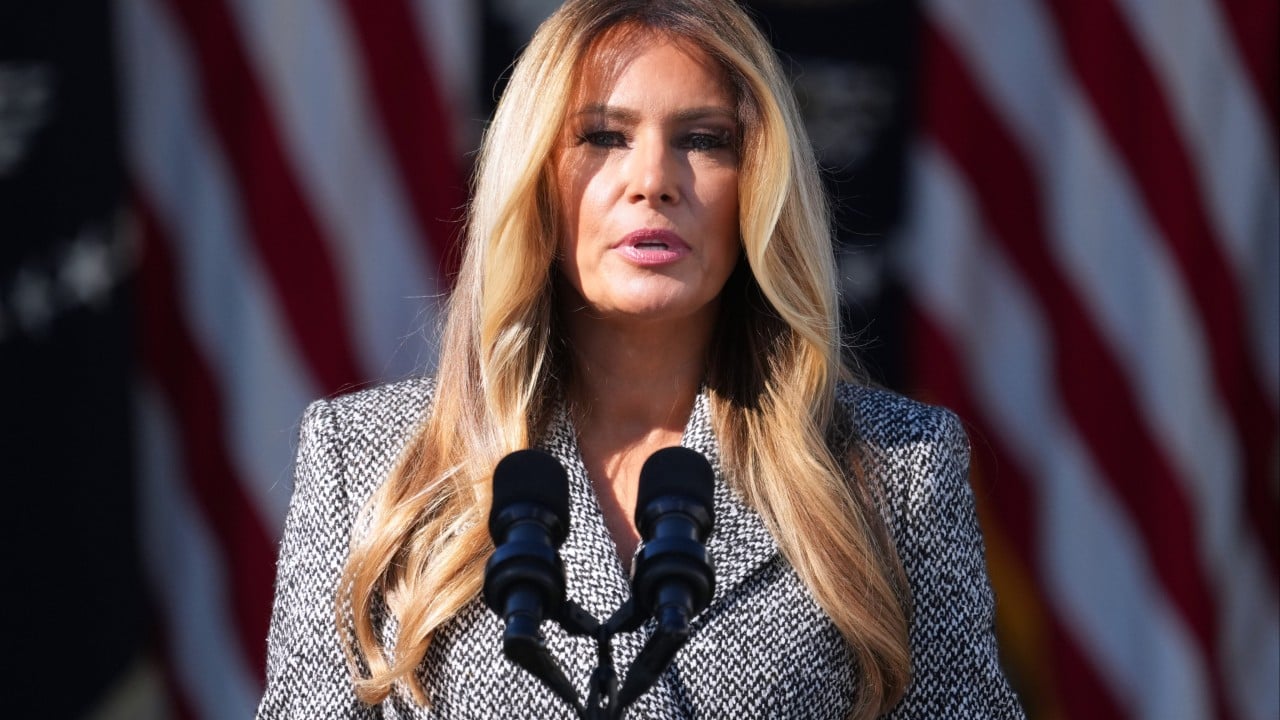
First Lady Melania Trump stepped into the center of one of the war's hardest front lines in late October 2026 when the White House announced a localized ceasefire in Oleshky, a flooded, Russian-occupied town across the Dnipro River from Kherson. Roughly 800 civilians were evacuated and aid moved into a ruined settlement where residents had gone without reliable power, heat, or running water.
What looks on paper like a straightforward humanitarian breakthrough carries sharper political incentives underneath. The truce arrived while relations between Washington and Kyiv were strained over throttled satellite communications, delayed Patriot interceptors, and friction over peace terms. By pairing a carefully bounded humanitarian operation with a White House gathering of Russian and Ukrainian officials on November 5, the East Wing projected motion and moral clarity without resolving the territorial or military deadlock.
Anyone who has watched crisis diplomacy for decades knows that temporary pauses in active fire rarely settle structural conflicts. They buy time, test channels, and reshape headlines. Whether Oleshky proves to be a durable precedent or a short-lived diplomatic stage depends on what happens once the cameras leave the riverbanks.
Why Oleshky Was Chosen as the Test Case
Oleshky did not become a focal point by accident. Captured by Russian forces at the outset of the full-scale invasion in February 2022 and devastated further when the Kakhovka Dam burst in June 2023, the town suffered catastrophic flooding across roughly 90 percent of its territory. Before the war, around 24,000 people lived there. By autumn 2026, only an estimated 1,700 to 2,000 remained—many elderly, isolated, and surrounded by mined roads, drone activity, and ruined infrastructure.
From a negotiator's standpoint, a near-ruined pocket along a contested river offers a narrower set of bargaining hurdles than a major industrial hub or an active offensive corridor. Both sides had reasons to tolerate a limited window there. Humanitarian access could address acute deprivation—shortages of food, medicine, and winter shelter—without forcing either Moscow or Kyiv to concede broader strategic positions along the southern front.
Ukrainian officials, including Human Rights Ombudsman Dmytro Lubinets, acknowledged that Kyiv had sought ways to address the plight of civilians in Oleshky for months and welcomed movement on evacuations. At the same time, Ukrainian volunteers and officials have warned that civilians left inside occupied southern settlements face acute risks and complicated dynamics on the ground. Moscow, which bears legal obligations as an occupying power toward civilians under its control, welcomed the First Lady's role publicly while treating the pause as a bounded arrangement rather than a surrender of control.
Mechanics on the Ground Versus Optics in Washington
Humanitarian pauses succeed or fail in the unglamorous details. Demining teams, route verification, convoy timing, and clear rules for how residents choose whether to head toward Ukrainian-held territory or Russian-controlled areas determine whether civilians actually get out safely. Melania Trump emphasized that residents wishing to leave would receive coordinated support and transportation to their preferred destination, alongside an American media presence—with Newsmax among outlets noted as participating—to observe the process.
Yet there is a wide gap between an evacuation corridor and a political settlement. A localized truce can pull several hundred people out of harm's way and deliver urgent supplies, and that relief matters enormously to the families involved. Still, a temporary cessation of shelling in one battered town does not stop long-range drone and missile strikes, nor does it answer who governs Oleshky once the evacuation buses depart.
Soft Power Inside a Hardened Dispute
First ladies have long used humanitarian themes—children's welfare, medical aid, family reunification—to step into spaces where formal diplomatic protocols feel rigid. Melania Trump leaned heavily on that approach, highlighting prior family and child reunification efforts and carrying personal letters to both Vladimir Putin and Volodymyr Zelenskyy when representatives met at the White House.
Humanitarian framing gives participants room to talk without calling the meeting a peace treaty. A Russian envoy or Ukrainian lawmaker can sit in the same room to discuss evacuations and humanitarian logistics without conceding sovereignty or political legitimacy. That is useful diplomatic choreography. It is not a substitute for enforceable security guarantees or verifiable demilitarization.
The Wider Friction Behind the Truce
Look closely at the timing and you see why the Oleshky announcement drew intense scrutiny. While the First Lady spoke of turning a modest spark into something more enduring, President Donald Trump and senior officials were pressing Kyiv on negotiations while friction persisted over U.S. support, including limits affecting Starshield and Starlink connectivity and pending Patriot air-defense interceptors. European allies, meanwhile, remained skeptical of Moscow's broader intentions as winter approached and energy infrastructure came under heavy pressure.
A hypothetical example illustrates the tension at work. Imagine a town cut off by river fire where two rival commanders agree to hold their guns for six days so ambulances can cross a single bridge. Every patient pulled from a flooded basement is a real life saved. If the truce ends and artillery resumes on day seven while major disputes over weapons supplies and borders remain untouched, the underlying war equation barely shifts.
That tension does not make the Oleshky evacuation meaningless. It simply means observers should judge the effort by what it actually achieved—relief for roughly 800 evacuees and a narrow channel of communication—rather than treating a localized pause as proof that the broader conflict is turning toward resolution.
What Real Progress Would Require Next
If Oleshky is meant to be more than a one-off headline, the standard for measuring follow-through is straightforward. Repeatability matters far more than rhetoric. A single six-day window in one heavily damaged town shows that ad-hoc coordination is possible when incentives align for a few days; expanding that model would require clear verification, predictable protection for aid workers and civilians, and no retaliation against residents who choose one direction over another.
Skepticism is warranted whenever high-profile diplomacy leans on symbolic gestures during a grinding war. Track the quiet logistics—whether demining holds, whether aid reaches those left behind, and whether hard security questions move forward in serious talks—rather than the speeches in the East Wing.
Melania Trump calls for 'enduring' Ukraine truce as rivals meet at White House
This video report covers the White House meeting following the Oleshky ceasefire and shows how officials framed the localized truce alongside ongoing diplomatic efforts.


