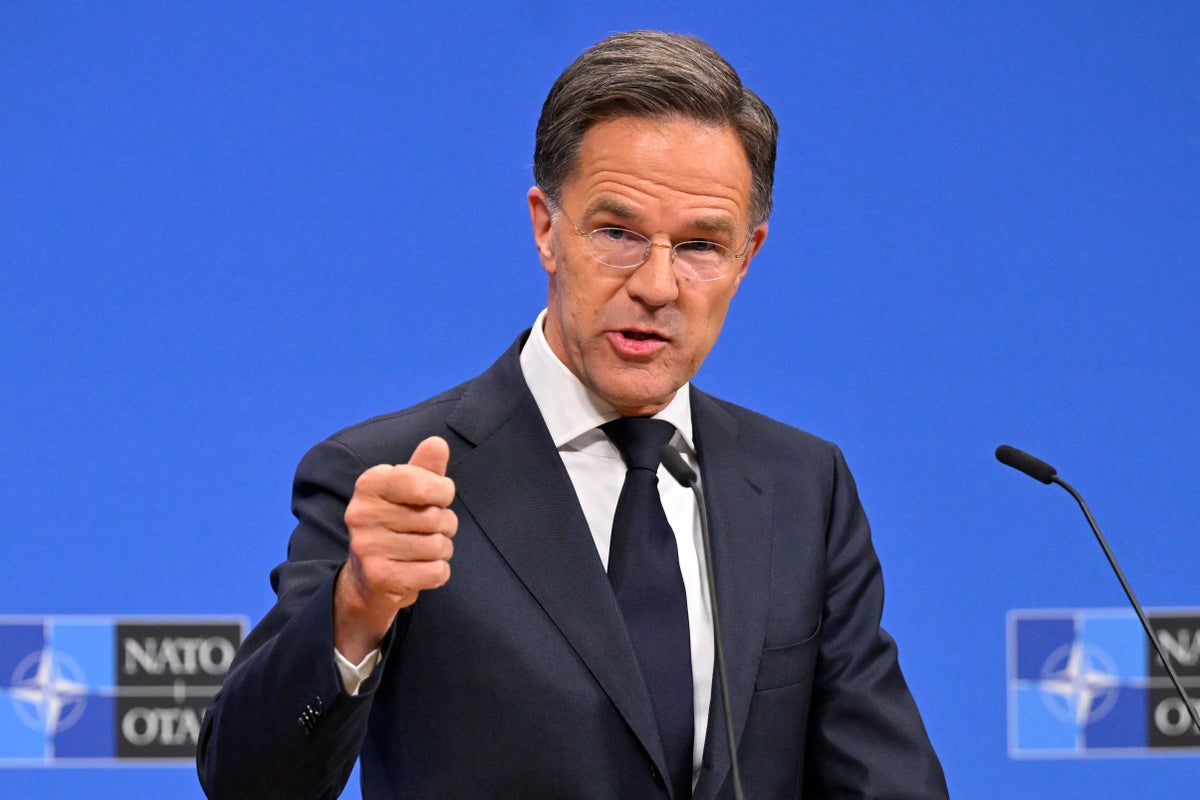
NATO Secretary General Mark Rutte has chosen submission over confrontation. Facing a public blistering from United States Defense Secretary Pete Hegseth in Brussels, Rutte refused to defend European sovereignty, instead labeling American threats to withdraw military assets as a prudent mechanism to keep the pressure on. This capitulation is not a failure of diplomacy, but a calculated survival strategy for an alliance that realizes its primary benefactor is actively drawing up an exit plan. By validating Hegseth’s description of the alliance as a paper tiger, Rutte has signaled that Europe will accept any amount of public humiliation if it keeps American hardware on the continent.
The immediate fallout from the Brussels ministerial meeting reveals an alliance operating in two entirely different realities. On one side stands a Trump-led Pentagon demanding a total restructuring of transatlantic defense obligations, furious over Europe’s refusal to support recent American military operations against Iran. On the other side are European defense ministers scrambling to patch together a credible deterrent while their collective safety net is pulled out from under them.
The Brussels Ambush and the Iran Fractures
The confrontation at the North Atlantic Council was meticulously planned by Washington to maximize discomfort. Hegseth did not offer the traditional diplomatic platitudes that usually grease the wheels of allied summits. Instead, he used his opening address to accuse European capitals of free riding on American taxpayers while actively sabotaging American strategic objectives.
The core of Washington's fury stems from the spring military campaign against Iran. Multiple European allies denied overflight rights and base access to American strike aircraft, a move Hegseth branded as shameful. From the American perspective, Europe expects unconditional protection under Article 5 but refuses to lift a finger when Washington requires operational flexibility in secondary theaters.
The strategic divergence is structural. Western Europe views NATO strictly as a regional shield against Russian revanchism. The Pentagon increasingly views it as a global utility that must support American power projection, particularly as the broader American military focus shifts toward countering China in the Indo-Pacific. When European nations blocked American bombers from using their airspace to strike Iranian targets, they drew a line that the current White House has no intention of respecting.
Hegseth’s response was an ultimatum disguised as a policy review. The Pentagon is initiating a six-month assessment of all American troop deployments and military assets across Europe. This is not a routine audit. The explicit goal is to make future American military presence conditional on European defense spending and operational compliance.
The Immediate Stripping of the Force Model
The threat is already materializing in tangible, dangerous ways. The Pentagon has confirmed immediate reductions to the assets it makes available to the NATO Force Model, the framework designed to handle a sudden continental crisis.
Military planners are looking at a massive drawdown. The proposed cuts include up to a third of the 150 American F-16 and F-15 fighter jets currently designated for European defense missions. More critically, the US is scaling back specialized assets that Europe fundamentally cannot replicate in the short term, including aerial refueling tankers, long-range reconnaissance aircraft, heavy bombers, and strategic surveillance drones.
Without American tankers, European fighter fleets are functionally grounded during long-duration operations. Without American reconnaissance, the alliance loses its eyes along the Baltic and Black Sea frontiers. Rutte attempted to dismiss these reductions as a mere planning adjustment, claiming that if a shooting war actually started, all allies would max out their capabilities. That is wishful thinking. A military alliance cannot build an integrated defense posture on the fly during an active invasion.
The immediate withdrawal of these assets creates a vacuum that European capitals cannot fill by simply writing checks. Procurement takes years. Shipyards and aircraft factories across the continent are already choked by supply chain bottlenecks and labor shortages. The American assets leaving Europe this season cannot be replaced by European defense contractors before the decade is out.
Why Rutte Chose Quiet Acquiescence
Rutte’s refusal to fire back at Hegseth is rooted in a clear-eyed, almost desperate assessment of European vulnerability. A public spat with the Pentagon would only accelerate the American withdrawal. By playing the role of the reasonable manager who welcomes tough love, Rutte hopes to manage a volatile administration while buying European capitals the one commodity they lack, time.
The numbers tell the story. While Rutte boasted that Europe and Canada have added $90 billion to their defense budgets compared to previous years, the internal distribution of that money is highly uneven. Poland and the Baltic states are spending well above 3% or even 4% of their economic output on defense, driven by immediate existential dread. Meanwhile, major economic engines like Spain, Italy, and parts of Western Europe continue to lag behind, struggling to meet even the baseline targets established years ago.
The Pentagon is no longer willing to accept promises of future compliance. Hegseth made it clear that Washington is grading allies individually. Those that fail the upcoming six-month posture review will see American assets removed from their soil. Those that pass, like Poland, which is receiving an additional 5,000 American troops, will be rewarded. This approach effectively slices up the principle of collective defense into a series of transactional bilateral agreements.
NATO Defense Spending Reality (Selected Members)
=========================================================
Country        Current % of GDP    Strategic Position
---------------------------------------------------------
Poland         4.0%+               Rapidly Arming / Passing US Review
Germany        2.1%                Meeting Base / Lacks Deep Stocks
Spain          Under 1.5%          Lagging / Primary Target of US Anger
=========================================================
This strategy places Rutte in an impossible position. His job is to maintain the illusion of a unified alliance. Yet, the largest shareholder of that alliance is openly using a divide-and-conquer strategy to force compliance. If Rutte defends the laggards, he risks alienating Washington completely. If he agrees with Hegseth, he validates the dismantling of NATO's core foundational premise, that an attack on one is an attack on all, regardless of that member's defense budget.
The Deep Malady of European Defense Industrial Strategy
Europe’s current vulnerability is the direct result of thirty years of deliberate de-industrialization. Following the collapse of the Soviet Union, European governments cashed in what they called the peace dividend. They treated defense budgets as social welfare funds to be cut whenever a domestic budget shortfall arose. Armed forces were downsized, heavy armor divisions were disbanded, and the industrial infrastructure required to manufacture artillery shells, missiles, and tanks was allowed to rot.
The war in Ukraine exposed the depths of this negligence, but it did not cure it. Despite the rhetoric flowing out of Brussels, the European defense industrial base remains fractured along national lines. Every European country wants to protect its own domestic defense contractors, leading to a ridiculous duplication of effort and a complete lack of standardization. Europe operates multiple different types of main battle tanks and fighter jets, preventing the economies of scale that allow the American defense industry to dominate.
Hegseth’s attack hit a nerve because his diagnosis of a dependent Europe is accurate. The continent relies on the United States for satellite intelligence, strategic airlift, electronic warfare, and precision-guided munitions. If the United States pulls its specialized assets tomorrow, the combined armies of Europe would struggle to sustain a high-intensity conventional conflict for more than a few weeks before running out of basic ordnance.
The European response to this reality has been talk. For years, French officials have advocated for European strategic autonomy, a concept that envisions a self-sufficient European defense apparatus independent of Washington. But Paris has never provided the funding or the political consensus necessary to make that vision a reality. Eastern European nations, deeply suspicious of French and German commitment to their security, have consistently rejected autonomy, preferring to hitch their wagons directly to Washington, even an erratic Washington.
The Dangerous Illusions of the Ankara Summit
The upcoming NATO leaders' summit in Ankara is being billed as a turning point, a moment where the alliance will finalize its transition to a harder, more capable posture. The reality is that Ankara will likely be a theater of intense diplomatic bullying. The United States will demand that Europe formalize a commitment to spend up to 5% of GDP on defense, an economic impossibility for nations already saddled with massive debt burdens and aging populations.
The Dutch political style that Rutte brought to the Secretary General's office is designed for coalition management and compromise. He is a master of finding the lowest common denominator and presenting it as a victory. But that political skillset is completely unsuited for an era of raw power politics. The Pentagon is not looking for a compromise; it is looking for a transformation of NATO from a mutual defense pact into a tool for American global strategy.
If Europe complies with the American demands, it will mean cutting domestic spending on health care, pensions, and infrastructure to fund a massive military buildup. If Europe refuses, the American security umbrella will continue to contract, leaving the continent exposed at a moment of maximum geopolitical instability. Rutte’s silence in Brussels was the sound of a leader realizing that the era of choosing both social stability and American protection is over. The bill has finally arrived, and Washington is demanding immediate payment in full.