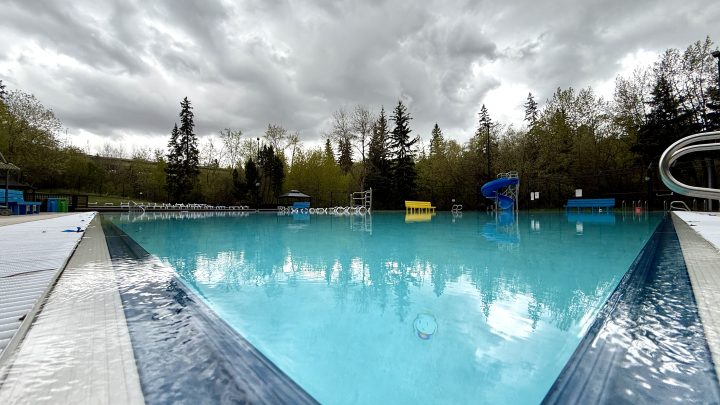
The City of Edmonton officially launched its 2026 outdoor pool season on May 20, starting a staggered rollout designed to get swimmers back into the water. Wîhkwêntôwin pool opened first, with Mill Creek following on May 23, Queen Elizabeth scheduled for May 30, Fred Broadstock on June 6, and the chemical-free Borden Natural Swimming Pool wrapping up the rollout on June 20. On the surface, the schedule promises a classic northern summer. Below the surface lies a complex logistical battle against shifting climate realities, infrastructure constraints, and the unpredictable wild card of Alberta air quality.
For a municipality situated this far north, operating a network of public outdoor pools is a high-stakes gamble. The operational window is brutal, squeezing a year's worth of community demand into roughly fourteen weeks. The City of Edmonton spends months preparing for this precise moment, deploying specialized maintenance crews to inspect piping, test water filtration mechanics, and balance chemical levels before the public ever touches the water.
The Hidden Logistics of the Summer Rush
Opening an outdoor pool in a northern metro area is not as simple as turning on a garden hose. The process begins during the final weeks of winter when subterranean frost lines still threaten structural integrity. Ground shifts can crack concrete basins or warp intake valves, requiring immediate engineering interventions that can delay openings by weeks if undetected.
Once physical safety is verified, the filling process begins. Millions of liters of municipal water must be treated and heated to operational standards. This massive draw on the city's water infrastructure requires careful balancing to prevent pressure drops in surrounding residential areas.
Financially, the city attempts to balance the books through structured entry fees. Single adult admission sits at $9.75, while families can utilize a household rate of $26.50 for up to seven people. To incentivize youth engagement, a subsidized summer pass program launches on June 11, offering unlimited access to fitness facilities and pools for under $35 a month. Yet, user fees only cover a fraction of the overhead. The remaining balance represents a direct taxpayer subsidy for public wellness, making every weather-related closure a hit to municipal efficiency.
The 18 Degree Rule and the Smoke Variable
The true vulnerability of Edmonton's outdoor aquatic infrastructure is its complete reliance on cooperative weather. The city enforces a strict operational baseline. If the ambient temperature drops below 18°C, public swimming is canceled. This rule protects patrons from hypothermia and guards staff against exposure, but it turns the scheduling system into a volatile guessing game for families.
Private groups, such as the Edmonton Masters Swim Club, operate under slightly different parameters, pushing through cold rain to maximize their highly limited lane allocations. But for the general public, a passing cold front completely empties the facility.
An even greater threat to the season is the modern reality of western Canadian wildfire smoke. Air quality index monitoring now dictates pool operations just as fiercely as temperature. The city monitors four distinct air quality stations across the municipal boundary. When fine particulate matter rises past safety thresholds, facilities shut down entirely. This is no longer an exceptional circumstance. It is an annual operational expectation that forces staff to recalculate attendance projections and labor costs on an hourly basis.
The Great Divide in Aquatic Design
Edmonton features a fascinating divergence in architectural philosophy across its five core sites. On one side stands traditional infrastructure like Queen Elizabeth and Fred Broadstock, relying on standard chlorine filtration to maintain sanitization. These facilities are predictable, highly accessible, and capable of handling intense weekend crowds without destabilizing the water chemistry.
On the other side sits the Borden Natural Swimming Pool, Canada's first public, man-made natural swimming basin. Instead of chemical interventions, Borden utilizes a biological filtration system consisting of plants, gravel layers, and natural microbes to purify the water.
While Borden offers an unmatched sensory experience for swimmers seeking a chemical-free environment, it represents a fragile ecosystem. The biological filters are highly sensitive to external contaminants. Heavy rainfall can wash organic debris into the basin, altering the nutrient balance and forcing temporary closures to let the natural filtration catch up. Furthermore, the facility requires strict pre-swim hygiene protocols from guests to prevent sunscreens and cosmetics from overwhelming the plant barriers.
Managing the Perimeter
As gates open, park rangers and facility staff face a heightened focus on facility security and safety. Edmonton's outdoor pools operate under rigid amenity restrictions. No outside alcohol is permitted under any circumstances, and staff maintain strict control over beverages entering the perimeter. Only unopened, factory-sealed drinks are allowed through the turnstiles. Anyone carrying an open container is required to empty it before entering.
This policy directly addresses the persistent challenge of maintaining safety on pool decks where hidden glass or illicit alcohol consumption introduces immediate liability. Exceptions are carved out for medical necessities and infant formula, but the general public faces zero flexibility.
The immediate test for the city will be staffing and distribution. Ensuring enough certified lifeguards are on deck during peak heat waves remains a national challenge, and Edmonton is not immune. When a heat wave hits, thousands of residents descend on these five locations simultaneously, testing the limits of crowd control and filtration turnover rates. The success of the 2026 season will not be measured by the optimism of opening week, but by how effectively the city manages the volatile intersections of climate, chemistry, and human behavior over the next three months.