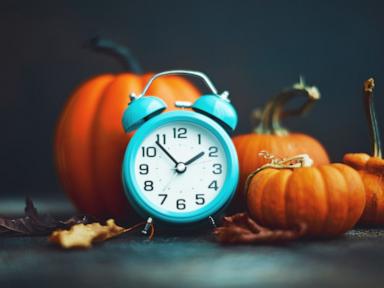
Daylight saving time 2026 ended on Sunday, November 1, at 2:00 a.m. local time, when clocks across most of the United States fell back one hour to 1:00 a.m. standard time. That mechanical adjustment restored an hour of morning light while pushing sunset abruptly earlier into the late afternoon.
Most news outlets treat this biannual ritual like a quaint reminder to change smoke detector batteries. They miss the larger story. Decades of federal inertia, intense regional lobbying, and misunderstood human biology keep millions of Americans locked into an artificial time-shifting cycle that sleep scientists have spent years trying to dismantle.
How the November Time Shift Actually Operates
Under the Energy Policy Act of 2005, which took effect in 2007, daylight saving time begins on the second Sunday in March and ends on the first Sunday in November. That expansion added roughly a month to the warmer-weather schedule, leaving the country on standard time for only about four months out of the year.
Not every state plays along. Hawaii and most of Arizona—excluding the Navajo Nation—stay on standard time permanently. U.S. territories including Puerto Rico, Guam, American Samoa, the U.S. Virgin Islands, and the Northern Mariana Islands also skip the clock change entirely. For everyone else, the November fallback marks the return to Standard Time, the baseline solar alignment where the sun sits roughly overhead at noon.
The Mechanics of the 2:00 a.m. Trigger
Lawmakers picked 2:00 a.m. on a Sunday for a practical reason. Few passenger trains run at that hour, bars in most jurisdictions have closed or are closing, and shift workers represent the smallest fraction of the active workforce. By rolling clocks back from 1:59 a.m. to 1:00 a.m., the federal government minimizes scheduling collisions for airlines, financial markets, and municipal transit systems.
Smartphones, computers, and connected appliances execute this rollback automatically via Network Time Protocol servers. Analog wall clocks, oven displays, and older vehicle dashboards require manual intervention. That split creates a predictable Sunday morning ritual where half the clocks in a household disagree until someone grabs a step stool.
The Biology Behind the Autumn Slump
Popular culture frames the November fallback as a gift. You gain an extra hour of sleep on Sunday morning, and the Monday commute suddenly happens in daylight instead of pitch darkness. Sleep researchers view that narrative with deep skepticism.
Human physiology runs on an internal circadian rhythm calibrated primarily by morning sunlight hitting specialized photoreceptors in the retina. When light enters the eye early in the day, it suppresses melatonin production and triggers a healthy spike in cortisol, signaling alertness and setting a timer for sleep roughly 14 to 16 hours later.
Standard time aligns closely with this biological clock. During the eight months of daylight saving time, delayed morning light forces millions of people to wake up and commute while their bodies still think it is the middle of the night. When clocks fall back in November, morning light returns, which actually helps realign human biology with the solar day.
Why Falling Back Still Feels Terrible
Even though standard time is healthier for human circadian alignment, the sudden one-hour shift creates immediate friction. People rarely bank that extra hour of sleep cleanly. Instead, many stay up later on Saturday night, wake up at their usual biological hour on Sunday morning anyway, and spend the following week waking up an hour earlier than their social schedules demand.
Then comes the afternoon crash. Because sunset jumps backward by sixty minutes overnight, people leave work or school in darkness. That sudden drop in late-day light exposure alters mood regulation and contributes directly to seasonal affective symptoms. Traffic data consistently shows a spike in pedestrian fatalities during the evening rush hour in the weeks immediately following the November rollback, largely because drivers and walkers have not adjusted to pitch-black conditions at 5:00 p.m.
The Economic Myth That Refuses to Die
Ask a casual observer why we still change the clocks, and they will likely mention farmers. That is historical fiction. Agricultural organizations actually lobbied fiercely against daylight saving time when Congress first introduced it during World War I. Cows do not read wall clocks, and dew on morning fields dictates when harvesting can begin regardless of what the courthouse tower says.
The true architects of modern daylight saving time are retail, recreation, and energy interests.
- Retail and Hospitality: Longer evening daylight encourages shoppers to linger in commercial districts after work rather than heading straight home. Golf courses, youth sports leagues, and outdoor dining venues generate measurable revenue gains when daylight stretches into the evening.
- Energy Consumption: Early advocates argued that shifting daylight into the evening would reduce electricity demand for household lighting. Modern grid data tells a far murkier story. While lighting demand drops slightly, air conditioning and heating usage often climbs, resulting in negligible net energy savings—and in warmer states, actual increases in electricity consumption.
Consider a hypothetical commuter living in suburban Ohio. Under daylight saving time in late October, she leaves her office at 5:30 p.m. with enough light left to stop at a strip mall or grocery store. The Monday after the November fallback, she walks out to her car in total darkness, drives straight home, and orders delivery instead. Multiply that single behavioral shift across tens of millions of households, and the commercial stakes become obvious.
Why Washington Remains Deadlocked on Permanent Time
If sleep scientists hate the biannual switch and ordinary citizens dread the winter darkness, why does Congress keep the system alive? Because lawmakers cannot agree on which clock to lock in permanently.
In March 2022, the U.S. Senate passed the Sunshine Protection Act by unanimous consent, a bill designed to make daylight saving time permanent nationwide. The legislation stalled in the House of Representatives and never reached the president's desk. Subsequent reintroductions have met the exact same fate.
The deadlock comes down to a fundamental clash between commercial preference and medical science.
| Policy Option | Primary Backers | Core Advantage | Major Drawback |
|---|---|---|---|
| Permanent Daylight Saving Time | Retail groups, golf and tourism lobbies, many voters | Brighter evenings year-round; no more clock changes | Sunrise occurs after 8:30 or 9:00 a.m. in northern winter cities |
| Permanent Standard Time | American Academy of Sleep Medicine, neurologists, school boards | Aligns with human circadian biology; safer morning commutes | Earlier summer sunrises around 4:30 a.m.; darker summer evenings |
| Current Biannual Switch | Status-quo inertia, competing regional coalitions | Balances summer evening light with winter morning light | Twice-yearly circadian disruption and administrative friction |
The United States actually tried permanent daylight saving time once before. In January 1974, amid an Arab oil embargo, President Richard Nixon signed emergency legislation keeping clocks forward through the winter to save fuel.
The experiment lasted less than a year. In northern cities like Detroit, Minneapolis, and Seattle, the sun did not rise until nearly 9:00 a.m. Parents watched their children walk to school in total darkness along icy roads. After a wave of public outrage and reports of morning traffic accidents involving schoolchildren, Congress repealed the measure in October 1974 and restored the winter fallback.
Geography Makes a National Consensus Nearly Impossible
A single time policy affects different corners of the same time zone in wildly different ways. Time zones span roughly 15 degrees of longitude, meaning the sun rises and sets about an hour later on the western edge of a zone than on the eastern edge.
Take the Eastern Time Zone. Boston sits near the eastern edge, while Indianapolis and Grand Rapids sit near the western boundary. Under permanent daylight saving time in late December, Boston would see sunrise around 8:13 a.m. Indianapolis would wait until roughly 9:05 a.m. for dawn.
Northern latitudes compound the problem. Southern states like Florida experience relatively mild seasonal swings in day length, making permanent daylight saving time attractive to local lawmakers. States along the Canadian border lose hours of winter daylight regardless of where the hands sit on the dial, turning any attempt to delay morning sunrise into a public safety liability.
Practical Adjustments to Survive the Post-November Shift
Until federal lawmakers break their stalemate—or individual states exercise their existing legal authority under the Uniform Time Act to opt out of daylight saving time altogether—households have to manage the biological fallout themselves.
- Anchor your wake time immediately: Wake up at your target standard-time hour on Sunday and Monday mornings rather than sleeping in to compensate for late nights. Consistent wake times stabilize circadian signaling faster than shifting bedtimes.
- Seek direct outdoor light before 9:00 a.m.: Step outside within thirty minutes of waking, even on overcast days. Outdoor ambient light delivers thousands of lux compared to a few hundred lux from indoor LED fixtures, shutting down residual melatonin production cleanly.
- Delay caffeine intake by 60 to 90 minutes: Allowing natural cortisol levels to peak and clear before introducing caffeine prevents the severe mid-afternoon energy crash that hits harder when sunset arrives at 4:45 p.m.
- Audit vehicle headlights and pedestrian visibility: Replace dim headlight bulbs and keep reflective gear near entryways for evening dog walks or runs, accounting for the sudden shift in commuter visibility.
The clock change every November is not a force of nature, nor is it an immutable law of physics. It is a political compromise drawn on a calendar more than a century ago, maintained by lobbying pressure and legislative gridlock while millions of people pay the price in lost sleep and dark afternoon commutes.