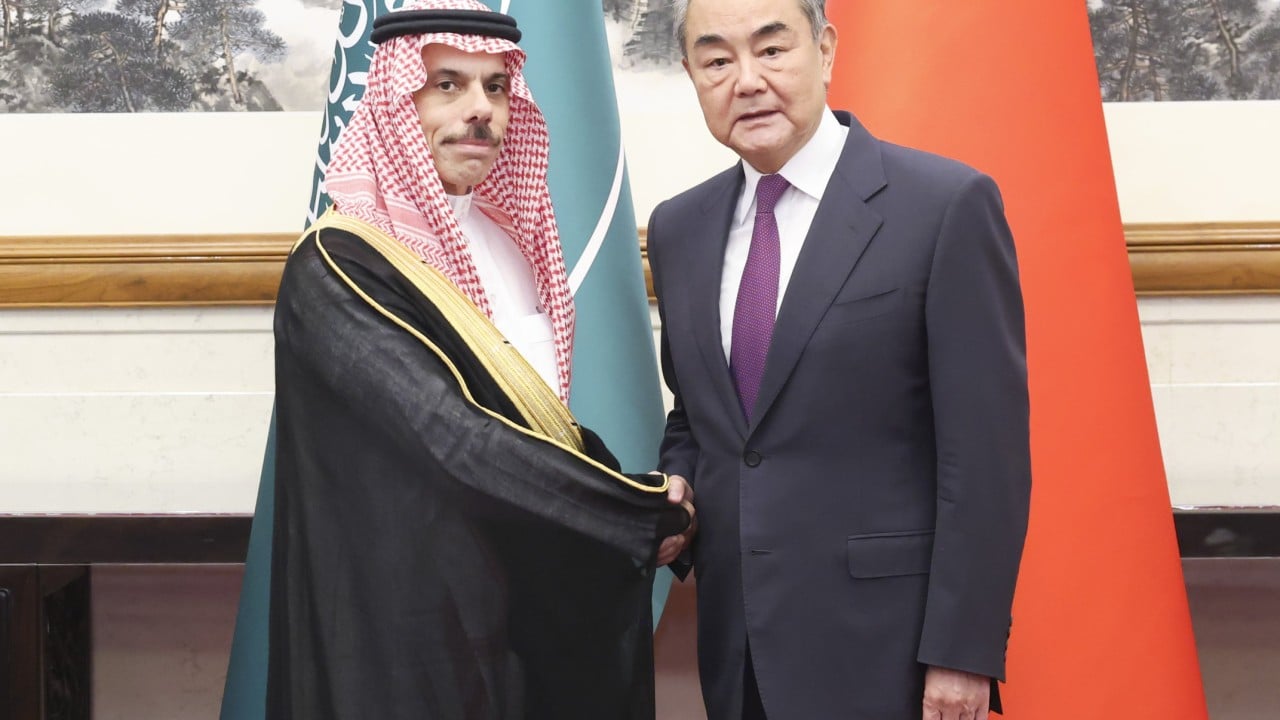
When Chinese Foreign Minister Wang Yi hosted his Saudi counterpart, Prince Faisal bin Farhan, in Beijing, the official communiqués carried the predictable language of diplomatic boilerplate. Beijing spoke of "maintaining the momentum of negotiations," while Riyadh praised China’s "constructive role."
Behind the choreographed handshakes lies an urgent reality. China is not acting out of altruism or a sudden desire to play global policeman. Beijing is scrambling to protect its economic lifeline. With the Strait of Hormuz teetering on the edge of renewed hostilities and a fragile ceasefire between Washington and Tehran showing signs of fracturing, China faces an existential threat to its energy security. Over 40 percent of China’s crude oil imports pass through that vulnerable maritime choke point. If the current U.S.-Iran negotiations collapse, China’s industrial engine faces immediate strangulation.
The Strait of Hormuz Choke Point
Diplomacy in the Gulf is always an extension of the oil markets. The timing of Prince Faisal’s two-day official visit to Beijing is tightly bound to unfolding drama in Doha and Switzerland. Following a conflict that disrupted shipping lanes earlier this year, the U.S. and Iran reached a tentative framework agreement under the Islamabad Memorandum.
Technical talks in Switzerland were supposed to solidify a permanent end to the hostiles. Instead, confusion reigns. While Washington claims direct talks are scheduled in Qatar, Tehran’s officials are publicly contradicting those assertions.
This diplomatic friction immediately registers as a threat in Beijing.
[Global Crude Oil Flows via Strait of Hormuz Choke Point]
China has spent the last decade building a deep trade relationship with Saudi Arabia, ballooning from $42 billion in 2016 to over $107 billion. Yet, all that economic integration matters little if the physical transit of oil is blocked by naval skirmishes or drone strikes. Wang Yi’s public declaration that "talking is better than fighting" is a direct message to both Washington and Tehran that Beijing will not tolerate a return to active warfare in the world's most critical energy corridor.
Riyadh Hedging Between Capitals
For Saudi Arabia, the trip to Beijing serves a different, highly calculated purpose. The kingdom is walking a geopolitical tightrope.
Riyadh still relies heavily on the United States for its security architecture. However, the political volatility in Washington forces the Saudis to diversify their strategic bets. By showing up in Beijing to discuss regional security, Prince Faisal sends a clear signal to the White House that Riyadh has alternative partners if American diplomatic efforts falter.
The economic reality reinforces this shift. Saudi Vision 2030 requires hundreds of billions of dollars in foreign investment to transition the kingdom away from pure oil dependency. China’s Belt and Road Initiative offers the capital and engineering capacity that Western firms, bound by strict ESG metrics and political scrutiny, are hesitant to provide.
This is not a sudden alignment of values. It is a transactional marriage of convenience. Saudi Arabia needs a reliable customer and an alternative superpower backer. China needs guaranteed, unhindered access to fossil fuels to power its domestic manufacturing.
The Illusion of the Chinese Peacemaker
Western analysts frequently mischaracterize China’s Middle Eastern diplomacy as an attempt to displace the United States as the primary security guarantor. That view overestimates Beijing's appetite for risk.
China loves the optics of mediation, such as the 2023 Iran-Saudi normalization deal, but it has no intention of deploying carrier strike groups to protect the Persian Gulf. Beijing wants the influence that comes with diplomacy without the immense financial and military cost of enforcing peace.
This strategy works only as long as the United States is willing to do the heavy lifting of policing international waters. If the current U.S.-Iran ceasefire breaks down entirely, China’s rhetorical support for talks will do nothing to stop anti-ship missiles or naval mines. Wang Yi’s hosting of the Saudi delegation is a sign of diplomatic anxiety, an admission that Beijing is highly vulnerable to regional shocks it cannot directly control.
The current peace framework remains incredibly fragile. If the technical talks in Doha fail this week, the resulting escalation will hit Beijing directly in its industrial heartland, proving that no amount of diplomatic hospitality can replace actual hard security on the water.