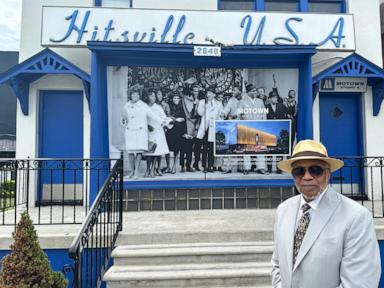
Detroit is betting $75 million that a localized monument to past glory can spark a modern economic resurgence. The Motown Museum expansion project, an ambitious multi-phase overhaul of the historic Hitsville U.S.A. site on West Grand Boulevard, aims to transform a modest collection of legacy buildings into a massive 50,000-square-foot international tourist destination. While early coverage frames this purely as a victory lap for the city’s musical heritage, the underlying reality is far more complex. This massive capital campaign is not just about preserving the past; it is a high-stakes play to anchor billions of dollars in neighborhood revitalization outside Detroit's rapidly gentrifying downtown core.
The expansion shifts the museum from a passive repository of memorabilia into an active commercial engine. To understand why this matters now, one must look at the geography of Detroit's comeback.
For the last decade, investment has flooded into Downtown and Midtown, creating a stark divide between a glittering central business district and the surrounding residential neighborhoods. The Motown Museum sits firmly in the latter, nestled in a community that has spent decades waiting for the economic promises of city leadership to materialize. By anchoring a major cultural institution here, organizers want to prove that tourism dollars can bleed past the standard downtown boundary lines.
The Financial Architecture of a Heritage Monopoly
Cultural tourism is a brutal business. Most independent museums operate at a loss, relying constantly on philanthropic lifelines to keep the lights on. The Motown Museum, however, holds a unique advantage: it owns the physical origin point of the most influential sound of the 20th century.
The $75 million expansion breaks down into three distinct phases, each designed to maximize revenue generation.
- Phase One: The completion of Hitsville NEXT, an educational programming hub housed in three transformed, historic townhouses. This facility serves as a pipeline for local talent, offering workshops in entrepreneurship, vocal performance, and audio engineering.
- Phase Two: The construction of a state-of-the-art outdoor plaza, designed to host community events, pop-up markets, and live performances, effectively creating a new public square on West Grand Boulevard.
- Phase Three: The final, massive footprint expansion that introduces an interactive indoor theater, immersive exhibit spaces, a retail experience, and extensive cafe operations.
This is a business model built on throughput. The original museum layout, centered around the famous Studio A, severely restricted visitor volume. Guests moved through cramped rooms in small, guided batches. It was intimate, but it was an operational bottleneck. The new architecture changes the calculus entirely. By creating a sprawling, interconnected campus, the museum can handle larger crowds simultaneously, keeping visitors on-site longer and, crucially, increasing the per-capita spend on merchandise and concessions.
The funding mechanism itself reveals a deeply calculated mix of corporate backing and public money. High-profile donations from Detroit icons like billionaire Dan Gilbert’s Rocket Community Fund, alongside major contributions from the Ford Motor Company Fund and the Kresge Foundation, anchor the private side of the ledger. On the public side, millions in federal and state grants have been funneled into the project. These entities are not writing checks out of pure nostalgia. They are investing in a regional anchor tenant intended to drive property values and commercial activity in the surrounding neighborhoods.
Preserving the Raw Edge of Hitsville
When a grassroots historic site scales up, it risks losing the very soul that made it valuable in the first place. The magic of Hitsville U.S.A. has always been its domestic simplicity. It was a home. Berry Gordy Jr. bought the property in 1959, lived on the upper floor with his family, and tracked global hits in the basement garage.
+--------------------------------------------------------+
|               Motown Museum Campus Layout              |
+--------------------------------------------------------+
|                                                        |
|   [Phase 1: Hitsville NEXT] -> Educational Programs    |
|               v                                        |
|   [Phase 2: Outdoor Plaza]  -> Public Events & Markets  |
|               v                                        |
|   [Phase 3: Main Expansion] -> Theater, Retail, Exhibits|
|                                                        |
+--------------------------------------------------------+
Architects face the daunting task of wrapping a modern, glass-and-steel tourist complex around these fragile residential structures without swallowing them whole. If the final product feels too polished, too corporate, the emotional connection evaporates. Visitors do not travel to Detroit to see a generic, shiny convention center; they come to stand in the room where the Funk Brothers played the basslines for Marvin Gaye and Stevie Wonder.
The danger of over-sanitization is real. In cultural preservation, there is a fine line between a monument and a theme park. The design team has repeatedly pledged to maintain the original buildings as the visual and emotional centerpiece of the campus, utilizing the new construction as a protective, supportive shell rather than an replacement.
The Local Neighborhood Reality
The grandest promises of the expansion project concern the surrounding neighborhood. For decades, the area around West Grand Boulevard has wrestled with blight, vacancy, and underinvestment. The museum's expansion is openly marketed as a catalyst for local economic development, but the actual mechanics of neighborhood stabilization are rarely straightforward.
Tourism-driven revitalization can be a double-edged sword for long-term residents. As a cultural destination grows, property values rise, attracts speculative real estate developers, and can inadvertently price out the very community members who stayed during the city's leanest years. The museum must navigate its growth in lockstep with local stakeholders to ensure that the economic windfall benefits neighborhood businesses, rather than just corporate vendors and out-of-town concessionaires.
True community integration means more than just hiring local staff for ticketing counters and security detail. It requires creating a symbiotic ecosystem where neighborhood restaurants, boutique shops, and community spaces thrive alongside the museum. If visitors simply bus in from downtown hotels, spend two hours inside the museum walls, and bus right back out, the expansion will have failed its most important civic metric.
The Intellectual Property Conflict
Behind the music lies a complicated web of ownership that complicates any legacy project. While the museum owns the physical buildings and an extensive archive of artifacts, the actual catalog of Motown hits—the music that draws people to the site—is owned by Universal Music Group. This separation between physical heritage and intellectual property creates a unique operational challenge.
Every immersive exhibit, every public performance, and every piece of digital media utilized within the expanded campus requires careful licensing and partnership management. The museum cannot simply broadcast the Motown catalog at will; it must continuously maintain an intricate, cooperative relationship with global entertainment conglomerates. This reality underscores the vulnerability of independent cultural institutions: they are custodians of history, but the monetization of that history is often controlled by corporate boards far removed from the city streets where the music was born.
The success of the $75 million expansion hinges on the museum's ability to leverage its physical authenticity against these corporate constraints. The physical space is something a streaming platform or a record label can never replicate. By doubling down on the tangible, geographical reality of the Motown sound, the museum asserts its relevance in a digital world.
The Blueprint for Post Industrial Renewal
The expansion of the Motown Museum is a critical test case for a broader urban theory: can a city leverage its cultural past to fund its economic future? Detroit has tried manufacturing revivals, casino gaming, and stadium-district construction with varying degrees of success. This project represents a shift toward capitalizing on cultural equity.
The project moves forward under immense scrutiny. The physical construction is only the first step. The true test will be the decades that follow, measured not in the number of tickets sold, but in the sustained vitality of the blocks surrounding Hitsville U.S.A. The stakes extend far beyond music history. If this expansion succeeds, it provides a replicable blueprint for post-industrial cities worldwide to reclaim their historic narratives and turn faded production hubs into vibrant, self-sustaining engines of cultural and economic growth.