Silence.
In a rural county bordered by dense hardwood forests and winding two-lane highways, silence is usually the main selling point, the very thing that makes people pack up their lives in louder cities and move to the edge of the map. You sit on your porch in the late afternoon, listening to the cicadas wind down and the distant hum of a tractor, secure in the unspoken agreement that the troubles of the wider world stop at the county line.
Then a siren wails in the distance, followed by another, and suddenly that quiet feels less like peace and more like isolation.
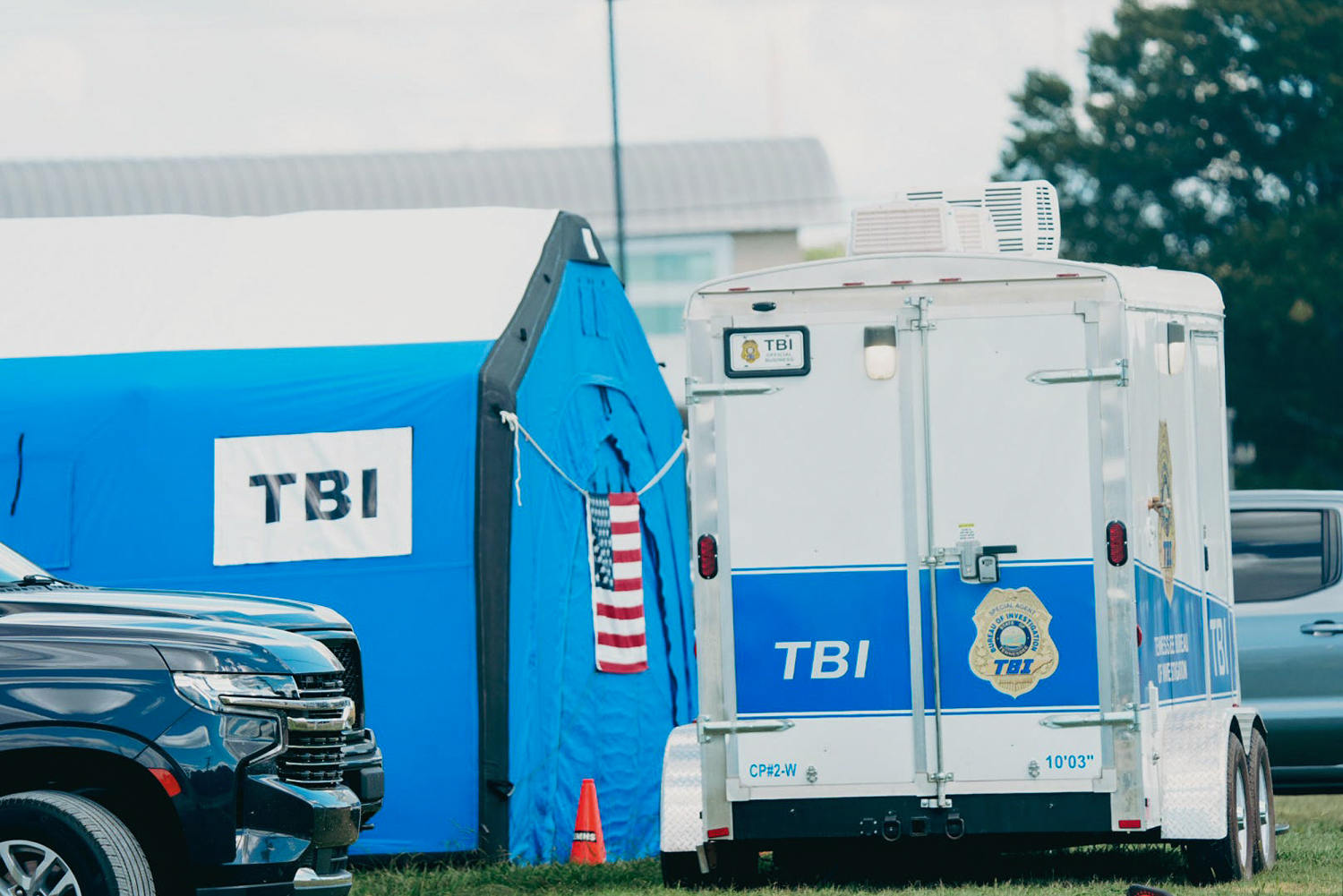
When news breaks that a convicted killer has escaped a Tennessee prison, the public receives a neat, sanitized package of facts. A press release goes out. A mugshot flashes across local television screens. Law enforcement agencies announce a multi-county manhunt, listing height, weight, tattoos, and the standard warning that the individual should be considered armed and dangerous. To the casual observer scrolling through their phone a hundred miles away, it is just another headline—a brief spike of adrenaline before moving on to the weather forecast or sports scores.
For the people living inside the search perimeter, however, the headline is not a piece of news. It is an immediate, suffocating reality.
The Architecture of False Security
To understand what happens when a maximum- or medium-security facility fails to hold someone who was never meant to walk free again, you have to understand the psychology of living near a prison. We like to think of correctional facilities as impenetrable fortresses—concrete monoliths wrapped in coiled steel, patrolled by armed guards in elevated towers, governed by strict protocols and unblinking surveillance.
That illusion is the only reason communities agree to host them. Prisons bring steady jobs to economically depressed areas, offering pensions and health insurance where factories used to stand. In exchange, the state makes an implicit promise: We will keep the monsters behind the wall.
Think of a prison perimeter not as a brick wall, but as a dam holding back a reservoir. Most days, the people living in the valley below don't even look up at the concrete. They plant gardens, send their kids to the bus stop, and leave their back doors unlocked while they run to the feed store. They trust the engineering. They trust the routine headcounts, the motion sensors, the layers of bureaucratic redundancy designed to catch a single human error before it becomes a catastrophe.
Until a crack appears.
Consider a hypothetical scenario—one that mirrors the exact terror unfolding across rural Tennessee whenever a walk-away or a fence-breach occurs. Imagine a Tuesday evening for a family living three miles from the correctional complex. Let's call them the Millers. Mark is fixing a leaky pipe under the kitchen sink while his wife, Sarah, helps their eight-year-old daughter with spelling words at the dining table. Their nearest neighbor is half a mile away, separated by a stand of thick oak and pine trees that swallow headlights whole.
At 6:15 PM, Sarah’s phone buzzes with an emergency alert. A convicted murderer—someone serving a life sentence without the possibility of parole—is unaccounted for following the evening headcount.
In an instant, the geography of their home changes. The woods out back, where their daughter builds forts out of fallen branches, transform from a playground into a hiding spot. The unlocked shed containing a splitting maul, a crowbar, and a spare set of keys to an old pickup truck suddenly becomes an armory and a getaway vehicle waiting to be claimed. Mark stops working on the pipe. He walks to the front door, turns the deadbolt, and then realizes how thin a pane of glass really is when someone on the other side has literally nothing left to lose.
What the Press Releases Leave Out
Having lived through the tense, sleepless days of a regional lockdown myself—watching state troopers set up roadblocks at the end of my own gravel road while helicopters beat the air into submission overhead—I can tell you that the official updates never capture the true texture of the event.
When authorities launch a manhunt for an escaped inmate, their public statements are calibrated to project control and prevent panic. They use clinical language. They talk about "perimeter containment," "canine tracking units," and "grid searches." What they don't talk about is the sheer, terrifying math of desperation.
A person serving decades—or the rest of their natural life—behind bars operates under a completely different set of rules than the rest of us. When they make the decision to go over a fence, slip out of a work detail, or exploit a blind spot in an aging facility's camera system, they are making a binary bet. Either they disappear, or they die trying. There is no middle ground, no fear of an added five years for escaping when your release date is already measured in lifetimes.
That psychological reality is what makes an escaped killer uniquely dangerous, even if they flee the facility without a weapon.
Law enforcement veterans and criminologists have studied these behavioral patterns for decades. Unlike a fugitive on the run from a white-collar crime or even a fresh street-level offense, an escaped prisoner has zero resources. They have no money, no phone, no valid identification, and no change of clothes. Within hours of clearing the perimeter, their basic biological needs become acute emergencies. They need water. They need calories. They need transportation to get outside the tightening ring of patrol cars, and they need clothing that doesn't scream convict.
Where do they get those things? From the people who live in the path of least resistance.
Every barn, every hunting cabin, every unlocked mudroom becomes a potential supply depot. And if a homeowner happens to walk into the garage at the exact moment a desperate fugitive is rummaging through a toolbox for a screwdriver to hotwire a truck, the resulting confrontation isn't driven by malice. It is driven by pure, cornered survival instinct. History has shown us, time and again, that a cornered fugitive will use whatever is within arm's reach to eliminate an obstacle between themselves and freedom.
Behind the Concrete Curtain
How does this happen in the modern era? How does someone convicted of taking a human life manage to slip through the fingers of a state corrections system equipped with thermal imaging, biometric scanners, and razor wire?
The uncomfortable truth—the one state officials rarely volunteer during press conferences—is that prisons are run by human beings, and human systems are chronically strained.
Across Tennessee and much of the American South, correctional departments have battled severe staffing shortages for years. When a facility operates at sixty or seventy percent of its mandated officer capacity, corners inevitably get cut. Mandatory overtime leaves guards exhausted, dulling their reflexes during routine cell checks. Towers go unstaffed to cover shortages inside the cellblocks. Aging infrastructure—broken motion sensors, overgrown brush creeping too close to exterior fences, blind spots created by new modular buildings—waits months for maintenance budgets that never quite stretch far enough.
An inmate has nothing but time. Twenty-four hours a day, seven days a week, they watch the rhythms of the facility. They notice which guard checks their phone at the top of every hour. They notice which gate stays unlatched for thirty seconds longer during shift change. They study the blind spots the way a chess grandmaster studies an opponent's weak pawn structure.
It doesn't take a Hollywood mastermind to break out of a prison. It just takes patience, an opportunity, and a system that blinked.
And once that breach happens, the clock becomes the enemy of every badge in the state. In the first hour after an escape, a person on foot can cover roughly three to four miles over flat terrain, or two miles through dense forest. By hour three, if they haven't been spotted, the search radius expands exponentially—from a few square miles to an area larger than most major cities. If they manage to steal a vehicle before roadblocks are established on the major arteries—Interstate 40, Interstate 24, or the labyrinth of state routes crisscrossing Tennessee—the manhunt shifts from a local containment operation to a needle-in-a-haystack pursuit spanning multiple states.
The Weight of the Wait
For the community caught inside that expanding circle, time slows to a crawl.
Schools go into soft lockdown, meaning the exterior doors are locked and recess is canceled, leaving parents debating whether to pull their kids out early or leave them inside buildings guarded by local deputies. Mail carriers skip rural routes. Evening church services and high school football practices are quietly canceled via text chains.
You find yourself listening to every sound with a hyper-vigilant intensity that leaves you exhausted by noon. Was that rustle in the dry leaves just a squirrel foraging for acorns, or a boot heel shifting weight? Why is the dog barking at the edge of the treeline? Did you remember to pull the keys out of the ATV in the pole barn?
I remember sitting in my living room during a similar search years ago, every light in the house turned off so anyone outside couldn't see movement through the windows, watching the blue and red strobes of a sheriff's cruiser wash silently across my front porch every twenty minutes. You feel foolish for being afraid, right up until you remember why the search party is out there in the first place. Fear isn't irrational when the threat is concrete, documented, and walking through your zip code.
And beneath the immediate fear for personal safety lies a quieter, deeper grief—the agony of the victim's family.
When a convicted killer escapes, the trauma of the original crime is violently resurrected for the people who already survived the worst day of their lives. Years after sitting through a grueling murder trial, after listening to graphic testimony and finally hearing a judge hand down a sentence meant to bring finality, they get a phone call from a victim services coordinator. He's out. The grief doesn't just return; it comes back sharper, laced with the terrifying realization that the person who destroyed their family might now have a reason to come looking for them.
When the Sirens Fade
Eventually, almost every manhunt ends the same way.
Statistically, the overwhelming majority of escaped prisoners are recaptured within days, sometimes hours. Modern law enforcement brings an overwhelming weight of technology to bear once the alarm is sounded. Infrared cameras mounted on helicopters pierce the canopy of the woods at night, turning body heat into glowing white silhouettes against a dark background. Bloodhounds follow scent trails hours old across creeks and rocky ridges. Tip lines flood with sightings from alert residents, narrowing the fugitive's world until there is nowhere left to hide—no barn left unsearched, no culvert unchecked.
Sooner or later, exhausted, dehydrated, and cornered in a ditch or an abandoned shed, the fugitive surrenders to a wall of drawn weapons, or forces a fatal confrontation.
The press releases go out once more. Suspect in custody. The roadblocks come down. The helicopters bank away toward their home airfields, their rotors fading into the hum of the afternoon cicadas.
The next morning, the Millers unlock their deadbolt. They walk their daughter down the driveway to meet the yellow school bus. Life resumes its quiet, familiar rhythm along the two-lane highways and the edge of the hardwood forests.
Yet something invisible has shifted in the soil of that community. You start checking the locks on the shed before you go to bed. You leave the porch light on until dawn. And every time you drive past that stretch of razor wire glinting in the Tennessee sun, you no longer see an impenetrable fortress—you just see a fence, and you wonder who is watching it from the inside.