Cold.
That is the first thing anyone notices inside a bonded warehouse at four in the morning, long before the harbor cranes wake up and long before a headline from Washington or Beijing reaches a breakfast table. The concrete floor holds the chill of the night air. Fluorescent tubes buzz with a thin, electric complaint. Somewhere in the back, a shrink-wrap machine ticks as it cools, smelling faintly of melted plastic and dust.
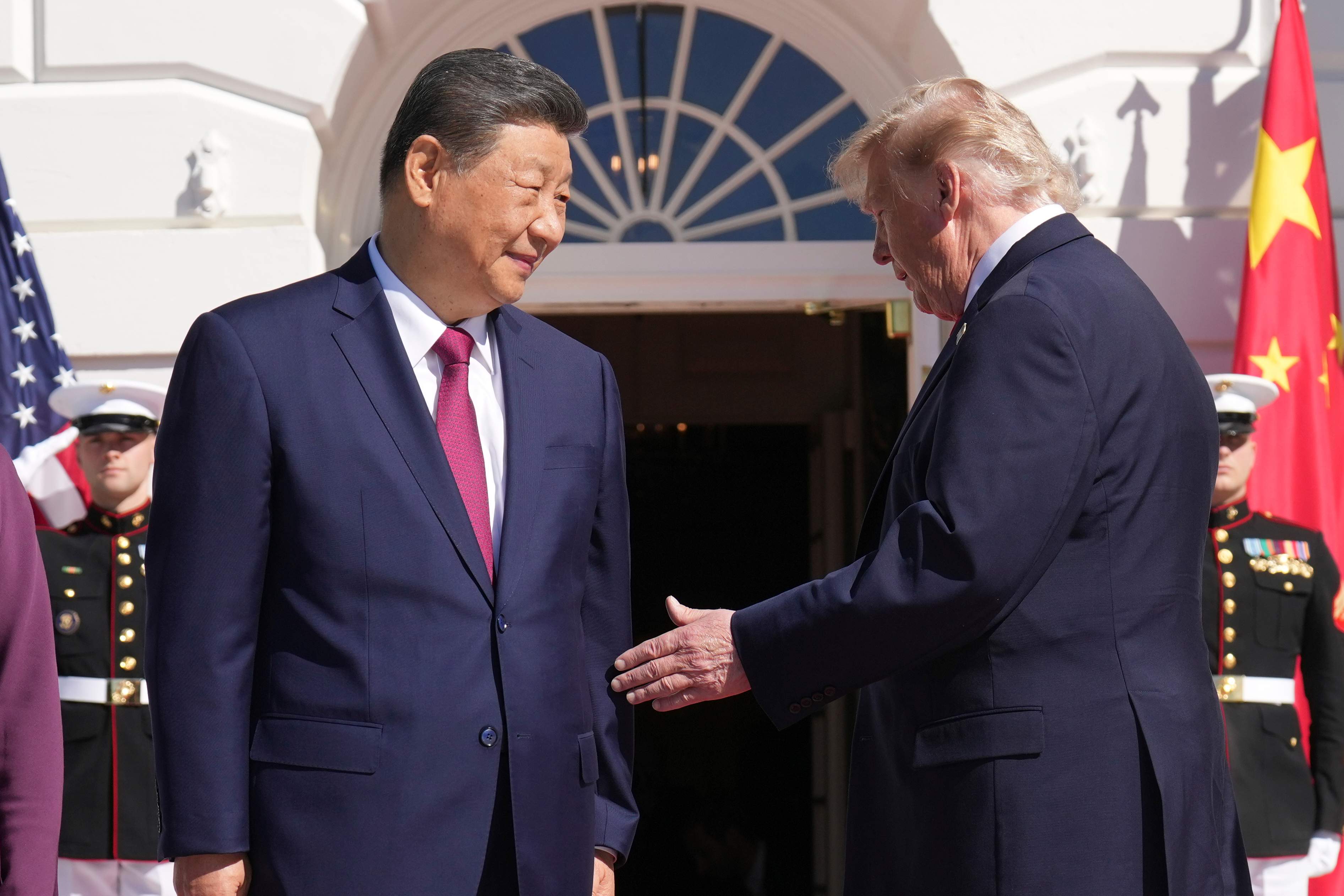
When word first filtered down through trade dispatches that the United States and China planned to slash tariffs on goods worth thirty billion dollars after a meeting between Donald Trump and Xi Jinping, most readers saw a neat little rectangle of information. Thirty billion. Two leaders. A smaller tax on certain shipments. Easy to file away between a weather report and a sports score.
Yet numbers like thirty billion do not arrive in the world as pure arithmetic. They arrive inside cardboard boxes. They arrive in late-night phone calls between time zones. They arrive in the tightening of a throat when a supplier says a price has to go up again, or in the sudden, almost dizzying quiet when a penalty stops accruing.
To understand what a thirty-billion-dollar tariff cut actually means, you have to step away from podiums and look at the people standing between a factory dock and a customer's door.
Consider Elena, a composite character modeled on the logistics and operations managers I have sat across from in industrial parks from Ohio to Illinois. Elena is not a billionaire speculator or a diplomat in a tailored suit. She runs purchasing and inventory for a mid-sized distributor of commercial kitchen equipment, replacement valves, and stamped metal housings. For several years, her desk calendar was ruled by customs schedules. Every time a new tariff hit a specific line of imported components, Elena had to pull spreadsheets, call factory contacts across the Pacific, and explain to local restaurant owners or repair shops why a replacement part now cost noticeably more than it did the previous winter.
You cannot tell a diner owner in Toledo that geopolitical friction is the reason his commercial mixer needs an expensive brass gear. He just knows his margin shrunk.
Now treat the economics of tariffs as a metaphor, because in practice they behave very much like tollbooths erected across a busy river. When Washington and Beijing raise tariffs on Chinese goods entering the United States, they are placing toll gates across channels where millions of small commercial boats carry everyday parts, subassemblies, and finished items. A tollbooth does not stop the river, yet every boat that slows down burns fuel, backs up behind the next hull, and leaves a portion of its cargo behind at the gate. Slashing tariffs on thirty billion dollars of goods does not drain the tollbooths overnight, but it lifts a few heavy arms so specific convoys can pass without paying the penalty tax at the border.
Why thirty billion? In the grand scale of U.S.-China commerce, thirty billion dollars is a targeted slice rather than a total reset. Trade analysts and business owners alike ask the same practical question whenever a partial rollback appears: if the broader tariff wall remains standing across hundreds of billions of dollars in other categories, does trimming thirty billion really change anything?
The honest answer is uncomfortable. It changes everything for the businesses sitting inside that thirty-billion-dollar window, and almost nothing for the ones left outside it.
Imagine a hypothetical scenario on the other side of the ocean to see the flip side of that coin. Picture Chen, a plant supervisor in Guangdong who oversees three assembly lines making specialized lighting housings, filtration cartridges, and small motor enclosures. For years, Chen watched American buyers hesitate. Whenever tariffs climbed, U.S. importers either demanded steep discounts from Chen's factory—squeezing wages and maintenance budgets—or split their orders into smaller, frantic batches while hunting for alternative suppliers in Southeast Asia or Latin America. Chen learned to read U.S. trade bulletins the way farmers read barometers. A single sentence in a policy document could mean Saturday overtime for his crew or two weeks of idle presses.
When Trump and Xi sat down and produced an agreement to cut tariffs across thirty billion dollars of goods, Chen's phone did not ring with a miraculous return to a frictionless past. Instead, it rang with questions. Which product codes made the list? When does the lower tariff rate take effect on goods already sitting in transit? Will American buyers share the relief, or keep the savings to rebuild their own battered margins?
That is the part dry reports rarely capture: the gap between a headline announcement and a cleared customs entry.
People also tend to miss a basic truth about who pays a tariff. In public debates, tariffs are often talked about as if a foreign government writes a check to the U.S. Treasury every time a container crosses the Pacific. In reality, the importer of record—usually a U.S. company or its customs broker—pays the tariff when the goods enter the country. Sometimes the Chinese exporter absorbs part of the hit by lowering factory prices. Sometimes the American importer eats the cost. Often, both split the bruise until the price reaches a contractor, a hospital, a school district, or a shopper, and the bill lands there.
So when two leaders agree to slash tariffs on thirty billion dollars worth of goods, they are not handing out charity. They are unwinding a surcharge that American buyers and Chinese makers had been splitting, arguing over, and building defensive workarounds against.
I know what it feels like to sit inside that kind of uncertainty because I have spent years watching supply chains bend under policy whiplash. Years ago, working near freight and manufacturing operations, I learned how quickly morale erodes when nobody knows whether a product line is profitable next quarter. You start hoarding safety stock you cannot afford to store. You hesitate before hiring a second-shift technician. You spend hours debating Harmonized Tariff Schedule numbers—ten-digit codes that sound like bureaucratic trivia until a single digit decides whether a shipment owes a punishing duty or a modest one.
Consider what happens next in Elena's world. Suppose the specific valves and metal housings her company imports fall inside the thirty-billion-dollar reduction. Elena cannot simply celebrate at lunch. First, she has to verify the exact product classifications with her customs broker. Then she has to check shipment dates, because customs rules care obsessively about when goods were exported, when they arrived, and whether entry summaries were filed before or after the new rate kicked in. Only after the paperwork settles does the lower tariff show up as real cash staying inside her company rather than flowing out to customs duties.
And if her goods are not on the list? Then Elena has to watch competitors who did make the cut underprice her bids while she explains once more why her costs stayed high.
There is another layer to this story, quieter and harder to measure. Trade policy is not just about prices; it is about trust. Once a company learns that a tariff can jump overnight after a summit or a tweet, it stops treating low-cost cross-border sourcing as a permanent foundation. Even with thirty billion dollars of tariff cuts on the table after a Trump-Xi meeting, cautious executives treat relief as provisional. They keep dual suppliers on standby. They keep cash reserves higher than usual. They remember how fast a handshake in one capital can turn into a surcharge in another.
Let us pause and admit how confusing and unsettling this whole subject can be. Even seasoned economists argue over the net effect of targeted tariff cuts. Does slashing duties on thirty billion dollars of goods cool inflation at the edges, or does it merely patch a leak while larger trade barriers remain? Does it reward American consumers, or mostly rescue corporate balance sheets that had been bleeding duty payments? Anyone who claims to know every consequence with certainty is guessing. What is clear is that policy on this scale is never neutral. Every tariff cut is a choice about which industries get room to breathe and which ones keep holding their breath.
Look closely at the human stakes underneath the diplomatic choreography. When Trump and Xi meet, cameras flash, analysts dissect body language, and markets twitch in milliseconds. Behind those flashes sits a web of ordinary obligations: a warehouse worker whose hours depend on container volume, a purchasing manager trying to keep a small firm solvent, a factory supervisor trying to keep skilled machinists from drifting into other trades.
Thirty billion dollars is large enough to move real cargo, relieve real pressure, and reopen lanes that had grown stiff with penalties. It is also small enough to leave vast stretches of the trading relationship fenced off, reminding everyone involved that peace on a shipping lane is fragile.
Out on the dock, long after the press briefings fade, a forklift driver still checks a manifest with a grease-smudged clipboard. A crane operator still lowers a steel container onto a chassis with millimeter precision. Somewhere inside that painted steel box are parts made by hands thousands of miles away, waiting to be bolted into machines that will feed, cool, build, or repair lives closer to home—finally crossing the water with a little less weight on their backs.