Wait.
Listen to the hum of a fluorescent bulb in an empty kitchen at three in the morning, and you will know the exact frequency of geopolitical dread. It is not the cinematic roar of fighter jets streaking across a crimson sky, nor the crisp, sterile font of a breaking news banner scrolling across a muted television screen in an airport lounge. It is a low, persistent vibration in your molars. It is the sudden, inexplicable urge to check the price of a gallon of regular unleaded on your phone while standing in your socks on cold linoleum.
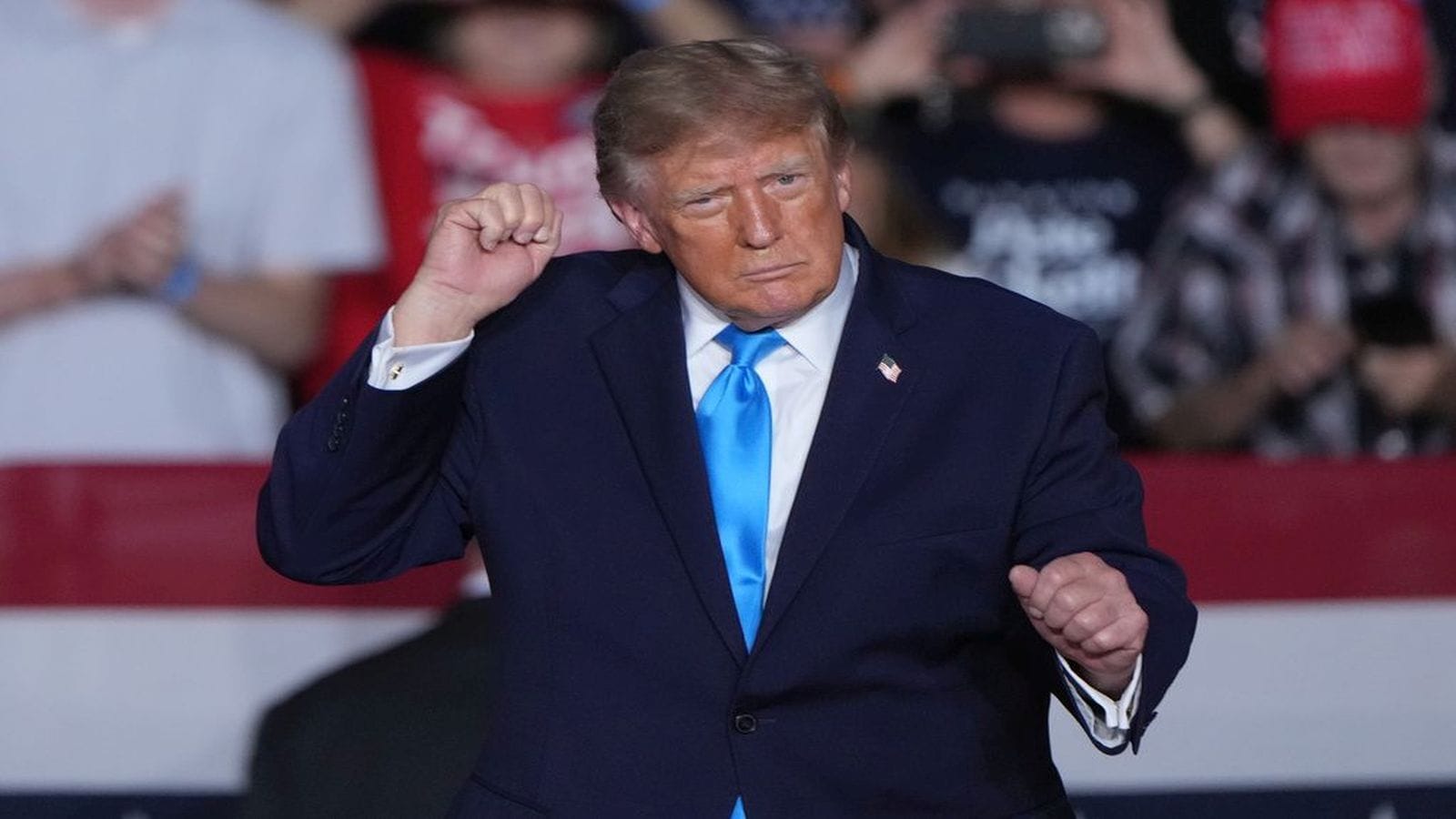
When Donald Trump steps up to a bank of microphones and remarks, with that familiar, casual cadence, that the United States may conduct another military operation against Iran, the wire services treat it as a standard diplomatic dispatch. They record the date. They quote the phrasing. They note the context of regional tensions, proxy skirmishes, and stalled nuclear negotiations, then file it away under foreign policy.
They miss the human tremor entirely.
To understand what those few offhand words actually mean, you have to step out of the briefing room and walk into the fluorescent-lit kitchens of people who will never sit at a negotiating table. You have to look at the invisible architecture of global stability—a structure far more fragile than the steel hulls of aircraft carriers patrolling the Persian Gulf.
The Architecture of a Single Sentence
Consider a hypothetical character—let us call her Elena—who runs a mid-sized logistics firm out of a converted warehouse near the Port of Rotterdam. Elena does not follow cable news pundits. She does not care about the theatrical posturing of campaign rallies or the subtle shifts in Washington rhetoric. Yet, within four minutes of a presidential hint at military action against Tehran, Elena’s phone begins to chime with automated alerts from maritime insurers in London.
Why? Because geography is stubborn.
Roughly twenty percent of the world’s petroleum passes through the Strait of Hormuz, a narrow, curving waterway pinched between Oman and Iran. At its tightest point, the shipping lanes are barely two miles wide in either direction. Think of it as the carotid artery of the modern industrial world. When a U.S. president suggests that another military strike against Iranian targets is on the table, he is not merely speaking to generals in the Pentagon or clerics in Tehran. He is placing a thumb directly over that artery.
Elena watches the numbers on her monitor shift in real time. War-risk insurance premiums for tankers transiting the Gulf do not wait for missiles to fly; they spike on the mere probability of sparks. Within hours, the cost of moving a container of medical supplies from Singapore to Hamburg climbs by thousands of dollars. By Tuesday, a bakery in Ohio pays more for flour because diesel fuel jumped twelve cents a gallon. By Friday, a family in suburban Chicago quietly puts the carton of organic berries back on the grocery shelf and reaches for the bruised apples instead.
We like to believe that foreign policy happens over there, separated from our daily lives by oceans and time zones. That is a comforting fiction. In reality, a single sentence spoken in Washington travels through fiber-optic cables at the speed of light, ricochets off commodity exchanges in Chicago and London, and lands as a quiet tax on dinner tables ten thousand miles away.
The Ghosts of Precedent
I remember the week in January 2020 when the air felt just like this. If you lived through those days—whether in a cramped apartment in Baghdad, a base housing unit in North Carolina, or simply glued to a radio during a winter commute—you remember the suffocating weight of waiting for the other shoe to drop.
Back then, the strike on Qasem Soleimani shattered decades of unspoken rules about how Washington and Tehran boxed with one another. For years, the two nations had engaged in a deadly, shadow-drenched waltz. Iran funded and armed regional militias—Hezbollah in Lebanon, the Houthis in Yemen, various factions in Iraq and Syria—maintaining plausible deniability while bleeding American influence. Washington responded with crippling economic sanctions, covert cyber warfare, and diplomatic isolation. It was brutal, cynical, and predictable.
Then the rules changed. Direct lethal force entered the equation.
When the current conversation turns toward another military operation, we are not starting from a blank slate. We are standing on scorched earth where the muscle memory of escalation is already primed. Every military planner in the Pentagon and every commander in the Islamic Revolutionary Guard Corps knows how the last round played out: targeted strikes, ballistic missile retaliations against bases in Iraq, commercial vessels limping into port with limpet mines blown into their hulls, and civilian airliners caught tragically in the crossfire of jittery air defense operators.
To be honest, the sheer unpredictability of this moment is terrifying. Anyone who claims to know with certainty where a limited strike ends and a regional conflagration begins is selling you an illusion. History is a graveyard of "surgical" operations that metastasized into decade-long quagmires.
The Illusion of the Clean Strike
Let us strip away the sanitized vocabulary of modern warfare. Politicians and defense analysts love phrases like degrading capabilities, restoring deterrence, and calibrated response. These words are linguistic anesthetic. They numb us to the physical reality of high explosives meeting concrete, steel, and human tissue.
Imagine a chessboard where both players are blindfolded, the board is soaked in kerosene, and someone just struck a match to see the pieces better. That is the strategic reality of threatening military action against Iran today.
Tehran is not a monolithic fortress waiting passively to be bombed. Over the last forty years, knowing it could never match the conventional firepower of the United States Air Force or Navy, Iran built an asymmetric web designed specifically to survive a first blow and make the second day unbearable for its adversaries. Its ballistic missile arsenals are buried deep beneath granite mountains. Its drone swarms are cheap, decentralized, and easily hidden in civilian trucks. Its regional allies stretch from the Mediterranean Sea to the Bab el-Mandeb Strait.
When Washington signals that another operation might be coming, Tehran does not look at its naval frigates; it looks at its leverage points.
Consider what happens next in a hypothetical scenario where U.S. stealth bombers target Iranian nuclear facilities or missile production sites. Within hours, the conflict ceases to be bilateral. Oil infrastructure across the Persian Gulf becomes a target. Commercial shipping in the Red Sea freezes. American service members stationed in isolated outposts across Jordan, Syria, and Iraq—young men and women who joined up to pay for college or carry on a family tradition—suddenly find themselves sleeping in concrete bunkers, listening for the high-pitched whine of incoming drones.
I have spoken with veterans who served in those exact outposts during previous flare-ups. They do not talk about grand strategy. They talk about the dust that coats your teeth when a shockwave hits the blast walls. They talk about the strange, hollow silence that follows an explosion before the alarms start screaming. They talk about trying to write a text message home to a spouse in Texas without letting their hands shake on the glass screen.
The Human Ledger in Tehran
There is another side to this equation that rarely makes it onto Western television screens, yet it sits at the very heart of why military threats often backfire.
Picture another hypothetical life—a twenty-six-year-old software engineer named Amir living in northern Tehran. Amir despises the hardline clerics who govern his country. He watched his sisters risk arrest during the protests for basic human dignity. He has watched the Iranian rial collapse into near-worthlessness, turning his parents' lifelong savings into enough money to buy a few bags of groceries. Like millions of young Iranians, Amir wants a normal life: a stable currency, freedom to travel, an internet without firewalls.
Yet, when bombs fall from foreign skies, something primal happens inside a society. Fear overrides frustration. National survival eclipses domestic reform.
Every time Washington rattles the saber and threatens military strikes, hardliners in Tehran receive a gift they could never manufacture on their own: an external enemy to blame for every internal failure. The secret police tighten their grip under the banner of wartime security. Dissidents are branded as traitors. Young people like Amir are forced into an impossible corner, trapped between a regime they loathe and a foreign superpower threatening to destroy their country's infrastructure.
Sanctions starve the economy; airstrikes rally the flag. Over decades, this cycle has hollowed out Iran’s middle class—the very demographic most capable of demanding democratic change—while leaving the military apparatus stronger and more entrenched than ever.
Why the Threat Exists at All
So why do it? Why does an American president float the possibility of another military strike if the ripple effects are so volatile and the human costs so steep?
Because in the ruthless calculus of international politics, ambiguity is a weapon.
If an adversary believes you will never pull the trigger, your diplomatic demands carry the weight of wet paper. For decades, American presidents from both parties have repeated the mantra that "all options are on the table" regarding Iran’s nuclear ambitions and regional aggression. The logic is simple: keep Tehran guessing, force them to spend billions defending against an attack that might never come, and extract concessions at the bargaining table out of sheer fear.
Trump, however, plays this game with a distinctly personal brand of brinkmanship. Unlike traditional statesmen who wrap threats in layers of diplomatic euphemism, he prefers blunt, unpredictable force. By openly musing about another military operation, he is attempting to shatter Tehran's confidence in its ability to read American restraint. He wants the leadership in Iran to wake up every morning wondering if today is the day the rules change again.
It is a high-wire act without a net. Deterrence only works if the threat is credible, yet making the threat credible increases the pressure to actually follow through when the other side calls your bluff. Once a leader draws a line in the sand—or hints at an impending strike—backing down looks like weakness, while moving forward invites chaos.
The Weight of Unseen Consequences
We live in an era that treats geopolitical crises like episodic television. A headline flashes, social media erupts with partisan hot takes for forty-eight hours, and then our collective attention drifts toward the next scandal, the next election, the next distraction.
The world, however, keeps the receipts.
Every threat of war leaves a permanent scar on the global nervous system. Central banks hoard gold instead of investing in growth. Supply chains fracture as companies scramble to build redundant, expensive routes around potential blast zones. Diplomat-to-diplomat channels rust shut, leaving fewer adults in the room capable of picking up a red phone when a radar operator misreads a blip on a screen at two in the morning.
Look closely at the next time you fill up your car, or scan your groceries at the self-checkout lane, or watch a young neighbor pack a duffel bag for deployment. The distance between a podium in Washington and the quiet rhythms of your own life is an illusion maintained only by fragile, invisible threads of restraint.
Out in the dark waters of the Persian Gulf tonight, a twenty-two-year-old sailor stands watch on the bridge of a guided-missile destroyer, staring through night-vision binoculars at the running lights of an Iranian fast-attack boat drifting just three hundred yards off the port bow, both crews waiting to see who blinks first.