At 35,000 feet, time does not move in minutes. It moves in the low, steady hum of the engines, the occasional chime of the seatbelt sign, and the cramped arithmetic of how many pages remain in your paperback before descent.
Then the pitch of the engines changes.
If you have ever been on a commercial flight when an emergency diversion begins, you know the exact second the atmosphere in the cabin shifts. It is rarely triggered by an announcement. It starts with the physical sensation of the nose dipping—a sudden, unfamiliar steepness that presses your stomach gently against your ribs. Across the aisle, a flight attendant walks briskly toward the galley, her practiced smile gone, replaced by the tight-jawed focus of someone running a mental checklist she hoped she would never have to use.
When news broke of multiple Ryanair and Wizz Air flights making emergency landings across Europe following anonymous bomb threats, the headlines treated the events like digital ticker tape. Flight numbers. Departure cities. Diversion airports. Safe evacuations.
Neat. Contained. Over.
For the hundreds of people strapped into those narrow budget-airline seats, however, there was nothing neat about it. When a threat is phoned in or emailed to an airport authority, it triggers a cascade of invisible machinery—fighter jets scrambling from quiet airbases, air traffic controllers clearing entire corridors of European sky, and ordinary people suddenly confronting the fragility of modern travel.
The Anatomy of an Unscheduled Descent
To understand what actually happens when a bomb threat targets a commercial airliner, step away from the cold jargon of aviation press releases and picture a typical Tuesday afternoon over Central Europe.
Consider a hypothetical passenger—let’s call her Elena—sitting in seat 14F on a Wizz Air Airbus A321 bound for London. She has a cup of lukewarm coffee on her tray table and a toddler asleep against her shoulder. Below her, invisible beneath a blanket of afternoon cloud, a series of frantic communications is already underway.
In real-world incidents involving both Ryanair and Wizz Air over the past few years—from Polish-registered flights diverted to Athens and Budapest, to aircraft escorted by NATO fighter jets into Prague or Warsaw—the trigger is almost always the same: a message sent to an airport switchboard or a national security agency claiming an explosive device is on board.
Aviation security protocols leave zero room for guesswork. Authorities cannot afford to weigh probabilities when two hundred lives are suspended in an aluminum tube over populated cities. The moment a threat is deemed even remotely credible, the aircraft is treated as compromised.
Inside the cockpit, the pilots receive the instructions first. Their job is to fly the plane, communicate with military and civilian controllers, and keep the cabin from descending into panic. Think of air traffic control during a bomb threat like an emergency room trauma team clearing a hallway: every other flight in the vicinity is vectored away, creating an empty tunnel of sky leading straight to the nearest suitable runway.
If the threat reaches a certain threshold, military interceptors are launched. For Elena in 14F, looking out her scratched plastic window, the first real sign that her flight is no longer normal isn't a voice on the intercom. It is the sight of a grey fighter jet materializing off the wingtip, close enough that she can see the helmet of the pilot inside.
Silence.
That is what passengers who have lived through military intercepts describe first. Not screaming, not crying—just a heavy, suffocating quiet as dozens of people stare out the windows at the armed aircraft flying formation beside them, trying to reconcile the mundane reality of a €40 budget ticket with the sudden presence of warplanes.
Why Budget Airlines Become Frequent Targets
Whenever news surfaces of Ryanair and Wizz Air planes making emergency landings, a predictable question ripples across social media: Why is it always the budget carriers?
The answer has nothing to do with lax security. In fact, Ryanair and Wizz Air operate under the exact same stringent European Union Aviation Safety Agency (EASA) regulations as Lufthansa, British Airways, or Air France. Every bag is scanned; every passenger passes through identical checkpoints.
The real reason lies in simple, brutal mathematics.
Ryanair and Wizz Air are two of the largest short-haul operators in Europe, moving hundreds of millions of passengers across thousands of daily flights. When an airline operates over 3,000 flights a day, pure statistical probability dictates that its aircraft will be in the sky more often when a hoaxer decides to make a call.
There is also a psychological element to how anonymous threats work. Hoaxers—whether they are bitter ex-employees, erratic individuals seeking chaos, or state-backed actors testing response times—want maximum disruption for minimum effort. Targeting high-frequency carriers connecting major European hubs guarantees immediate headlines, widespread travel chaos, and tens of thousands of stranded passengers.
Consider what happens next when a single plane is forced down.
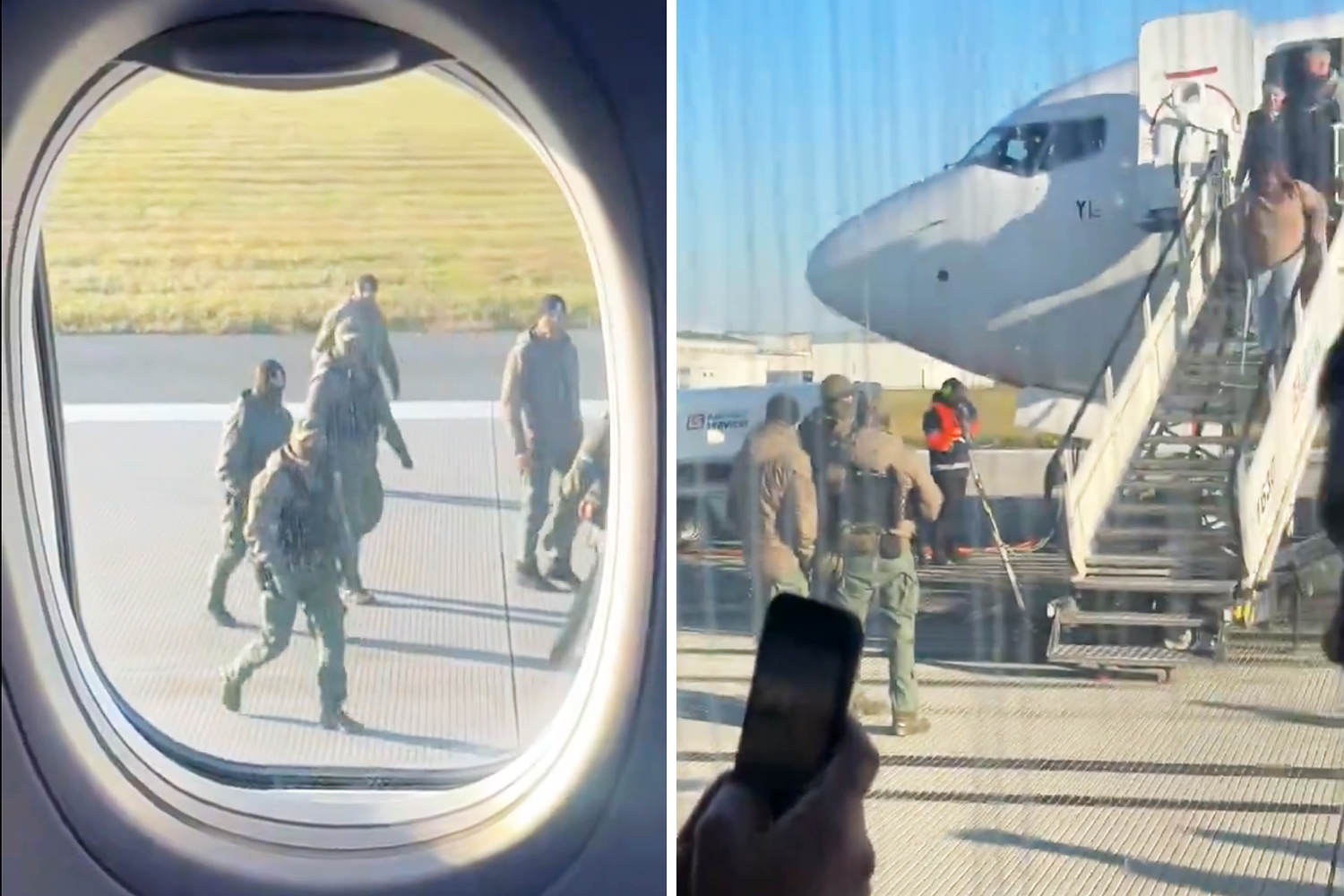
It isn't just that flight that stops. When an emergency landing is declared at an airport like Athens International or Berlin Brandenburg, the entire airfield often grinds to a halt. The diverted plane is directed to an isolated tarmac area far from the main terminal—a remote stand designed specifically to contain potential blast radii.
Slides deploy, or mobile stairs are rolled up under the watchful eyes of tactical police units. Passengers are ordered to leave everything behind. No laptops. No passports tucked into overhead bins. No duty-free bags. Just the clothes on their backs and whatever happens to be in their pockets.
The Hidden Cost of a Hoax
Once everyone is on the tarmac, the waiting begins. And this is where the emotional toll of a bomb threat truly settles in.
Imagine standing on a windy stretch of concrete three hundred yards from a terminal building, surrounded by flashing blue lights, sniffer dogs, and bomb disposal robots. Your phone battery is at twelve percent. Your coat is still in the overhead locker. Around you, strangers are pacing, shivering, or frantically texting family members who have just seen the flight's emergency squawk code—7700—trending on flight-tracking apps.
For security teams, the work is painstaking and slow. Every single piece of luggage must be pulled from the cargo hold and lined up on the tarmac so passengers can physically identify their bags before bomb-sniffing dogs and X-ray units clear them. Every overhead bin, seat cushion, and lavatory panel inside the aircraft is searched by hand.
This process routinely takes four to six hours.
During that time, the ripple effects spread across the continent. The crew on that aircraft times out—meaning they have exceeded their legally permitted working hours and cannot fly the plane even after it is cleared. A replacement crew must be flown in or driven across borders. Meanwhile, the three subsequent flights that specific aircraft was scheduled to operate later that day are delayed or canceled entirely, stranding hundreds more travelers in airports from Dublin to Bucharest.
In almost every single case of these European aviation bomb threats, the searches turn up nothing. No explosives. No wires. Just dirty laundry, souvenir snow globes, and half-eaten bags of pretzels.
To the outside world, a false alarm feels like a non-story. Nobody was hurt. The system worked.
Yet anyone who has ever sat on a cold tarmac at two in the morning while armed officers search their carry-on bag knows that a false alarm is never harmless. It leaves a quiet residue of distrust—a lingering flinch every time an engine changes pitch on a future flight, or every time a flight attendant walks a little too quickly down the aisle.
The Thin Line Between Routine and Chaos
Modern commercial aviation is arguably the safest mode of transportation human beings have ever invented. We have engineered away mechanical failure, mapped weather patterns down to the mile, and trained pilots to handle scenarios most of us cannot even fathom.
What we cannot engineer away is human malice—or the sheer vulnerability of a system built entirely on trust.
Every time you board a flight, you enter an unspoken contract with two hundred strangers. You trust that the person in 12B packed only clothes. You trust that the person in 24E isn't carrying a grudge. You trust that the voice on the other end of a phone line in an airport operations center isn't trying to weaponize fear.
Most days, that contract holds. You read your book, drink your coffee, and touch down twenty minutes ahead of schedule.
Until the day the nose dips a little too steeply, the fighter jet pulls alongside the wing, and the entire machinery of European airspace bends around the desperate hope that someone, somewhere, was lying.