The teacup on Mr. Lin’s kitchen table in Shanghai has been chipped along the rim since 2018, the year he retired from thirty-four years of managing municipal water pipes. Every morning at seven, he pours boiling water over cheap green leaves, opens a worn blue ledger, and waits for the gentle chime of his banking app.
For a decade, that chime was the heartbeat of his retirement. It wasn't the wildly fluctuating green and red lines of the Shanghai Composite Index that kept his lights on, nor the speculative fever of Shenzhen tech stocks. It was the dividend payout. Cash hitting the account. Real, spendable renminbi transferred from the vaults of China’s state-owned energy giants and commercial banks directly into the hands of an aging man who simply wanted to buy fresh sea bass at the wet market without counting his coins.
Lately, the chime has been quieter.
Not silent. Just noticeably thinner.
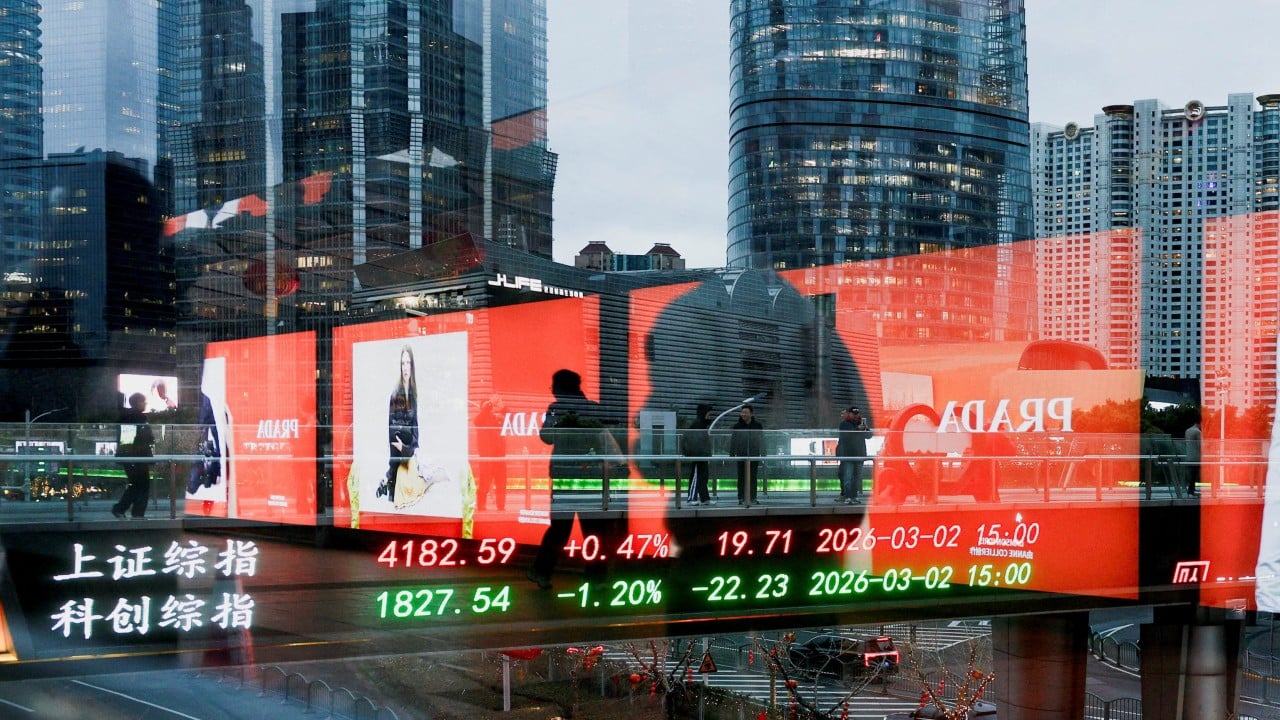
If you read the financial wire reports coming out of Hong Kong and London this autumn, the story is told in the bloodless shorthand of institutional accounting. Third-quarter dividend growth among Chinese firms lagged the global average amid a persistent market slump. Payout ratios stalled. Global payouts surged ahead on the backs of American tech titans issuing maiden dividends and European banks flush with high-interest cash, while mainland China’s corporate engines sputtered.
Numbers on a Bloomberg terminal rarely bleed. Yet behind that dry statistical lag sits a quiet, creeping anxiety stretching from the humid alleys of Guangzhou to the pension funds of Zurich. When the world’s second-largest economy hits the brakes on sharing its cash, the shockwaves do not stay trapped inside spreadsheet cells. They land on kitchen tables.
The Illusion of the Iron Rice Bowl
To understand why a dip in third-quarter dividend growth feels like a tremor in an earthquake zone, you have to understand the unspoken social contract that governed Chinese investing over the past few years.
For generations, ordinary Chinese families poured their life savings into concrete. Apartments were the ultimate store of value, an unshakeable faith passed from parent to child. Then came the property crisis, the defaulted developers, the half-built towers standing like hollow concrete skeletons against gray skies. Overnight, real estate ceased to be a sanctuary.
Bruised and cautious, retail investors—and the massive state-backed funds managing their pensions—went looking for a new safe harbor. Beijing offered one. Regulators rolled out sweeping campaigns encouraging listed companies, particularly massive state-owned enterprises, to boost their shareholder returns. The message from the top was unmistakable. Forget wild speculative growth; buy the steady giants. Buy the banks, the telecoms, the coal miners, the oil drillers. They will pay you to wait.
Think of a dividend-paying stock like an apple orchard. In boom times, everyone obsesses over how tall the trees are growing—that is share price appreciation. You sell the lumber, or you sell the whole farm to someone willing to pay double what you paid. When the weather turns freezing and nobody wants to buy farmland, the height of the trees no longer pays your grocery bill. All that matters is how many apples drop into your basket each autumn.
During the third quarter, the global orchard had a bumper harvest. Across North America, Europe, and parts of Asia-Pacific, corporations handed out record sums of cash, buoyed by resilient consumer spending and fat profit margins. Global dividend growth hummed along at a healthy clip, reassuring nervous investors that corporate balance sheets remained strong despite geopolitical friction.
In China, the harvest came up short.
Let us be clear about the mechanics, because Wall Street jargon often obscures simple truths. A company cannot conjure cash out of thin air forever. Dividends are paid out of net earnings—the money left over after you pay the workers, buy the raw materials, service the debt, and settle the tax bill. When China’s domestic economy entered a prolonged slump, weighed down by deflationary pressures, sluggish consumer confidence, and a housing market still searching for its floor, corporate profits began to compress.
Anatomy of a Squeeze
Consider a hypothetical mid-sized industrial manufacturer in Jiangsu province—let us call it Eastern Precision Components. For years, Eastern Precision rode the wave of domestic infrastructure spending. Its profit margins were predictable, and every third quarter, its board comfortably approved a generous cash distribution to shareholders.
This year, the math turned hostile.
Factory-gate prices across China have spent months in negative territory. To keep assembly lines moving and workers employed, Eastern Precision had to slash the prices it charged customers by eight percent. Meanwhile, local governments, strapped for cash themselves because land sales have dried up, delayed paying invoices on municipal contracts. Cash sat trapped in accounts receivable instead of sitting in the corporate treasury.
When the board of Eastern Precision met in late summer to decide on the third-quarter payout, the finance director laid out two grim choices. They could maintain their celebrated dividend growth streak, draining their cash reserves and leaving the company vulnerable if export tariffs spiked next year. Or they could freeze the payout, disappointing the shareholders who had bought the stock specifically for its yield.
They froze it. Multiply Eastern Precision by hundreds of listed firms across Shanghai and Shenzhen, and you get the cold headline: Chinese third-quarter dividend growth lagging the global average.
I remember watching a similar dynamic play out during the European sovereign debt crisis over a decade ago, sitting in a cramped trading room in London as utility companies—widows-and-orphans stocks, as we called them—suddenly slashed payouts they had sworn were sacred. The shock isn't just financial; it is psychological. When a growth stock crashes, you feel foolish for gambling. When a dividend stock disappoints, you feel betrayed by something that promised to be safe.
The State-Owned Conundrum
Even the titans were not immune to the gravity of the slump.
For the past two years, China’s "Big Four" state-owned banks and energy monopolies acted as the Atlas holding up the entire dividend market. Under pressure from the China Securities Regulatory Commission, which actively penalized companies that hoarded cash without rewarding shareholders, these behemoths opened the spigots. Some even introduced rare interim dividends to smooth out payments across the year, mimicking Western corporate calendars.
Yet a closer look at the third-quarter numbers reveals a critical catch. Much of the apparent stability in headline payout figures came from timing shifts—companies splitting their annual dividends into two smaller chunks rather than actually increasing the total pie. When stripped of these calendar adjustments, underlying dividend growth decelerated sharply.
Why? Because even giants feel the squeeze when the whole forest dries out.
Take the banking sector, the undisputed heavyweight champion of Chinese dividends. Beijing has repeatedly leaned on state banks to support the flagging economy—cutting mortgage rates for struggling homeowners, extending cheap credit to cash-starved local government financing vehicles, and keeping credit flowing to small businesses. Every time a bank lowers lending rates to rescue the broader economy, its net interest margin shrinks. It is a zero-sum tug-of-war. You cannot simultaneously force banks to act as a charitable lifeline for a sluggish economy and expect them to generate record profit growth for shareholders.
Something had to give. In the third quarter, it was the pace of the payout.
Why the Global Gap Matters
Does it really matter if a conglomerate in Shenzhen raises its payout by two percent while a rival in Ohio or Munich raises theirs by eight? If you live in Chicago or Frankfurt, you might shrug and scroll past.
You shouldn't.
Global capital flows like water, always seeking the path of least resistance and highest yield. For years, international pension funds, sovereign wealth funds, and endowment managers tolerated the political risks and opaque accounting of Chinese equities because the growth story was too massive to ignore. When growth cooled, those same global investors stayed for the high dividend yields—often four, five, or six percent, far outstripping the miserly yields available in New York or Tokyo during the era of zero interest rates.
That math has flipped upside down.
Today, an institutional fund manager in Boston can park money in risk-free U.S. Treasury bills or reliable European blue-chip stocks and earn yields that rival or beat Chinese equities, without worrying about sudden regulatory crackdowns, currency depreciation, or deflationary spirals. When Chinese third-quarter dividend growth falls behind the rest of the world, it removes the last remaining pillar justifying foreign capital staying in the market.
The exodus is quiet, executed through algorithmic rebalancing rather than dramatic press conferences. Every basis point by which Chinese dividend growth trails the global average triggers automatic outflows from emerging-market index funds. Less foreign capital means lower share prices. Lower share prices make it harder for Chinese companies to raise money for research and expansion. It is a slow, self-reinforcing loop.
The Human Ledger
Back in Shanghai, Mr. Lin does not track basis points or net interest margins. He tracks the price of cooking oil, electricity, and train tickets to visit his daughter in Hangzhou.
Last month, he noticed that one of his favorite holdings—a major infrastructure firm whose bridges he had admired for twenty years—kept its quarterly dividend completely flat for the first time since he bought the shares. Another firm, a consumer appliance maker battered by weak domestic retail sales, trimmed its distribution by nearly fifteen percent.
It wasn't catastrophic. Mr. Lin won't miss a meal. Nobody is marching in the streets over a stagnant payout ratio.
Instead, the reaction is quieter, and for policymakers in Beijing, far more dangerous.
When Mr. Lin sees his dividend income flatten out while the value of his apartment down the street slips another five percent, he does not go out and buy a new refrigerator. He does not book a domestic vacation to Yunnan. He puts the chipped teacup back on the counter, cancels his weekend restaurant plans, and transfers whatever cash arrives straight into a low-interest fixed deposit at the local post office bank.
Multiply Mr. Lin by two hundred million middle-class savers and retirees across urban China, and you uncover the beating heart of the country’s economic dilemma. Economists call it a balance-sheet recession or a liquidity trap. In plain human terms, it is a crisis of nerve. People hoard cash when they no longer trust tomorrow’s income stream. And when everyone hoards cash at the exact same moment, the economy starves for spending, dragging corporate profits down further, ensuring that next quarter’s dividends will be even thinner.
A Question of Trust
There is an old saying among value investors: Dividends don't lie.
Executives can massage earnings per share through clever depreciation schedules. They can paint rosy pictures in quarterly earnings calls using buzzwords about "high-quality development" and "structural transformation." Accountants can bend accruals like warm plastic.
Cash is stubborn. Either the money is in the bank account on Friday afternoon, or it isn't.
That brutal honesty is precisely why the third-quarter slowdown carries so much weight. Beijing has unleashed a barrage of stimulus measures—interest rate cuts, liquidity injections, pledges of fiscal support—trying to reignite animal spirits in a stock market that has spent years in the doldrums. Whenever a new policy announcement hits the wires, speculative traders bid up share prices for a few euphoric days before reality sets back in.
Real recovery will not be announced at a press conference. It will show up silently, unannounced, in the dividend ledgers of ordinary companies—when factories have enough pricing power to raise margins, when consumers have enough confidence to spend, and when corporate boards feel secure enough in the future to part with their cash rather than hoarding it against the storm.
Until then, the gap between China’s corporate payouts and the rest of the world remains an unblinking mirror reflecting the true health of the economy.
Every morning at seven, the kettle whistles in Mr. Lin’s kitchen. He pours the water, watches the green leaves unfurl slowly in the chipped ceramic cup, and checks his phone. The numbers are still there, steady and familiar, just a little smaller than they used to be—and for the first time in years, he leaves the ledger open on the table, wondering what next quarter will bring.