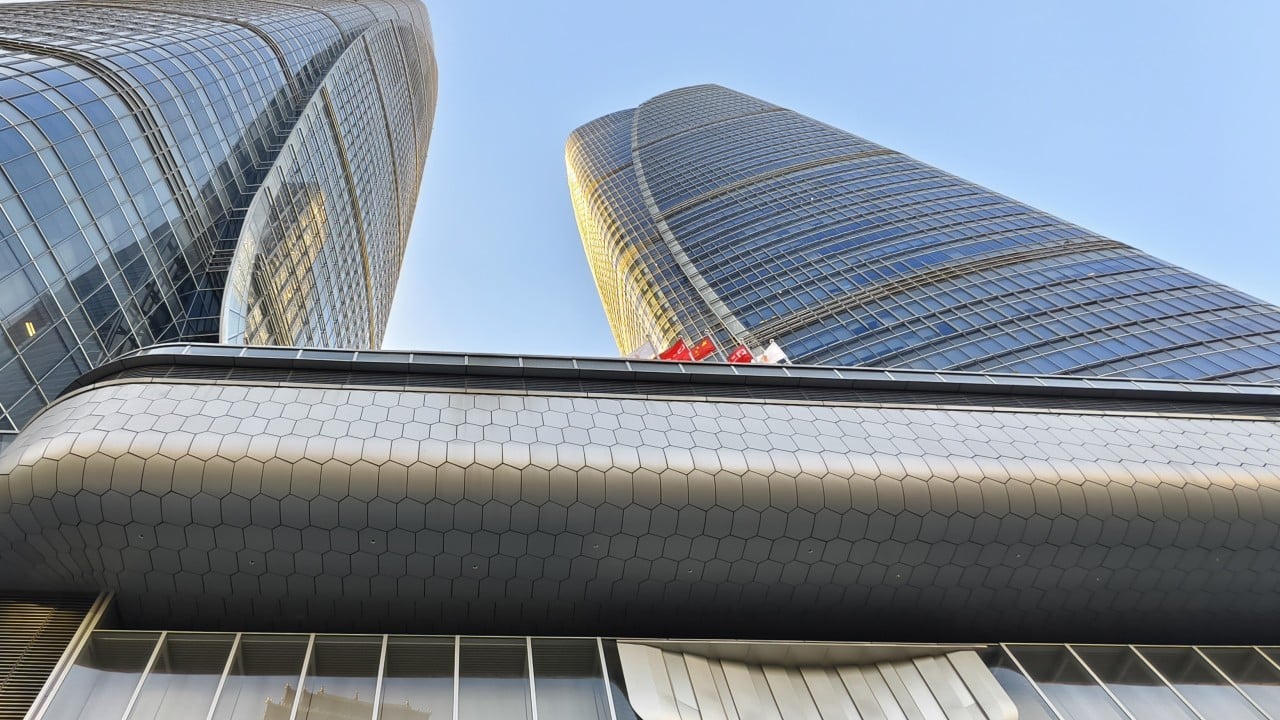
Hong Kong property developers are quietly shifting away from speculative residential building in mainland China toward high-yield commercial assets, selective urban renewal, and capital preservation. For three decades, tycoons from Victoria Harbour treated the mainland as an endless frontier for growth, deploying vast balance sheets to build sprawling housing estates and trophy towers across first- and second-tier cities. That era is dead. Faced with a protracted mainland property slump, compressed profit margins, and a fundamental shift in Beijing’s economic priorities, Hong Kong’s real estate dynasties are no longer chasing mainland scale—they are fighting to protect liquidity and reinvent their cross-border playbooks.
To understand how drastic this pivot is, you have to look at the structural advantages Hong Kong builders once enjoyed—and how completely those advantages have evaporated.
The End of the Cheap Capital Arbitrage
For years, the formula was simple. Hong Kong developers had access to cheap, abundant offshore financing in Hong Kong dollars and US dollars, backed by the steady cash flows of their local monopoly-like holdings in retail malls, office towers, and residential land banks. Mainland competitors, particularly during the rapid urbanization boom of the 2000s and 2010s, faced higher domestic borrowing costs and tighter credit channels.
Hong Kong firms—names like Sun Hung Kai Properties, Henderson Land, New World Development, Wharf, and Hang Lung—used that cost-of-capital gap like a blunt instrument. They bought prime plots in Shanghai, Beijing, Guangzhou, and Chengdu, patient enough to hold land for years while values appreciated, building high-end commercial complexes and luxury apartments that commanded massive premiums.
Then the math broke.
When interest rates in the United States surged starting in 2022, the Hong Kong dollar—pegged to the greenback—imported those higher borrowing costs directly onto the balance sheets of Hong Kong’s biggest landlords. Simultaneously, Beijing’s regulatory crackdown on debt-fueled expansion, epitomized by the "Three Red Lines" policy, triggered a cascading liquidity crisis across the mainland private sector. Instead of creating a buying opportunity for cash-rich Hong Kong players, the resulting market freeze dragged down property values, buyer sentiment, and rental yields across the entire country.
Suddenly, Hong Kong builders were paying high offshore interest rates to fund mainland assets generating shrinking renminbi returns. When you factor in currency depreciation—as the renminbi weakened against the US and Hong Kong dollars—the cross-border carry trade inverted. Holding massive, slow-moving mainland land banks stopped being a wealth generator and became a drag on net asset value.
Why Distressed Mainland Assets Remain Untouchable
A common assumption among outside observers is that Hong Kong developers, with their famously conservative balance sheets and generational cash reserves, would swoop in to buy distressed projects from defaulted mainland rivals like Evergrande or Country Garden.
They haven't. And they won't.
If you spend enough time talking to project directors and corporate finance heads in Central, the reasons become painfully clear. First, distressed mainland residential projects rarely come clean. They are almost always tangled in complex webs of off-balance-sheet debt, unpaid contractor liens, pre-sold apartments waiting for delivery, and local government mandates to finish construction before a single yuan of profit can be extracted. Acquiring a distressed site in mainland China doesn't mean buying land at a discount; it means inheriting a political and social obligation to make homebuyers whole.
Second, the residential business model itself has been permanently altered. Beijing’s long-standing directive that "housing is for living in, not for speculation" is not a temporary cyclical measure. It is state doctrine. Combined with demographic headwinds—a shrinking population and sluggish household income growth—the days of double-digit annual price appreciation in mainland housing are over. Without price inflation, the slow-turn development model favored by Hong Kong builders simply does not generate enough return on equity to justify the risk.
The Great Pivot to Recurring Income and Retail Fortresses
Instead of catching falling knives in the housing market, the smartest Hong Kong players are doubling down on what they actually do better than almost anyone in Asia: long-term commercial asset management.
Consider how Hang Lung Properties or Swire Properties operate on the mainland. Neither company relies on quick-flip residential sales. Instead, they build dominant, luxury-anchored retail and office ecosystems—like Shanghai’s Plaza 66 or Beijing’s Taikoo Li Sanlitun—that function as cash-generating fortresses.
Even here, however, the ground is shifting beneath their feet. The post-pandemic luxury spending boom in mainland China proved short-lived. As domestic consumer confidence cooled and wealthy Chinese shoppers resumed traveling to Tokyo, Paris, and Milan—taking advantage of currency arbitrage—foot traffic and tenant sales at high-end mainland malls began to soften.
To survive this slowdown, Hong Kong landlords are fundamentally re-engineering their mainland retail spaces:
- Experiential and Lifestyle Anchors: Malls are cutting back on pure luxury fashion floorplates and expanding space for high-end dining, wellness clubs, niche domestic designer brands, and cultural exhibitions that cannot be replicated online or bought duty-free abroad.
- Data-Driven Tenant Curation: Rather than simply collecting fixed base rents, landlords are structuring leases with tighter turnover-rent components, using granular customer loyalty data to actively manage tenant mix and boost conversion rates.
- Focus on Tier-One and Strong Tier-Two Hubs: Capital expenditure is being ruthlessly concentrated in cities with genuine demographic inflows and deep purchasing power, such as Shanghai, Guangzhou, Shenzhen, Hangzhou, and Chengdu, while peripheral tier-three and tier-four cities are effectively abandoned.
Swire Properties’ massive 100-billion-Hong-Kong-dollar investment plan—roughly half of which is earmarked for mainland China—illustrates this selective conviction. They are not buying random tracts of suburban dirt. They are partnering with state-owned enterprises on complex, transit-oriented, mixed-use developments in core urban districts where barriers to entry are insurmountable for smaller rivals.
The Rise of the State-Owned Joint Venture
If there is one structural shift defining the future of Hong Kong developers on the mainland, it is the mandatory embrace of state-owned enterprises (SOEs).
In the current mainland real estate ecosystem, state-backed giants like China Overseas Land & Investment, China Resources Land, and Poly Developments hold all the cards. They have access to cheap onshore renminbi financing from state banks, privileged relationships with municipal governments, and implicit political backing.
For a Hong Kong developer entering a major mainland project today, going it alone is unnecessarily hazardous. The preferred structure is now a joint venture where the mainland SOE provides the local regulatory navigation, land access, and onshore debt capacity, while the Hong Kong partner brings architectural execution, master-planning expertise, and international commercial leasing networks.
This arrangement comes with clear trade-offs. Hong Kong firms must accept minority or equal stakes rather than total control, conform to state-driven timelines, and share upside. Yet in an environment where regulatory missteps can freeze a project for years, aligning directly with state capital is the ultimate insurance policy.
The Greater Bay Area Mirage vs Reality
No analysis of Hong Kong developers can ignore the Greater Bay Area (GBA)—Beijing’s grand blueprint to integrate Hong Kong, Macau, and nine Guangdong cities into a single economic powerhouse. On paper, the GBA looks like natural turf for Hong Kong builders. It is right across the border, culturally familiar, and backed by massive state infrastructure spending.
In practice, the GBA has proven to be a minefield of fierce competition and razor-thin margins.
Shenzhen and Guangzhou are home to some of the most aggressive, technologically sophisticated state and private developers in China. When Hong Kong firms bid for land in Qianhai or Nansha, they aren't competing against novices; they are bidding against local champions who understand every nuance of Guangdong municipal planning and can mobilize onshore capital faster.
Furthermore, the anticipated wave of Hong Kong residents buying retirement or second homes across the border has materialized far more slowly than boosters predicted. While weekend cross-border consumption—Hong Kongers flocking to Shenzhen for cheaper dining, groceries, and entertainment—has boomed, buying mainland real estate remains a vastly different commitment. Concerns over property rights, capital controls, healthcare portability, and resale liquidity keep many Hong Kong middle-class buyers on the sidelines.
As a result, Hong Kong developers have scaled back grandiose GBA residential ambitions, focusing instead on targeted transit-oriented hubs near high-speed rail stations and border crossings where cross-border foot traffic is guaranteed.
Balance Sheet Defense Comes First
Ultimately, what happens in mainland China cannot be separated from the crisis happening right back home in Hong Kong.
Hong Kong’s own property market has suffered a brutal correction, with residential prices dropping significantly from their 2021 peaks and Grade-A office vacancy rates hitting historic highs as multinational corporations downsize or relocate. Developers who aggressively leveraged up during the boom years—most notably New World Development—have found themselves forced to sell non-core assets, cut dividends, and prioritize debt reduction over expansion.
When your flagship home market is bleeding cash flow and asset values, you do not have the luxury of bankrolling speculative adventures across the Shenzhen River.
For the next five years, the primary metric for Hong Kong’s property dynasties will not be gross floor area added or mainland land bank size. It will be net gearing ratios and free cash flow. Capital allocation committees in Hong Kong boardrooms are applying unprecedented hurdle rates to any new mainland capital expenditure. Unless a mainland project offers immediate cash yield, ironclad state-backed partnerships, and a prime urban location, it simply does not get funded.
The golden age of easy cross-border arbitrage is permanently finished, leaving behind a leaner, harder-edged reality where survival belongs only to those willing to trade empire-building for disciplined cash flow.