At 4:15 in the morning, the fluorescent lights of a regional dairy plant in central Wisconsin hum with a cold, steady vibration. Outside, the frost is thick enough to scrape off a windshield with a credit card. Inside, the air smells of warm milk, stainless steel, and bleach.
Consider a hypothetical scenario grounded in the daily reality of American agriculture. Meet Mateo, a composite character representing the estimated hundreds of thousands of undocumented dairy workers across the Midwest. Mateo has worked the early milking shift for eleven years. He pays taxes through an Individual Taxpayer Identification Number. His two youngest children were born in a hospital twenty miles away, and his oldest daughter is studying nursing at a community college down the highway. When enforcement vans roll into town as part of a wide-reaching federal immigration crackdown, the immediate reaction from supporters of the policy is straightforward: the law is finally being enforced, order is being restored, and unauthorized labor is being removed from the market.
Yet within seventy-two hours, something unexpected happens at the dairy plant, at the local diner, and in the county commissioner’s office. The cows still need to be milked twice a day. The milk trucks still need to roll. And the neighbors who voted overwhelmingly for tougher border enforcement begin asking quiet, uncomfortable questions at the hardware store.
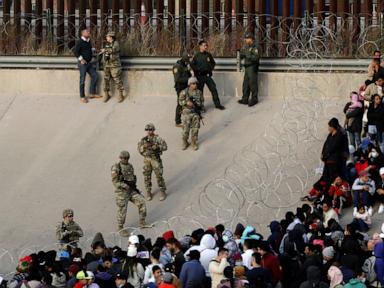
Political analysts, economists, and local journalists tracking the second Trump administration's immigration enforcement push have documented a striking pattern. What began as a signature campaign promise designed to consolidate political support has increasingly triggered localized pushback—from small-business owners, agricultural associations, faith leaders, and even conservative voters who feel the execution has overshot the target. According to reporting by outlets including The Wall Street Journal, Reuters, and The New York Times, the very breadth of workplace raids and community sweeps has created friction where the administration expected applause.
The Architecture of a Promise
To understand why a policy built on clear, popular slogans can generate political turbulence on the ground, it helps to separate the abstract idea of border security from the lived mechanics of interior enforcement.
During the 2024 presidential campaign, polling consistently showed broad public frustration with record migrant encounters at the southern border during the preceding years. Surveys from the Pew Research Center and Gallup indicated that majorities of Americans favored stricter border controls and increased deportations of individuals with criminal records. On paper, the mandate looked unambiguous.
Once implemented, however, the machinery of mass deportation rarely operates with surgical precision. Enforcement agencies face numerical targets, logistical bottlenecks, and finite detention capacity. When federal agents conduct large-scale operations in the American interior, the net inevitably catches people who have lived in the country for decades, own homes, run small businesses, or anchor extended families of U.S. citizens.
Think of an ecosystem like a mature forest. From a distance, removing what looks like underbrush seems like simple maintenance. Up close, you realize the roots are intertwined with the oldest trees on the hill. Pull one hard enough, and the soil gives way beneath everything else.
Economists at the Peterson Institute for International Economics and the American Immigration Council have long pointed out this structural entanglement. Undocumented immigrants make up roughly 4.6 percent of the U.S. workforce, according to Pew Research Center estimates, with far higher concentrations in specific sectors: nearly 15 to 20 percent in agriculture, roughly 13 percent in construction, and significant shares in hospitality and food processing. These are not theoretical placeholders on a spreadsheet. They are the people framing houses in Texas, harvesting lettuce in California, and staffing kitchens in Florida.
The Empty Chairs at the Diner
When enforcement intensifies in a mid-sized town, the economic shockwaves arrive before the political commentary.
Take a second hypothetical composite, grounded in documented industry reports from the National Association of Home Builders and state agricultural bureaus. Sarah owns a mid-sized residential framing company in North Carolina. She voted for Donald Trump because she wanted lower taxes, less red tape, and a secure border. She assumed federal agents would focus on violent offenders and recent arrivals straining city shelters.
Instead, a sweeping audit and enforcement action across her county causes half of her subcontractor crews to stop showing up to job sites overnight. Some are detained; others stay home out of fear of being stopped on the drive to work. Within two weeks, Sarah has three half-built houses exposed to rain, delayed closing dates that trigger financial penalties, and angry homebuyers calling her phone every hour. She cannot replace a skilled framing crew in a week, nor can she suddenly double wages without pricing her homes out of the market.
This is the exact dynamic that industry lobbyists and Republican lawmakers from agricultural and construction-heavy districts have privately—and occasionally publicly—flagged to the White House. Reporters covering Capitol Hill have noted growing unease among lawmakers in states like Nebraska, Iowa, California, and Florida, where farm bureaus and hospitality groups warn that aggressive interior sweeps threaten harvest seasons and local tax bases.
It is one thing to cheer for a tough policy at a rally. It is another thing entirely when the local meatpacking plant cuts a shift, the school district loses dozens of students overnight, and the church down the street holds a vigil for a deacon who has lived in town since the Bush administration.
Why Public Opinion Shifts When Policy Gets Personal
Political scientists have observed this phenomenon for decades, often referring to it as the gap between symbolic politics and operational reality.
In national polling, "illegal immigration" functions as an abstract concept—often associated in the public mind with chaos at the border, cartel violence, or strains on municipal budgets. When pollsters ask voters whether they support deporting immigrants who committed violent crimes, support regularly tops 80 percent.
When pollsters change the wording, however, the numbers fracture. Data from Gallup, PRRI, and the Pew Research Center consistently show that a majority of Americans—including substantial shares of independents and moderate Republicans—favor allowing long-term undocumented residents without criminal records a pathway to remain in the country legally.
The backlash grows sharper when enforcement tactics collide with deeply held norms about family, community, and fairness. News coverage of parents separated from U.S.-citizen children, longtime business owners detained during routine check-ins, or raids near schools and churches tends to shift the media narrative from border order to human disruption.
There is also a historical precedent here. During the Eisenhower administration's 1954 enforcement campaign—known formally as "Operation Wetback"—federal authorities conducted massive sweeps across the Southwest. While initially praised by proponents as decisive action, the operation quickly drew fierce pushback from southwestern growers, agricultural lobbies, and local communities whose economies ground to a halt, ultimately forcing the government to expand legal guest-worker channels through the Bracero program.
History rarely repeats itself verbatim, but it rhymes with stubborn regularity. Whenever enforcement targets the labor supply that communities quietly rely on, the political coalition supporting the crackdown begins to fray from the inside.
The Invisible Ledger
What makes this moment particularly volatile is the economic backdrop. Voters across the political spectrum cited inflation and the cost of living as their primary concerns in the 2024 election. Households were exhausted by the price of groceries, housing, and basic services.
Here lies the central policy tension. Economists across the ideological spectrum—from center-left researchers at the Brookings Institution to free-market analysts at the Cato Institute—have warned that removing millions of workers from labor-intensive industries risks tightening an already constrained labor market. Fewer farmworkers mean higher harvest losses and upward pressure on food prices. Fewer construction workers mean slower housing starts and higher home prices. Fewer caregivers mean rising costs for nursing homes and families caring for aging parents.
For a voter who pulled the lever hoping for cheaper groceries and lower mortgage rates, watching a crackdown inadvertently drive up the price of milk, produce, and home repairs feels like a broken promise. The backlash is not born out of ideological conversion; it is born out of kitchen-table math.
Meanwhile, local law enforcement agencies often find themselves caught in the crossfire. Police chiefs in major cities and suburban counties alike have long warned—through organizations like the Major Cities Chiefs Association—that when local police are perceived as an extension of federal immigration enforcement, crime reporting drops. Witnesses stop coming forward. Victims of domestic violence hesitate to call 911. Public safety, paradoxically, can become harder to maintain when entire neighborhoods retreat into the shadows.
The Human Variable
At the center of every policy debate sits a stubborn truth: human beings are not chess pieces that can be swept off a board without altering the game.
When you walk through a town experiencing heavy enforcement, the atmosphere changes in subtle, sensory ways. Parking lots outside international grocery stores sit half empty on a Saturday afternoon. Youth soccer leagues forfeit games because parents are afraid to drive across county lines. Teachers notice empty desks in third-grade classrooms and spend their lunch breaks packing homework folders for children who may never come back to pick them up.
I remember speaking years ago with a high school principal in a rural town after a large workplace raid had swept through the local poultry plant. He wasn't a political activist. He was a lifelong conservative who coached football on Friday nights and hunted deer in November. What broke his composure wasn't a debate over federal statutes; it was watching an eleven-year-old honor student sit in the front office until six in the evening because nobody had come to pick her up from school. Both of her parents had been detained on the morning shift.
That is the moment when national talking points dissolve. Once a community experiences that afternoon in the principal's office, the conversation changes permanently.
Where the Momentum Meets the Wall
None of this means that the desire for border security has vanished, or that voters suddenly favor open borders. Far from it. The demand for an orderly, lawful immigration system remains one of the most potent forces in American politics. Critics of the previous administration rightly pointed out that chaotic border crossings overwhelmed municipal shelters and eroded public trust in federal competence.
Yet a political boomerang rarely strikes because the original goal was unpopular. It strikes because the execution ignores complexity.
As enforcement operations continue into 2026, the administration faces an increasingly narrow tightrope. Push too hard into farms, factories, and long-settled neighborhoods, and it risks alienating the exact working-class and small-business coalition that delivered its electoral victory—potentially costing allies crucial seats in midterm elections and stalling broader economic goals. Pull back quietly, and it risks disappointing hardline supporters who demanded sweeping results.
Back in central Wisconsin, the sun finally rises over the frozen fields around 7:15 in the morning. Inside the dairy plant, the morning shift is running forty-five minutes behind schedule. Two veteran workers didn't come in today, and the plant manager is on the phone trying to explain to a regional distributor why the afternoon shipment will be short.
Outside, the exhaust from an idling milk truck hangs thick and white in the subzero air, lingering long after the engine turns over and pulls away toward the highway.