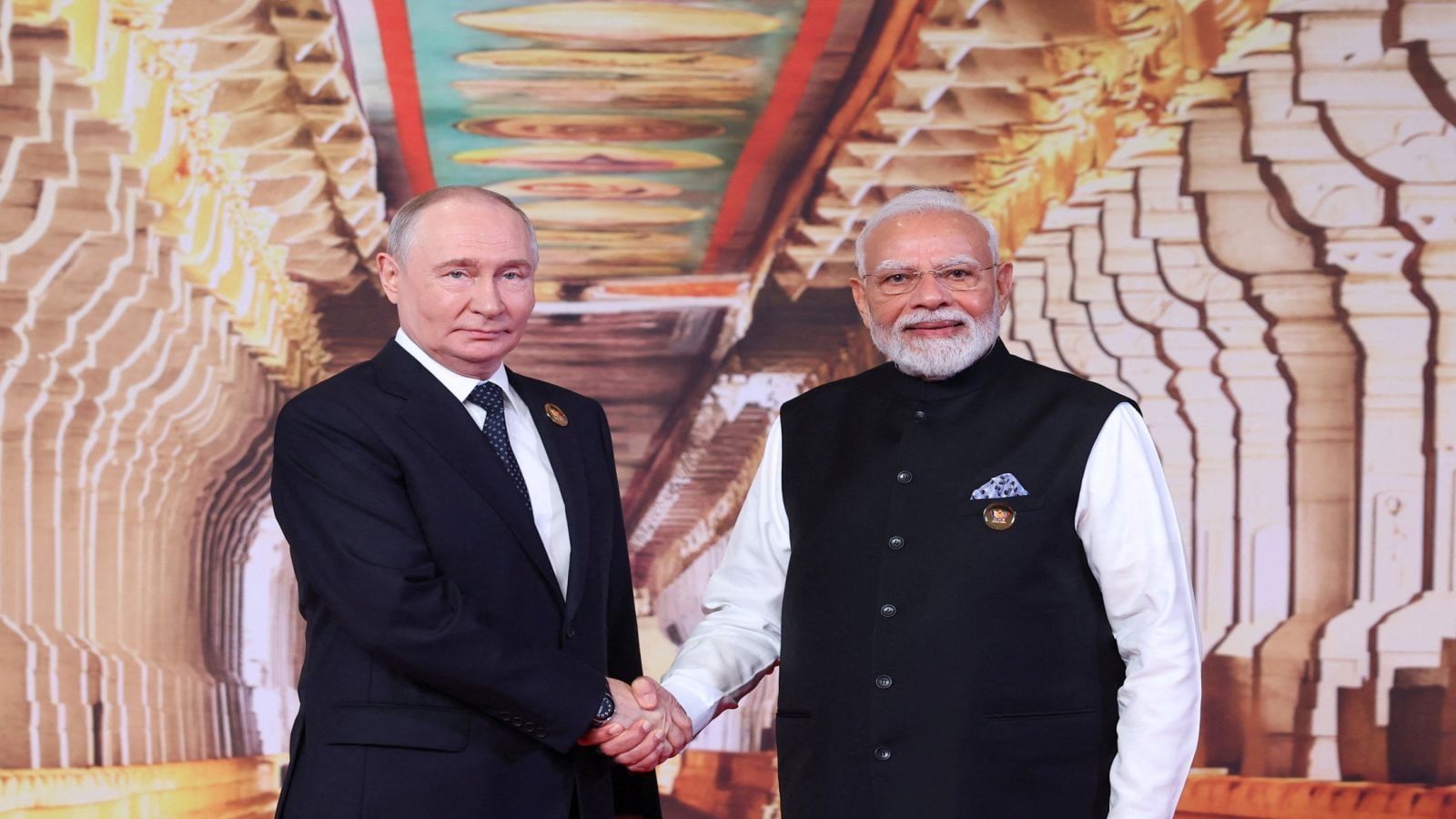
In a quiet room overlooking the manicured lawns of South Block in New Delhi, an analyst leans over a spreadsheet that will never make the evening news. The numbers are precise, cold, and entirely merciless. They represent millions of barrels of crude oil, multi-billion-dollar defense upgrades, and a centuries-old architecture of trust built between nations that now find themselves caught in the gravity well of a distant legislative draft in Washington.
Outside, the monsoon humidity hangs thick in the air, blurring the skyline of a capital city that has spent decades mastering the art of strategic autonomy. But today, the conversation inside is not about weather or ceremony. It is about a piece of paper thousands of miles away—a sanctions bill winding its way through the United States Congress—and what it means for a nation trying to lift millions out of poverty while keeping the lights on in its factories.
To understand why this matters, you have to step away from the macroeconomic charts and look at what energy actually means on the ground.
Imagine Rajesh, a third-generation machinist in an industrial cluster outside Pune. His workshop relies on a steady, affordable supply of power to run heavy CNC lathes. Every morning when Rajesh flicks the master breaker, the current surging through those copper wires is tied, through a complex, invisible chain of global logistics, to discounted Urals crude shipped from Russian ports. When international sanctions threaten to choke those shipping lanes, the shockwave does not land as an abstract diplomatic memo in Geneva. It lands on Rajesh’s monthly ledger as an electricity tariff hike, eating into the thin margins that keep his family afloat.
This is the human core of what diplomats call trade interests. It is not just about statecraft or abstract geopolitical posturing. It is about the price of fertilizer for a farmer in Punjab, the cost of diesel for a logistics truck hauling goods across the Golden Quadrilateral, and the economic breathing room of a rising demographic engine.
For years, New Delhi has walked a diplomatic tightrope that would make a circus performer dizzy. It maintains a deep, historical security partnership with Moscow—rooted in decades of defense cooperation, spare parts for military hardware, and steady diplomatic backing. Simultaneously, it shares an increasingly vital, gravitational embrace with the United States, bound together by a mutual need to balance security architecture in the Indo-Pacific.
Then came the rupture in Europe. When the conflict in Ukraine reshaped the global energy map overnight, traditional supply lines fractured. Western nations slammed the door on Russian energy imports, creating a glut of discounted oil looking for a home. Faced with the choice of paying exorbitant spot-market prices that could cripple its domestic recovery or absorbing discounted barrels, India chose pragmatism. It became one of the primary buyers of Russian crude, a move that kept global oil prices from spiraling into a catastrophic shock while simultaneously securing its own energy security.
Washington watched with a mixture of pragmatic understanding and mounting legislative frustration.
Now, the legislative machinery in the United States is stirring again. New sanctions bills are being drafted, designed with broad brushes to penalize entities, nations, or financial institutions that grease the wheels of trade with sanctioned economies. The intent in Washington is clear: tighten the economic vise on Moscow until its military campaign collapses.
The collateral damage, however, is where India enters the frame.
When lawmakers in Capitol Hill draft these sweeping clauses, they rarely account for the ripple effects in developing economies. They see a ledger entry; New Delhi sees a lifeline. And so, the response from Indian trade ministries has been swift, firm, and unequivocally defensive. India is monitoring the US-Russia sanctions bill with intense vigilance, and officials have made it clear behind closed doors and in public briefings that the nation will aggressively protect its trade interests.
This is not defiance for the sake of posturing. It is survival.
To grasp the weight of this standoff, consider how international trade actually functions when the rules are rewritten mid-game. It is not like flipping a switch. You cannot simply pivot a billion-person economy away from its primary energy and defense supply chains overnight without inviting economic devastation. When sanctions threaten secondary targets—shipping insurance, maritime logistics, or banking transactions settled in non-dollar currencies—they threaten to freeze the circulatory system of international commerce.
Think of it like an old, intricate clock mechanism. If you jam a wrench into one gear because it belongs to a neighbor you dislike, you might stop that specific wheel. But if that gear was meshed with half a dozen other cogs driving the hands of the entire timepiece, you suddenly find the whole apparatus grinding to a violent halt.
Indian policymakers are working overtime to ensure their clock keeps ticking.
Diplomatic channels are currently a blur of confidential cables, backchannel assurances, and calculated economic diplomacy. Indian trade negotiators are engaging with their counterparts in Washington, spelling out the math in stark terms: destabilizing India's energy access does not weaken Moscow in a meaningful way; instead, it weakens a key democratic anchor in Asia, disrupts global market stability, and inflames inflationary pressures worldwide.
There is an inherent vulnerability in this position, and it is best to be honest about it. India is caught between a superpower partner it needs for its future technology and security architecture, and a historic partner that provides the raw caloric energy required to fuel its present. There is no clean, painless exit from this paradox. Every choice carries a cost. Every diplomatic cable sent from South Block is a calculation of risk, balancing the wrath of western regulators against the domestic fury of skyrocketing inflation at home.
Yet, history suggests a certain resilience in how New Delhi navigates these storms. India has practiced the art of strategic autonomy not as a passive doctrine, but as an active, elbows-out defense of its national interest. It bought oil when the West told it not to, arguing—correctly—that European energy security needs did not supersede the development needs of eight hundred million energy consumers in the global south. It managed to upgrade its intelligence-sharing and naval cooperation with the US QUAD partners while simultaneously keeping its Soviet-era defense inventory operational.
As this new sanctions bill winds its way through committees and floor votes, the stakes are rising.
The real story is not about politicians trading sharp words or diplomats issuing standard-issue press releases. The real story is happening in the quiet boardrooms of shipping conglomerates, in the risk-assessment models of international banks, and in the quiet determination of a nation refusing to let external geopolitical crusades dictate whether its citizens can afford to heat their homes or run their businesses.
The legislation will change. The debates in Washington will roar and fade. But down on the factory floors, along the busy shipping lanes of the Arabian Sea, and within the vaulted halls of government offices where the tea is always hot and the air conditioning hums against the heat, the work continues.
The ledger must be balanced. The trade must flow. And the quiet architecture of independence must hold, no matter how heavy the pressure gets from above.