Salt spray burns the eyes long before you ever see the grey hull of a coast guard cutter on the horizon.
Consider a hypothetical scenario out in the West Philippine Sea, forty nautical miles off the coast of Zambales, right as dawn begins to bleed bruised purple across the water. Picture a fisherman named Mateo, fifty-two years old, his knuckles swollen from four decades of hauling nylon nets out of the South China Sea. He does not read geopolitical white papers. He does not track defense procurement budgets in New Delhi or diplomatic communiqués drafted in air-conditioned suites in Manila. Mateo knows only one metric of international law: whether a massive, white-hulled foreign vessel aims a high-pressure water cannon at his wooden outrigger before he can pull up enough mackerel to pay for his daughter's nursing school tuition.
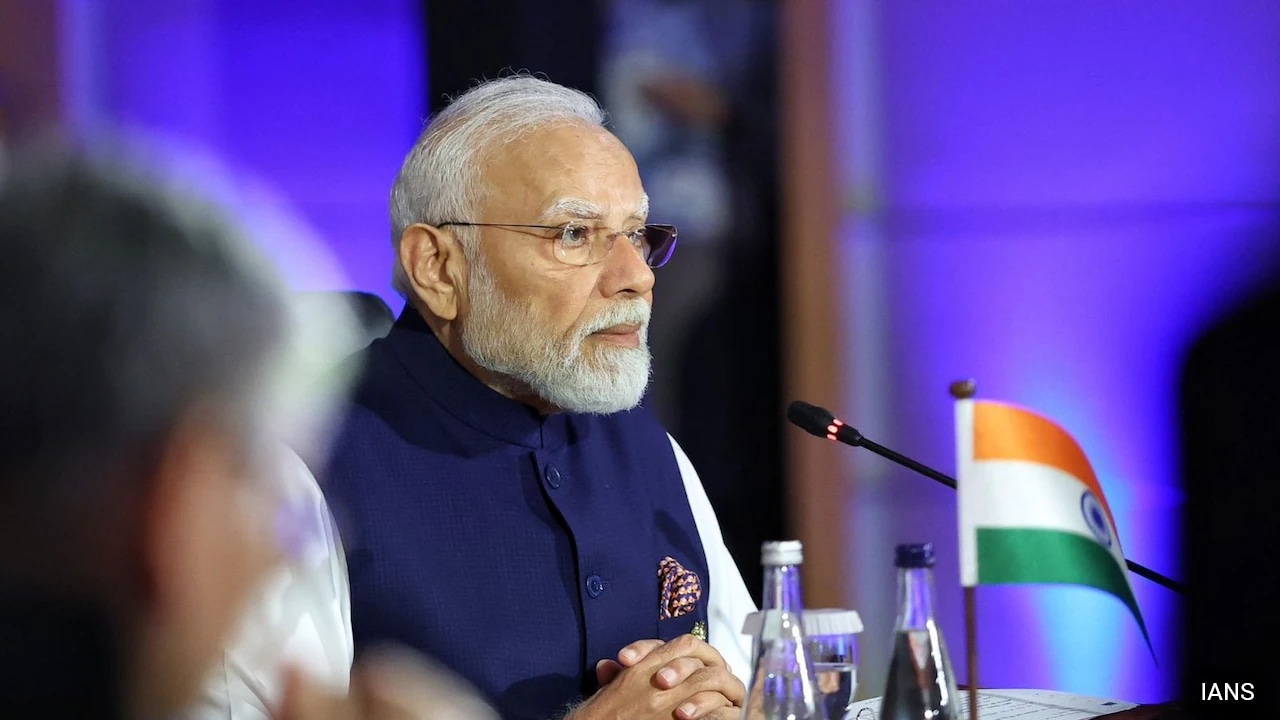
When Prime Minister Narendra Modi touches down in Manila for the Quad Summit, the cameras will capture the crisp linen suits, the firm handshakes on red carpets, and the rehearsed smiles shared with Philippine President Ferdinand Marcos Jr. Standard news dispatches will reduce the trip to sterile bullet points about maritime security, supply chain resilience, and bilateral defense agreements.
Those dispatches miss the entire point.
Behind the diplomatic choreography lies a raw, urgent reality about survival in the Indo-Pacific. For years, small nations bordering the South China Sea have lived under the shadow of an overwhelming neighbor, forced to choose between quiet submission and lonely defiance. Now, two democracies separated by thousands of miles of ocean—India and the Philippines—are locking arms in ways that would have seemed unthinkable a decade ago.
The Weight of an Empty Net
To understand why an Indian Prime Minister standing on Philippine soil carries such heavy emotional and strategic weight, you have to understand the psychology of a bully on the open water.
I have spent years watching how maritime disputes play out from the perspective of coastal communities and regional security analysts. From the docks of Subic Bay to the naval outposts along India's eastern seaboard, the pattern is identical. Territorial expansion rarely begins with an invasion. It begins with friction. It begins with coast guard ships blocking resupply boats. It begins with lasers blinding sailors on bridge decks, radio frequencies jammed into static, and fishing grounds slowly fenced off by steel hulls ten times the size of local boats.
Think of the South China Sea as a neighborhood cul-de-sac where one household suddenly decides it owns the entire street, parks armored trucks across every driveway, and charges a toll just to walk to the corner store. You can call the neighborhood association. You can wave a 2016 international arbitration ruling in the air, just as Manila did when the Permanent Court of Arbitration in The Hague invalidated sweeping maritime claims across the region.
A piece of paper, however, cannot stop a water cannon.
For years, Manila tried accommodation. Leaders hoped that soft words and economic concessions might buy peace for fishermen like our hypothetical Mateo. Instead, the pressure only grew heavier. Resupply missions to the BRP Sierra Madre—a rusted World War II-era warship intentionally grounded on Second Thomas Shoal to serve as a lonely Philippine outpost—became gauntlet runs. Filipino sailors found themselves dodging blockades, enduring collisions, and nursing injuries simply for trying to deliver drinking water and rice to their own troops.
That humiliation leaves a scar on a national psyche. It breeds a quiet, suffocating helplessness.
Why New Delhi Stopped Watching From Afar
Across the Malacca Strait, India watched this slow-motion squeeze with sharp recognition.
India knows what happens when borders are treated as mere suggestions. In the freezing, oxygen-starved heights of the Himalayas along the Line of Actual Control, Indian soldiers have stood toe-to-toe against the exact same brand of relentless territorial pressure. When deadly clashes erupted in the Galwan Valley in 2020, something fundamental shifted inside New Delhi's strategic establishment. The old doctrine of cautious non-alignment—of keeping one's head down and hoping trade ties would tame aggression—died on those rocky ridges.
Suddenly, the distance between the Himalayas and the South China Sea shrank to nothing.
Indian planners realized that if Beijing could rewrite the rules of the sea in Manila's backyard without consequence, nothing would stop the same playbook from arriving in the Indian Ocean. Over half of India's seaborne trade passes through the choke points of Southeast Asia. If those waters become a private lake controlled by a single authoritarian power, India's economic lifeline rests in someone else's hands.
Honesty requires admitting that geopolitics is rarely driven by pure altruism. India is not stepping up in Southeast Asia solely out of warm sentiment. New Delhi is acting out of cold, clear-eyed self-interest. Yet in a region desperate for balance, self-interest aligned with the survival of smaller neighbors becomes a powerful force for stability.
The $375 Million Turning Point
Nothing illustrates this shift better than a deal signed in early 2022 that sent shockwaves through defense ministries across Asia.
For decades, India was known globally as the world's largest arms importer, reliant on foreign factories to equip its own military. Then, New Delhi made a historic bet. It signed a $375 million contract to supply the Philippine Marine Corps with three batteries of the BrahMos supersonic cruise missile—the very first export order for a weapon system co-developed by India and Russia.
Stop and appreciate what that transaction actually means.
Imagine you are a coastal defender in the Philippines, tasked with guarding an archipelago of more than seven thousand islands with a navy stretched thin and aging equipment. For years, deterrence was an abstract dream. Then, cargo planes land in Manila carrying shore-based anti-ship missiles capable of streaking across the waves at nearly three times the speed of sound, skimming just meters above the water to evade radar until it is far too late to intercept.
In plain terms, the BrahMos gave the Philippines a credible shield. It changed the math for anyone contemplating coercion along the Philippine coast. You do not need to match a giant ship-for-ship if you can make every square mile of water near your shore prohibitively expensive to threaten.
When Modi arrives in Manila, that initial missile delivery is no longer just a signed contract; it is operational reality on the ground. Discussions between Indian and Philippine defense officials now stretch far beyond a single weapons system. They cover lines of credit for further military modernization, joint naval patrols through contested waters, coast guard cooperation, intelligence sharing, and training programs that bring Filipino officers into Indian military academies.
Four Democracies and a Fragile Ocean
Of course, the bilateral embrace between India and the Philippines sits inside a much larger frame: the Quad Summit.
Bringing together the leaders of Australia, India, Japan, and the United States in Manila sends an unmistakable signal before a single word is spoken at the podium. For years, critics dismissed the Quadrilateral Security Dialogue as an awkward, hesitant grouping—a talk shop afraid to name the challenge it was built to counter. Cynics pointed out that India was too hesitant, that Australia was too economically tied to Beijing, or that Washington was too distracted by crises elsewhere in the world.
They were wrong.
By convening in the capital of a frontline Southeast Asian state that is not even a formal member of the group, the Quad is tearing down the invisible wall between diplomatic theory and front-line reality. The message to Manila—and to every other capital in the Association of Southeast Asian Nations—is simple: you do not have to stand on the pier alone.
Consider what happens next when these four nations pool their strengths in support of Philippine sovereignty:
- Maritime Domain Awareness: Through the Indo-Pacific Partnership for Maritime Domain Awareness, satellites and dark-vessel tracking systems are stripping away the cover of night and distance. Ships that turn off their transponders to harass local fishermen or illegally dredge reefs can no longer hide in the blind spots of small coastal states.
- Coast Guard Interoperability: Modern maritime friction rarely involves grey warships firing torpedoes; it happens in the grey zone of white-hulled coast guards. Joint exercises between Indian, Japanese, American, Australian, and Philippine coast guards build shared reflexes, common radio protocols, and institutional muscle memory.
- Economic and Digital Insulation: Security means very little if a nation's power grid or telecommunications network can be switched off remotely. Quad initiatives in Manila are tying defense cooperation directly to undersea cable protection, clean energy infrastructure, and resilient semiconductor supply chains.
It is messy work. Democracies argue. They move slowly, hampered by legislative debates, budget battles, and shifting election cycles. Watching these four countries coordinate can sometimes feel like watching four orchestra conductors trying to lead the same symphony from different corners of the stage. There are real tensions—over trade tariffs, over Russia, over how loudly to confront Beijing without triggering an accidental war.
Pretending those fractures do not exist would be dishonest. Deterrence is never a clean, effortless machine. It is a daily, exhausting effort to keep disparate nations aligned long enough to convince a neighbor that aggression will fail.
The Human Ledger of Deterrence
Still, step back from the war rooms and return to the water.
Geopolitics often fails the people who live inside it because analysts treat maps like chessboards. On a chessboard, pawns are sacrificed without grief, squares have no families living on them, and the game ends when someone tips over a wooden king.
Real life refuses to stay on the board.
When India deploys naval destroyers to Manila Bay for goodwill visits and joint drills, or when Indian defense attachés take up permanent posts in the Philippine capital, the immediate effect is invisible to the naked eye. No dramatic battle occurs. No headlines scream of victory.
Instead, deterrence reveals itself in what does not happen.
It reveals itself when a coast guard captain on a foreign vessel checks his radar, sees a joint patrol operating nearby, and decides to hold his fire rather than blast a wooden fishing boat with a water cannon. It reveals itself when a resupply ship reaches Second Thomas Shoal with fresh water, medicine, and letters from home without having its hull rammed into twisted steel. It reveals itself in the quiet confidence of a government in Manila that no longer feels compelled to trade away its sovereign rights just to keep the peace.
Look closely at the historical arc of Asia over the last half-century. Every period of sustained prosperity—the rise of Japan, the transformation of South Korea, the economic miracle of Southeast Asia, and India's own climb out of poverty—depended on one foundational prerequisite: open, predictable seas governed by rules rather than raw tonnage. When the sea lanes stay open, goods move, factories hum, and millions of families climb into the middle class. When the sea lanes turn into contested fortresses, everyone pays the tax in higher shipping costs, stalled investment, and constant fear.
India and the Philippines are two massive, chaotic, vibrant democracies trying to lift hundreds of millions of young people into a better century. Neither country wants a war. Both countries know that a single shooting incident in the South China Sea could vaporize decades of economic progress in an afternoon.
That is precisely why they are preparing together. Peace in contested waters is never a gift handed down by the strong to the weak. It is a balance struck when nations decide that standing together is cheaper than kneeling alone.
Before the Next Tide
Tomorrow morning, the motorcades in Manila will clear out. The summit banners will come down, the joint statements will be filed away in ministry archives, and Prime Minister Modi will board his aircraft back toward New Delhi. Cable news panels will move on to the next domestic scandal or market fluctuation.
Forty miles off the coast of Zambales, however, the sun will rise over the same stretch of dark, restless water.
Our hypothetical fisherman, Mateo, will untie his lines from the wooden dock, start his sputtering engine, and steer out past the breakwater toward the open sea. His nets will still be heavy. The weather will still be unpredictable. The horizon will still hold the silhouettes of massive foreign ships patrolling waters they claim as their own.
Yet as his outrigger cuts through the morning swell, the ocean around him will no longer be quite so empty, and the silence over the waves will carry a very different weight.