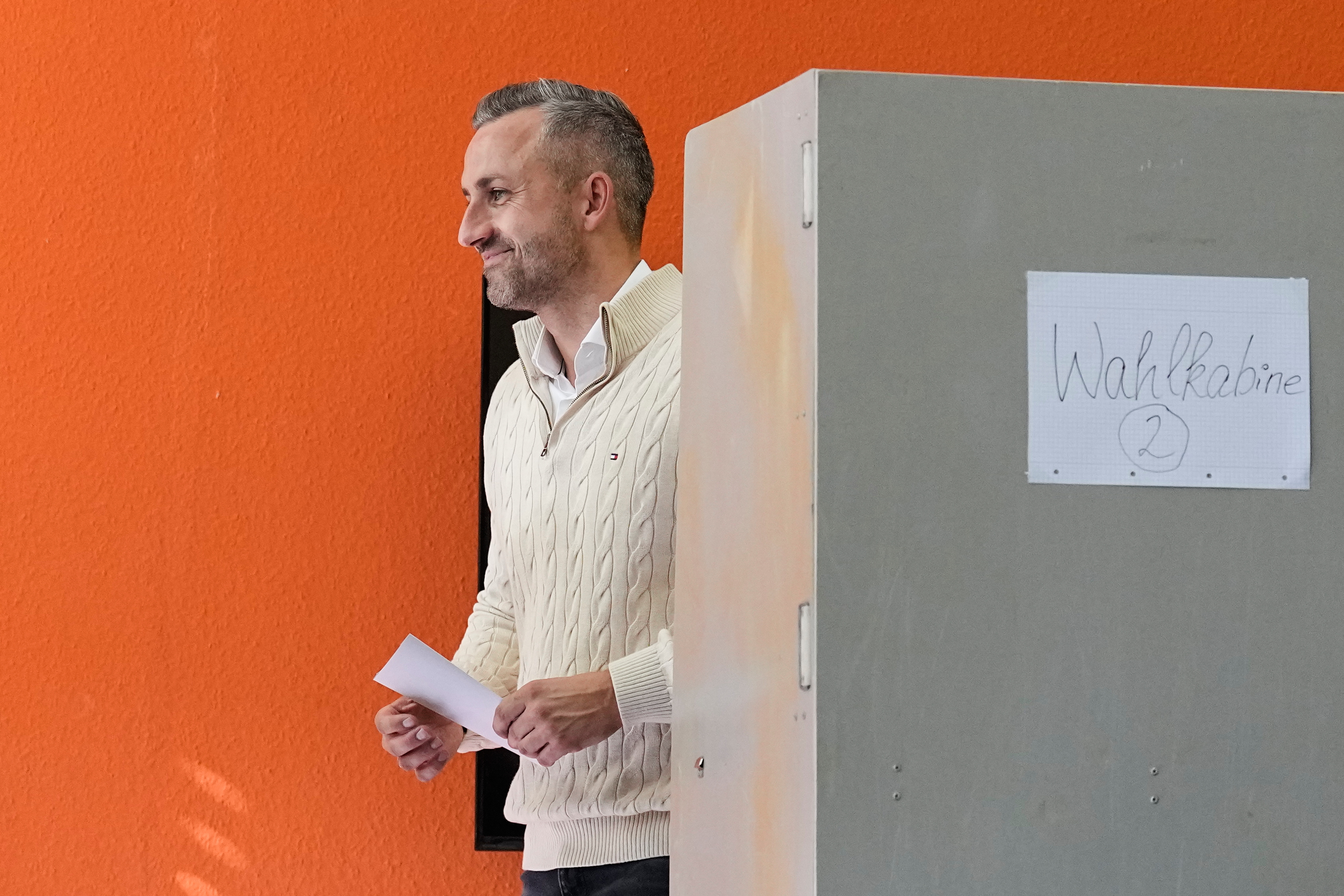
The air inside the community center smelled of damp coats, damp wool, and stale coffee. Outside, the early autumn wind stripped the last tired leaves from the birch trees lining the streets of Magdeburg. Inside, beneath the harsh buzz of fluorescent tubes, a row of weary poll workers sorted paper ballots with mechanical precision.
By six o'clock, the doors closed. The numbers, when they flickered onto public broadcast screens across Germany, hit like a physical blow.
The Alternative for Germany had surged to roughly 44.5 percent of the vote in the regional state election.
For months, political analysts in Berlin had tracked the drift. They spoke in clinical terms about voter volatility, economic stagnation under Chancellor Friedrich Merz, and the lingering resentment of post-reunification disparities in eastern Germany. But numbers on a spreadsheet fail to capture the heavy, anxious silence settling over living rooms from the Harz Mountains to the banks of the Elbe.
Consider what happens when a community stops believing that the status quo has its best interests at heart.
For over two decades, the Christian Democratic Union held the reins of power here, a steady, predictable hand that many local residents felt had turned a blind eye to crumbling infrastructure, disappearing rural post offices, and the quiet erosion of local industry. The discontent did not materialize overnight. It accumulated slowly, like sediment in a blocked pipe, year after weary year.
When exit polls revealed the dramatic shift—more than doubling the party's previous regional standing—it shattered the long-standing political arithmetic of the country. Mainstream parties had constructed an architectural marvel known colloquially as the firewall. This unwritten pact dictated that no democratic faction would ever touch, ally with, or legitimize the far right.
Yet walls are only as strong as the foundation of public trust beneath them.
When nearly half of a voting population decides that burning the fence down is preferable to maintaining a garden that no longer yields fruit, the architectural metaphors begin to crack. The party's charismatic lead candidate, Ulrich Siegmund, a figure whose political ascent was fueled as much by digital savvy on platforms like TikTok as by populist rhetoric, declared to cheering supporters that history had been written.
History, yes. But what kind?
The regional branch of the party had been categorized by domestic intelligence agencies as a verified right-wing extremist organization. That legal designation hangs over the proceedings like a storm cloud. If the party crosses the threshold to form an absolute majority of seats in the state parliament, it will mark the first time since the darkest chapters of the twentieth century that a far-right movement assumes regional executive power in Germany.
Even as the initial exit numbers suggested they might fall a fraction short of an absolute majority, the psychological barrier had already been breached. Turnout reached historic highs, proof that apathy had been entirely consumed by polarization. Voters did not stay home; they rushed to the ballot boxes to make a statement that reverberated far beyond the borders of Saxony-Anhalt.
The implications stretch toward the federal capital and across the broader European Union. Chancellor Merz faces an immense political reckoning. His coalition government has struggled to convince ordinary citizens that economic recovery is within reach or that immigration policies are functioning smoothly. When grocery bills remain stubbornly high and local factories close their gates, grand geopolitical strategies sound hollow to a worker sitting at a kitchen table wondering about next month's heating bill.
The tallying continues deep into the night under the watchful eyes of exhausted civil servants. Outside, the Magdeburg wind howls through empty streets, carrying the chill of an uncertain tomorrow. The votes are counted one by one, but the real tally is cultural and psychological, measuring the distance between a fractured populace and the institutions meant to hold them together.