The whistle blows at 3:45 PM on a damp Tuesday in November, and across the United Kingdom, a quiet disappearance begins.
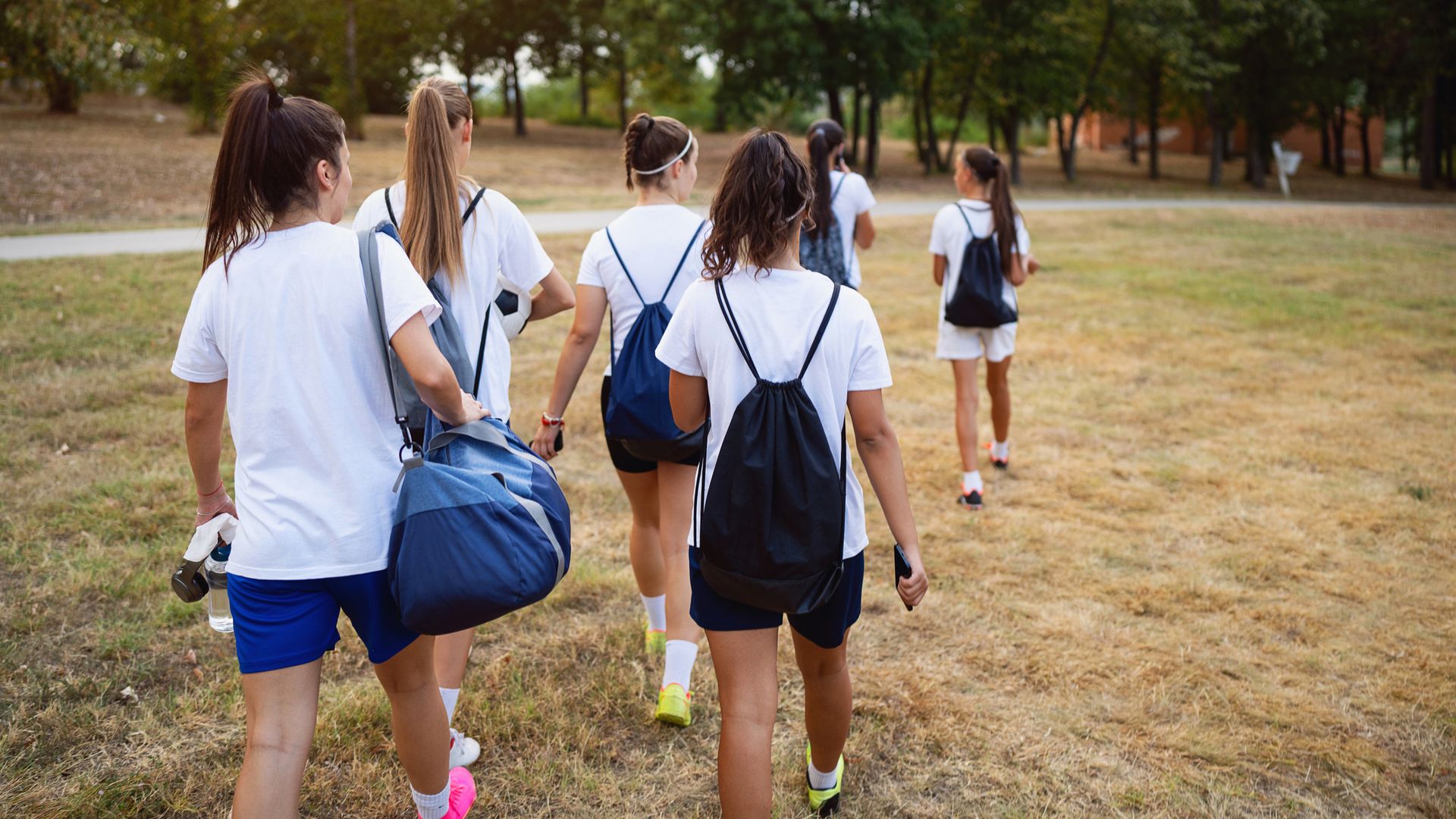
Stand by the iron gates of almost any British secondary school as the afternoon bell rings, and watch the crowd spill onto the pavement. You will see boys sprinting toward the local park with a battered football tucked under one arm, shouting over the roar of idling buses. Then look at the girls. Most of them are walking slowly, shoulders slightly hunched against the drizzle, clutching oversized tote bags and glowing smartphones. A few are headed to netball practice. Almost nine out of ten are going home to sit down.
This is not a guess, nor is it the nostalgic grumbling of an older generation convinced that teenagers have gone soft. According to a landmark global analysis by the World Health Organization, just 13 percent of adolescent girls in the UK meet the baseline recommendation of 60 minutes of moderate-to-vigorous physical activity each day. Put another way, 87 percent of British teenage girls are moving too little to sustain their developing bodies and minds. Among their male peers, the figure is hardly a triumph—only around 20 percent hit the daily target—but the gender gap is stark, stubborn, and widening during the exact years when lifelong habits solidify.
Numbers like "13 percent" have a way of sliding right off the human brain. We read the headline over morning coffee, feel a brief flicker of concern, and scroll on to the weather forecast. To understand what that statistic actually tastes like, smells like, and feels like in the bones, you have to step away from the spreadsheets and look at what happens to a girl between the ages of eleven and sixteen.
The Vanishing Act at Age Thirteen
Consider a hypothetical teenager—let us call her Maya. At ten years old, Maya was practically made of kinetic energy. She climbed the oak tree at the end of her cul-de-sac, raced her brother to the corner shop, and spent Saturday mornings tearing up and down a muddy five-a-side pitch with scraped knees and a grin missing two baby teeth. Movement was not a "health behavior" for Maya. It was simply how she inhabited the world.
Fast-forward four years. Maya is fourteen, sitting in the back row of a school changing room that smells sharply of cheap aerosol deodorant and damp wool.
What happened in those forty-eight months? Nothing dramatic. No single catastrophe broke her stride. Instead, she collided with a dozen invisible tripwires set across the terrain of British adolescence.
First came the uniform. For generations, UK school PE kits have seemed almost deliberately engineered to maximize self-consciousness during the exact window when a girl's body is changing fastest. Thin white polo shirts that turn translucent in the rain, unforgiving polyester shorts, and communal changing rooms where teenage eyes measure every curve against impossible social media standards. When you are fourteen and suddenly acutely aware of how your chest moves when you run—and when roughly half of school-aged girls report that breast discomfort or the lack of a proper sports bra stops them from exercising—standing still feels like the safest option available.
I remember that exact paralysis from my own school days, standing on the edge of a frosty hockey pitch in a skirt that barely covered my thighs, wishing the ground would swallow me whole before the ball rolled in my direction. You do not learn to love movement when movement feels like public humiliation. You learn to make yourself small. You learn to fade into the sidelines.
Why the Baseline Matters More Than We Admit
When public health officials talk about 60 minutes of daily activity, parents often hear a demand for elite athleticism. They picture grueling cross-country runs in sleet or expensive weekend club fees that stretch a household budget already buckling under grocery bills.
That misunderstanding sits at the heart of how we talk about youth fitness. The World Health Organization is not asking every teenager to train for an Olympic qualifier. Moderate-to-vigorous activity simply means elevating the heart rate and breathing faster—a brisk walk to the train station, dancing in a bedroom, cycling with friends, swimming, or chasing a ball around a court.
Yet biologically, that single hour acts as the primary architect of a young woman's adult health. During adolescence, a girl lays down roughly 90 percent of her peak bone mass. Think of teenage bones like a savings account that only accepts high-interest deposits until the age of twenty. Every jump, sprint, and sudden change of direction signals the skeleton to pack in more mineral density. Miss that window, and no amount of calcium supplements in your forties can fully rebuild the vault. Decades later, that quiet deficit shows up as a fractured hip from a minor fall on an icy pavement.
The stakes are equally urgent inside the skull. We are living through an unprecedented spike in anxiety, low mood, and self-harm among teenage girls across Britain, with NHS mental health referrals climbing steadily year after year. Physical exertion is not a magic cure-all for clinical depression, and pretending otherwise insults families navigating genuine psychiatric crises. Still, neuroscience leaves zero room for doubt about what regular movement does to an adolescent brain. Vigorous activity triggers a surge of brain-derived neurotrophic factor—essentially fertilizer for neural connections—while metabolizing excess cortisol and regulating sleep architecture.
When 87 percent of girls lose their daily outlet for physical exertion, they do not just lose cardiovascular fitness. They lose their sharpest natural pressure valve right when academic exams, peer pressure, and algorithmic social feeds turn up the heat.
The Myth of the "Unathletic" Girl
Spend enough time watching youth sports policy in Britain, and you start noticing a curious pattern. Whenever a report reveals low participation among girls, the reflex is almost always to try to "fix" the girls. Campaigns urge them to be braver, more confident, less worried about smudging their mascara or looking sweaty.
That framing gets the problem completely backward. Teenage girls are not broken, and they are not inherently lazy. The infrastructure around them was simply built for someone else.
Look closely at the average British school curriculum. From September to April, PE in state schools remains overwhelmingly dominated by traditional team invasion games: football, rugby, hockey, and netball. For the confident, naturally competitive kid, these sports are heaven. For the girl who hits a growth spurt early, who struggles with hand-eye coordination, or who simply hates being yelled at across a muddy field, the curriculum offers almost no doorway into joyful movement.
Imagine if we taught music by handing every eleven-year-old a trombone, forcing them to play solos in front of their classmates twice a week, and then declaring 87 percent of them "unmusical" when they quit at fourteen. We would recognize the absurdity immediately. Yet we run physical education on that exact model and act surprised by the dropout rate.
Outside the School Gates
The drop-off does not stop at 3:30 PM. Step into almost any neighborhood park in the UK after dark, and look at the multi-use games areas—those fenced-in tarmac cages built to give local youth a place to play. Nine times out of ten, they are occupied entirely by boys.
Researchers who study urban design and adolescent behavior call this "spatial exclusion," though any teenage girl could explain it to you in five seconds without a sociology degree. Single-entrance cages with poor lighting and zero seating feel like traps if you are outnumbered. Studies by organizations like Women in Sport and Make Space for Girls have documented how quickly girls abandon public parks once they hit puberty, pushed out not necessarily by overt hostility, but by the subtle, unmistakable message that public space belongs to boys who take up room, while girls are expected to sit on swings and watch.
Meanwhile, the digital world offers an effortless, frictionless alternative. A smartphone does not care if it is raining in Manchester. It does not require a £45 sports bra, a bus fare across town, or the courage to walk alone into a brightly lit leisure center where older boys are lifting weights near the entrance. TikTok and Snapchat offer instant social belonging from the safety of a duvet, quietly harvesting hours that previous generations spent wandering neighborhoods on bicycles until the streetlights flickered on.
What Actually Brings Girls Back
If the diagnosis feels bleak, the remedy is surprisingly practical—and it does not require billions of pounds in new stadium construction. Across the UK, pockets of teachers, community coaches, and local councils have already cracked the code by changing the environment rather than lecturing the teenagers.
Consider what happens when a school makes three deceptively simple adjustments.
First, abolish the rigid, body-policing PE kit. When schools allow girls to wear dark, breathable leggings, loose t-shirts, and supportive layers of their own choosing, participation jumps almost overnight. Dignity is not a luxury in physical education; it is the baseline requirement.
Second, decouple movement from humiliation and fierce competition. In pilot programs where schools introduced non-traditional options—boxercise, dance fitness, indoor climbing, yoga, or even brisk walking clubs where friends can chat while hitting their step counts—attendance among previously disengaged girls soared. Many girls do not hate exercise; they hate being watched, judged, and ranked while they do it. Give them autonomy, music, and the freedom to move alongside their closest friends without a scoreboard ticking overhead, and their natural appetite for physical play returns.
Third, rethink how we design public spaces. When local councils replace intimidating, fenced-in tarmac cages with open, well-lit social zones—featuring wider paths, sheltered seating, outdoor gym equipment, and accessible courts—girls show up. They want to be outside. They want to move, laugh, and test what their bodies can do. They just need spaces that signal they were actually invited.
The Stakes We Cannot Afford to Ignore
It is easy to treat teenage inactivity as a minor lifestyle quirk, something girls will naturally grow out of once they hit university or start paying for a gym membership in their twenties. History and epidemiology tell a harsher story.
Physical habits forged by age sixteen are remarkably sticky. A girl who leaves school believing she is "not sporty"—convinced that breathlessness is painful and her body is an ornament to be scrutinized rather than an instrument to be used—rarely wakes up at twenty-five eager to join a running club. The 13 percent figure today is a direct preview of tomorrow's chronic disease burden, tomorrow's mental health strain, and tomorrow's quiet epidemic of women who never got to experience the sheer, intoxicating power of their own physical strength.
Think back to Maya, standing by the school gates in the November drizzle.
Next Tuesday, imagine she walks out of the building wearing comfortable dark joggers instead of a thin uniform skirt she spent all afternoon tugging down over her knees. Imagine she and her two best friends cut across a newly lit park path toward an open studio where music is thumping through the speakers and nobody is keeping score. Twenty minutes into the session, her cheeks are flushed, her lungs are burning in the best possible way, and for the first time all day, she has forgotten to check her phone.
She is not thinking about bone mineral density, cortisol regulation, or World Health Organization benchmarks. She is just laughing, breathless, and alive inside her own skin—running again, because someone finally unlocked the gate.