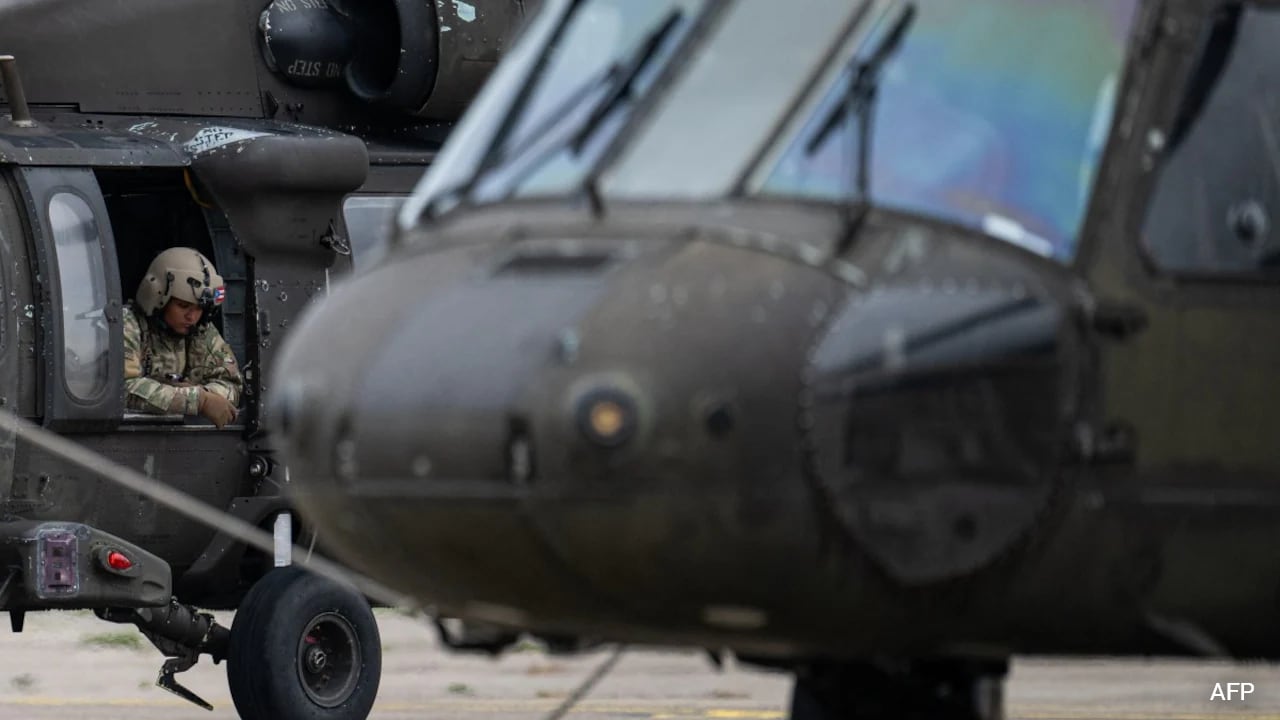
Rain falls differently in the English countryside. It does not storm or rage; it simply settles, heavy and grey, turning ancient hedgerows into slick, dark walls and muzzling the sound of footsteps on gravel. For decades, that quiet isolation has been the ultimate shield for the intelligence installations scattered across the United Kingdom—places where American and British officers sit side by side, drinking burnt coffee, staring at glowing screens that monitor the movements of Russian submarines, hypersonic missiles, and troop deployments across Eastern Europe.
Then came the knock at the door.
When British counter-terrorism police arrested a senior United States Army soldier on suspicion of spying for Russia, the news broke with the sterile, bureaucratic precision of a press release. One paragraph. A handful of statutory references. An official statement confirming the arrest under the National Security Act, noting that the individual remained in custody while investigators combed through digital devices and bank records. To the casual reader scrolling past headlines over morning toast, it looked like just another blip in the endless, static hum of geopolitical friction.
It was not a blip. It was an earthquake disguised as a footnote.
To understand why a single arrest in the UK sends cold shockwaves through the Pentagon, Whitehall, and NATO headquarters in Brussels, you have to stop thinking about espionage as a glamorous game of trench coats, microdots, and midnight drops in Vienna. That world is dead. Modern treason does not happen in smoky alleyways. It happens in climate-controlled briefing rooms, behind layers of biometric security, by people who passed every background check, smiled at every family barbecue, and swore an oath to defend the very secrets they decided to sell.
The Architecture of Blind Trust
Consider a hypothetical scenario—one mirrored in real-world counterintelligence cases from Fort Meade to London. Picture a senior non-commissioned officer or field-grade specialist, twenty years into a spotless career. Let us call him Miller. Miller is not a cartoon villain. He does not hate his country. Perhaps he is drowning in quiet, humiliating debt from a bad real estate bet, or nursing a festering resentment after being passed over for a promotion he felt he earned in blood and sweat across two deployments. Or perhaps, in the echoing loneliness of an overseas posting, someone online simply listened to him when nobody else did.
In the intelligence community, we call this the "insider threat," a sterile term that completely fails to capture the visceral nausea of discovering that the person guarding the vault is the one handing out copies of the key.
I have sat in rooms where classified briefings are delivered—rooms with no windows, where phones are locked in steel boxes outside the door, and the air smells faintly of ozone and stale paper. You feel safe in those rooms. The walls are thick. The clearances are Top Secret, Sensitive Compartmented Information. Every person around that table has been vetted by federal investigators who interviewed their childhood neighbors, audited their credit scores, and scrutinized their travel histories. That shared vetting creates an intoxicating, dangerous illusion: We are the vetted. We are the tribe. Everything inside this room is safe.
That illusion is precisely what Russian intelligence services exploit.
When a senior US Army soldier stationed in the UK turns, they do not merely compromise American secrets. They strike at the load-bearing pillar of Western defense: the "Special Relationship" and the Five Eyes intelligence alliance. Britain and the United States share a level of raw, unfiltered intelligence that exists nowhere else on Earth. British signals intelligence at GCHQ and American analysts at the NSA, alongside military bases like RAF Lakenheath, RAF Mildenhall, and RAF Croughton, operate as a single nervous system. When an American soldier on British soil is suspected of passing information to Moscow, the damage is instantly doubled. London has to ask itself a terrifying question: What of ours did he hand over?
How the New Espionage Actually Works
People often ask how a single soldier, even a senior one, could access material valuable enough to interest the Kremlin, and how British police—rather than American military investigators—ended up making the arrest.
The answer lies in the mechanics of modern warfare and the geography of jurisdiction.
First, a senior soldier in today’s US Army is rarely just a trigger-puller. With fifteen or twenty years of rank comes administrative reach, logistical oversight, and access to communications networks that map the arteries of NATO. You do not need the nuclear launch codes to cripple an alliance. Knowing the exact maintenance schedules of F-35 fighter jets based in Suffolk, the frequency-hopping protocols of battlefield radios, the vulnerabilities in satellite uplinks, or the precise rotational timelines of armored brigades heading toward the Baltic states is pure gold to Russian military planners. In a war of attrition, logistics and electronic warfare are everything. Give Moscow the map of how the West moves and talks, and you hand them the blueprint to blind us before the first shot is fired.
Second, jurisdiction on British soil is a delicate dance. Under the Visiting Forces Act and international agreements, US service members stationed in the UK exist in a dual legal reality. When an offense touches directly upon the national security of the United Kingdom—violating the UK's National Security Act 2023, which dramatically expanded British powers to prosecute foreign state threats—British authorities step forward. The Counter Terrorism Policing network, working alongside MI5, takes the lead on British soil. It means the betrayal was not merely an internal American disciplinary infraction; it crossed a line that threatened the host nation itself.
Think about the sheer audacity required to spy inside the United Kingdom right now. Since the 2018 Salisbury poisonings, where Russian military intelligence agents deployed a military-grade nerve agent on an English cathedral city, British counterintelligence has been on a war footing. MI5 and British police have dismantled spy rings—including the high-profile conviction of a Bulgarian network operating out of Great Yarmouth for Moscow—and expelled dozens of undeclared intelligence officers. Every camera, every financial transfer, every anomalous encrypted burst near a military installation is watched with predatory intensity.
To operate as a Russian asset in Britain today is to walk across a minefield wearing snowshoes. Yet, someone tried anyway.
The Invisible Casualties
It is easy to treat espionage as a victimless crime, a bloodless chess match played between rival capitals. It is nothing of the sort. Every leaked document has a human price tag attached to it, even if the bill arrives years later in a different hemisphere.
If a soldier hands over technical specifications for electronic countermeasures, a pilot flying over Eastern Europe might suddenly find their cockpit alarms silent until a surface-to-air missile is seconds from impact. If a soldier passes along the identities or operational patterns of allied personnel, an intelligence officer in Warsaw or Kyiv might disappear into a Russian detention facility.
And then there is the quieter, corrosive casualty: paranoia.
The moment handcuffs click shut on a senior soldier, a freeze descends over the entire base. Colleagues who shared meals with the suspect, who trusted them with their lives and their families' safety, are suddenly pulled into sterile rooms by counterintelligence agents. Did he ever ask strange questions? Did she stay late at the terminal? Did they suddenly pay off a car loan in cash? Every casual conversation from the past three years is replayed under a harsh fluorescent light. Trust—the invisible glue that allows a military unit to function under fire—curdles into suspicion. You start looking sideways at the person sitting at the next desk. You hesitate before sharing a file. Friction enters the machine, slowing down decisions that need to happen in seconds.
Moscow does not even need the stolen secrets to win that round. The arrest itself accomplishes half their mission by poisoning the well between Washington and London.
The Psychology of the Turn
Why do they do it? Having studied decades of counterintelligence failures—from Aldrich Ames and Robert Hanssen to the digital-age leakers like Jack Teixeira—I can tell you that the public consistently misunderstands the motive. We want it to be ideological. We want to believe the traitor was secretly reading Marxist theory or nursing a grand, misguided philosophy. That makes them alien to us. It makes them other.
The reality is far more uncomfortable because it is so painfully human.
Most modern traitors are driven by the mundane trinity of ego, grievance, and greed. They feel unappreciated by a massive, impersonal military bureaucracy. They are angry at a commanding officer. They are terrified of bankruptcy, divorce, or social ruin. And sitting on the other end of an encrypted messaging app is a Russian handler who is a master of psychological alchemy.
The handler never starts by asking for classified documents. They start by offering validation. They tell the target: You are smarter than your bosses. You deserve better. We respect your expertise. They ask for harmless, unclassified opinions first, paying a small sum in cryptocurrency—just enough to cover a overdue bill or a weekend trip. Once the target takes that first dollar, the trap snaps shut. Now the handler owns them. Now the requests escalate from public reports to restricted memos, and finally to the crown jewels of allied defense. By the time the soldier realizes they are no longer just "consulting" or venting, the prison sentence is already measured in decades.
What Happens in the Dark
In the wake of an arrest like this, the public rarely gets the satisfying, cinematic closure of a courtroom drama. National security cases move at a glacial pace, wrapped in layers of secrecy designed to protect the very intelligence that was compromised. If prosecutors reveal in open court exactly what documents the suspect possessed, they confirm to Moscow that the leak was genuine and expose the methods used to catch them.
So the machinery grinds out of sight. Digital forensic teams spend months peeling back encrypted partitions on phones and laptops, tracing cryptocurrency wallets through mixers, and reconstructing every keystroke made on classified terminals. Diplomats work frantically behind closed doors in London and Washington to conduct damage assessments, scrubbing compromised protocols, changing frequencies, and quietly relocating assets before Russia can act on whatever it bought.
To the outside world, the story vanishes from the news cycle within forty-eight hours, replaced by celebrity scandals, election polls, and weather forecasts.
It should not vanish from our awareness.
We live in an era where the borders between peace and war have dissolved into a permanent grey zone. Cyberattacks, undersea cable sabotage, disinformation campaigns, and human espionage are no longer preludes to conflict; they are the conflict. The arrest of a single senior soldier in the United Kingdom is a stark reminder that the strongest fortifications, the most advanced stealth fighters, and the deepest historical alliances all share the exact same vulnerability.
They are built, maintained, and guarded by human beings.
Somewhere in a high-security detention facility in Britain right now, a person who once wore the uniform of the United States Army sits alone in a concrete cell, listening to the rain beat against reinforced glass, tallying the exact cost of whatever promise, threat, or paycheck convinced them to trade away a lifetime of honor. And across the Atlantic, in quiet rooms lit by the cold glow of computer monitors, thousands of other men and women are quietly changing the locks, wondering who else might still be holding a key.