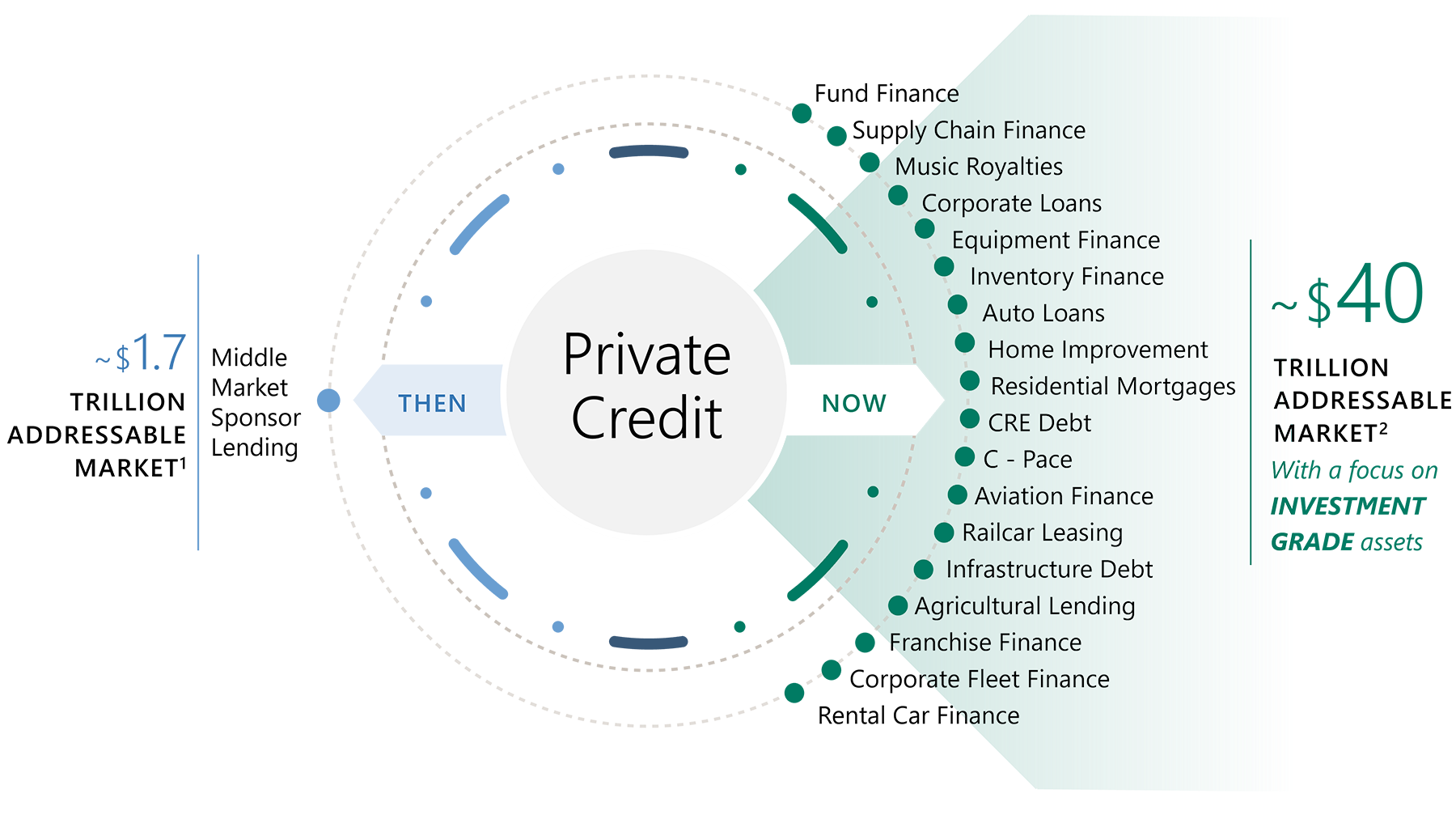
Blue Owl Capital just hauled in $9 billion in new commitments, a figure that would normally signal a victory lap for the private credit titan. But look closer. This massive capital injection arrives at the exact moment the industry’s armor is starting to crack. While the headline suggests a vote of confidence, the reality on the ground is far more desperate. Investors are currently trying to claw back more than $10 billion from the broader private credit market, forcing major managers to throw up the gates and restrict redemptions to keep their funds from collapsing under the weight of a sudden liquidity hunt.
The era of "easy yield" has ended. As we move through the second quarter of 2026, the $1.7 trillion private credit market is no longer the invincible alternative to volatile public markets. It is facing its first genuine existential crisis since the 2008 financial meltdown.
The Liquidity Trap
The $9 billion Blue Owl raised isn’t just growth capital; it is a defensive wall. For years, firms like Blue Owl, Blackstone, and Apollo sold retail and institutional investors on a dream of high-yield, low-volatility returns. They used "semi-liquid" structures—funds that promised investors they could get their money out quarterly, provided too many people didn’t ask at once.
That gamble is now failing. In early 2026, Blue Owl was forced to restrict redemptions from its $1.6 billion Blue Owl Capital Corp II (OBDC II) vehicle. They didn't just limit the cash; they opted to sell off assets to return capital to investors. When a fund manager starts selling the furniture to pay the guests, the party is over.
The industry calls this "gating." I call it a liquidity trap. These funds are packed with mid-market loans that are nearly impossible to sell quickly in a cooling economy. You cannot liquidate a $50 million loan to a regional car wash chain or a specialized software provider in forty-eight hours. When thousands of retail investors hit the "sell" button simultaneously, the math simply stops working.
Why the $9 Billion Matters Now
Blue Owl’s recent $11 billion in total new commitments for the quarter—headlined by that $9 billion credit push—is a strategic pivot. They are aggressively shifting toward "permanent capital." This is the holy grail for asset managers because, unlike those pesky retail funds, permanent capital cannot be withdrawn.
By locking in $9 billion now, Blue Owl is effectively pre-funding its survival. They are moving away from the fickle retail "wealth channels" that are currently in retreat and doubling down on institutional partners who have the stomach for a five-to-ten-year lockup.
The Default Shadow
The cooling of the market isn't just about people wanting their cash back. It’s about the quality of the loans themselves. For the last three years, private lenders have been winning deals by offering "covenant-lite" terms. They essentially told borrowers, "We’ll give you the money, and we won’t check your books too closely as long as the interest keeps flowing."
That leniency is coming home to roost. We are seeing a surge in "Payment-in-Kind" (PIK) toggles. This is a technical way of saying a company can't afford its interest payments in cash, so it just adds the debt to the end of the loan. It’s a giant game of "extend and pretend." Blue Owl claims its loss rate is a mere 0.13%, but that figure is a backward-looking metric. It doesn't account for the stress currently building in portfolios as interest rates remain stubbornly high and consumer spending begins to sag.
The New War for Assets
As direct lending to traditional software and healthcare firms becomes crowded and risky, Blue Owl is pivoting into Real Assets. Their recent $2.4 billion acquisition of Sila Realty Trust signals where the smart money is going: data centers and specialized infrastructure.
The logic is simple. A software company can go bust in a recession. A data center used by an AI giant is a physical fortress with a guaranteed tenant.
However, even this "flight to quality" has risks. The competition for these assets is driving prices to astronomical levels. If Blue Owl is overpaying for data centers to find a safe place to park that $9 billion, they are merely swapping one risk—default—for another—valuation collapse.
The Reckoning for Retail Investors
The most brutal truth of this "cooling" market is that the retail investor was the last one invited to the table and the first one to be locked in the room. Wealth management platforms spent 2024 and 2025 pitching private credit as a "safe" alternative to bonds. They neglected to mention that when the wind changes, the exit door is only four inches wide.
Blue Owl’s stock price tells the story that their PR department won't. The shares have cratered nearly 70% from their January 2025 peak. While the firm reports $315 billion in Assets Under Management (AUM), the market is pricing them as if the fees on those assets are under threat. They are. If you have to gate your funds, you eventually lose your ability to charge premium fees.
The $9 billion fundraise is an impressive feat of salesmanship in a hostile environment, but it does not solve the underlying rot. The private credit industry is currently a massive experiment in shadow banking that has never been tested by a prolonged downturn.
The coming months will determine if Blue Owl is the smartest player in the room or simply the one with the biggest pile of cash to burn while waiting for a recovery that might not come. Investors should stop looking at the AUM growth and start looking at the redemption queues. That is where the real story is written.
Move your capital into senior secured positions with actual covenants, or get out of the way before the gates close on the rest of the industry.