Cold rain on a Tuesday morning in Dover smells like diesel, wet wool, and salt. If you have stood near the ferry terminal when the first lorries roll off the ramp, you know the sound of cross-Channel trade before you ever read a committee report. It is the hiss of air brakes, the clatter of crates, the low rumble of engines that have spent half the night crossing dark water.
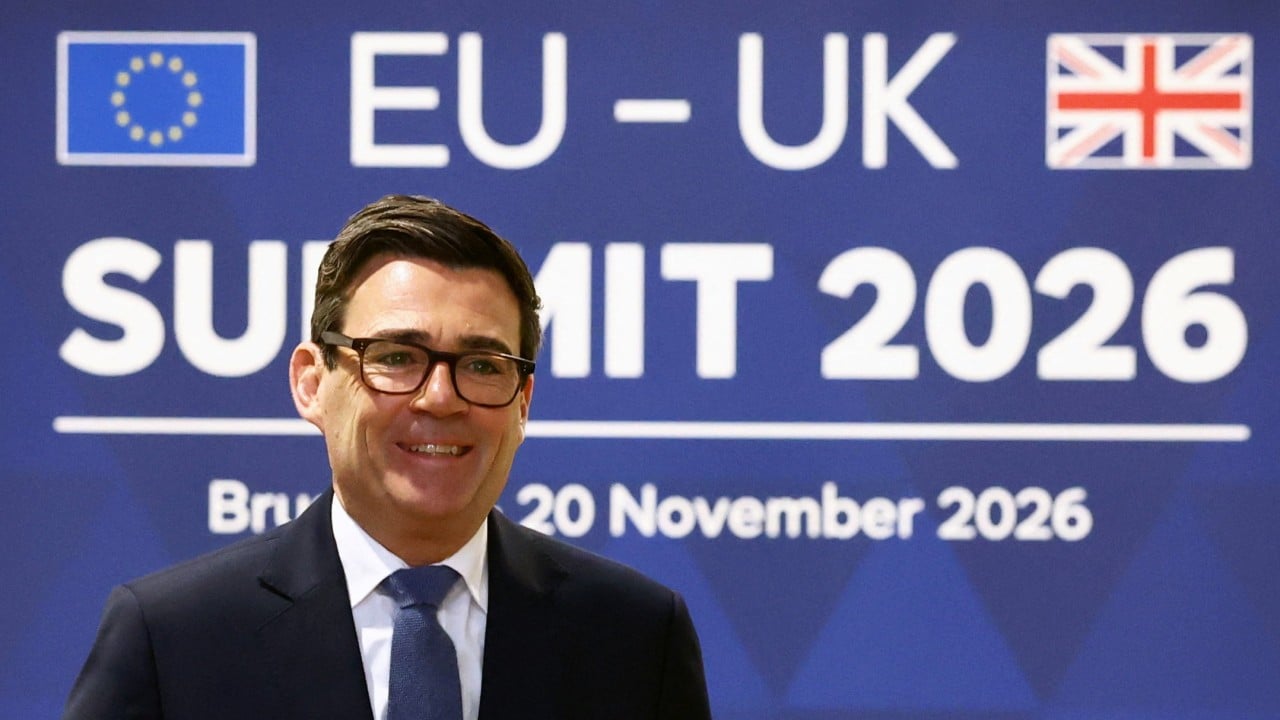
For years after Brexit, that sound felt heavier than it needed to. Every stamp, every form, every lingering suspicion between Westminster and Brussels turned ordinary movement into a negotiation. Now, talks between the United Kingdom and the European Union have moved into a different register. Negotiators have reached understandings on food and youth mobility, easing friction around trade in groceries and agricultural goods while opening doors for young people to live, work, and travel across the divide. In related updates, we also covered: The Terrifying Reality Behind the Xi and Trump Military AI Pact.
Yet the talks have hit a stubborn snag over university tuition fees.
On paper, that sounds like a technical dispute between ministries. A line item. A bureaucratic hang-up. USA Today has also covered this fascinating subject in great detail.
It isn't.
Tuition fees decide who gets to walk through an open door and who stays pressed against the glass. You can sign a youth mobility agreement promising young adults the chance to spend a year or two abroad, building friendships, learning a language, and discovering who they are away from home. That part can feel almost effortless compared with the math of higher education. Because the moment a teenager looks at a university prospectus across the Channel or across the Irish Sea, the romance of borderless youth runs straight into a ledger.
When a Mobility Deal Meets a Tuition Bill
Imagine a hypothetical student—let's call her Maya—growing up in a small town outside Leeds. She is eighteen, fluent enough in French to order coffee without wincing, and drawn to environmental policy. A youth mobility scheme between the UK and the EU sounds like an invitation written in bold ink. Spend a year in Lyon or Ghent. Intern at a local council. Learn how another country heats its homes or manages its rivers.
Now shift Maya's ambition slightly. Instead of a short-term placement, she wants a full degree at a European university, or perhaps a European student—let's make him a hypothetical young man named Lukas from near Hamburg—wants to study architecture in Edinburgh.
Suddenly, the cheerful promise of "youth" collides with the harsh arithmetic of "tuition."
Why do tuition fees trip up negotiations that seemed to be finding common ground on food and youth? Think of it like fixing the plumbing and the front porch of a house while arguing over who pays for the heated driveway. A food deal deals with standards, checks, inspections, and supply chains—things governments negotiate constantly, even when tempers run high. A youth mobility arrangement often focuses on temporary stays, visas, and cultural exchange, giving young people structured time abroad without automatically rewriting higher education funding rules.
Higher education is different. Universities are expensive ecosystems. Lecture halls have to be heated, labs equipped, researchers paid, and local taxpayers often have strong feelings about whether public money subsidizes international students or domestic ones. When the UK left the EU, EU students lost "home" fee status in England and faced higher international rates, while British students lost automatic access to programs like Erasmus and faced varied fee rules across Europe. Restoring or reshaping access isn't just a diplomatic gesture. It touches budgets, domestic politics, and a deep sense of fairness that cuts in two directions at once.
In Britain, voters who pay taxes often ask why foreign students should get discounts if domestic students are already carrying heavy loans. Across the EU, governments and universities weigh capacity, language of instruction, and the balance between welcoming talent and protecting local systems. Even when both sides want closer ties, neither wants to look like it gave away public money without a clear return.
A mobility pass can put a young person on a train. A tuition bill decides whether they can afford to stay once the train stops.
Why Food and Youth Moved Faster Than Classrooms
To understand why food and youth deals can come together while tuition stalls, it helps to look at what each issue demands from politicians.
Food is tangible. If border checks slow down chilled meats, dairy, or fresh produce, supermarket shelves show the strain quickly, and farmers feel it in their margins. Governments understand supply chains. They know that reducing friction on food helps keep prices steadier and trade flowing. A food deal is practical, measurable, and closely tied to everyday shopping baskets.
Youth mobility carries a different kind of appeal. After years in which young people bore a heavy share of pandemic disruptions and post-Brexit restrictions, the idea of letting young adults work, study temporarily, or travel more freely has a clear human pulse. It speaks to curiosity, language skills, and cultural warmth. Even when details like length of stay, caps, or visa costs require careful bargaining, the basic human story is easy to grasp: young people grow when they see how others live.
Tuition fees sit right at the intersection of money and identity.
I have spent enough time around university campuses—watching first-generation students unpack cardboard boxes in damp halls of residence, listening to parents count out savings on kitchen tables—to know how real that stress is. Higher education isn't an abstract policy debate when you are the one trying to figure out how to cover rent, books, and course fees without drowning in debt before your career even starts. A few thousand pounds or euros a year isn't a rounding error to a twenty-year-old. It is the difference between taking a chance and staying put.
Admittedly, untangling post-Brexit education rules is confusing. Even people who follow politics closely can get lost in who qualifies for what, which devolved nations set their own rules, and how reciprocal arrangements would work in practice. When a system feels that complicated, negotiators move cautiously. Nobody wants to sign a headline promise on tuition only to discover a budget hole six months later.
The Invisible Stakes Behind Every Negotiation
Still, caution has a cost.
When talks stall on tuition fees, the consequence isn't dramatic. There are no sirens. No dramatic press conference announcing a collapse. Instead, something quieter happens. A student looks at the numbers, sighs, and picks a closer option. Another decides university isn't worth the gamble at all.
Consider what happens next: over five or ten years, those quiet choices add up. Fewer British students study abroad for full degrees; fewer European students come to British campuses. Classrooms lose a slice of cross-border friction—the good kind of friction, where someone from another country challenges a habit you took for granted because you grew up surrounded by the exact same assumptions.
History shows how much those everyday encounters matter. Long before trade ministers draft a single clause, friendships formed in seminar rooms and shared flats shape how neighbors see one another a decade later. When education becomes more expensive or harder to navigate across borders, the loss isn't only financial. It narrows horizons on both sides.
At the same time, there is a genuine dilemma here that deserves honesty rather than cheap slogans. Governments aren't villains for guarding public budgets. If a university system is already stretched, or if domestic students feel squeezed by high costs at home, politicians feel pressure to protect what they have. Pretending tuition fees are easy to solve would ignore real constraints.
Yet leaving tuition stranded while food and youth move forward creates a strange mismatch. We can make it smoother to ship cheese and let young people take short-term trips, while still treating a full university education across the Channel like a luxury reserved for the wealthy or the lucky.
What Young People Actually Need Right Now
If you talk to young people on either side of the Channel, most aren't asking for grand speeches. They want clarity. They want to know whether a youth deal means a genuine chance to build experience abroad, or just red tape with a friendlier label. And if they dream of studying at a university across the divide, they want rules they can plan around without needing a legal degree just to read the eligibility chart.
Negotiators have already shown they can find common ground where it counts most for daily life and youth opportunity. Sealing deals on food and youth shows momentum—proof that even after years of friction, pragmatism still has room to breathe.
Unsticking tuition fees will take patience, hard compromises on who pays and who benefits, and a willingness to look past short-term political noise toward the people who will actually live with the outcome.
Picture a young person standing on a station platform with a scuffed backpack and a notebook full of questions, waiting for a train whose destination feels just slightly out of reach. The tracks are laid. The engine is idling. Everything comes down to whether the ticket costs more than they can bear.


