The flicker of a fluorescent bulb in a small Tehran bakery does not usually make international headlines. For Morteza, a third-generation baker whose hands are permanently dusted with flour, that flicker is a daily gauge of anxiety. When the power cuts out—a frequent casualty of an economy choked by isolation—the ovens cool, the dough spoils, and a day’s livelihood vanishes into the quiet heat.
Thousands of miles away, in sterile briefing rooms structured by mahogany and bulletproof glass, diplomats argue over percentages of uranium enrichment and the precise wording of sanctions waivers. These two worlds seem completely detached. They are not. Every stroke of a pen in Vienna or Washington recalibrates the thermostat in Morteza’s kitchen.
For years, the geopolitical narrative surrounding Iran has been told in the cold vocabulary of statecraft. We hear about centrifuges. We hear about frozen assets. We hear about strategic leverage. But the true story of the latest draft agreement between Iran and the world powers isn't found in the text of a treaty. It is found in the quiet, desperate calculus of everyday survival.
The Ghostly Ledger of Vienna
To understand the sudden shift in the wind, one must look at what is actually on the table. The latest draft agreement, heavily pushed into the light by Iranian officials, reads like a massive geopolitical swap meet. It is a document forged under the pressure of mutual exhaustion.
Consider the mechanics of the proposed deal. Under the current terms, Iran would freeze its most advanced nuclear activities, rolling back the clock on its uranium enrichment levels. In return, the global financial system would slowly unlock the gates. The most immediate relief would come in the form of a major US waiver allowing the release of billions of dollars in frozen Iranian oil revenues currently trapped in foreign banks, notably in South Korea.
Imagine a bank account containing a life-changing sum of money, but the bank teller is legally barred from letting you touch it. You can see the balance on the screen. You can calculate what it could buy. But you walk away empty-handed. For Iran, that frozen capital represents schools unbuilt, factories unmaintained, and medical supplies unpurchased.
The draft specifies a multi-stage timeline. First comes the psychological thaw—the signing and the immediate political posturing. Then comes the verification, a meticulous process where international inspectors must confirm that centrifuges have ground to a halt. Only then do the financial pipelines begin to clear. It is a structure built entirely on a foundation of profound mutual distrust.
The Anatomy of an Economic Chokehold
The word "sanctions" sounds clinical. It evokes images of briefcases and bureaucratic decrees. In reality, a sanction is a physical weight. It is the reason a hospital administrator in Isfahan cannot source replacement parts for an MRI machine, forcing doctors to make diagnostic guesses based on outdated X-rays. It is the reason a software developer in Shiraz cannot purchase a legitimate license for the tools they need to compete globally, forcing them into the shadow economy of pirated code.
Let us look at the numbers that define this reality. Before the reimposition of heavy US sanctions, Iran exported upwards of two million barrels of crude oil per day. That number plummeted to a fraction of its peak, forcing the country to rely on complex, dangerous smuggling networks and steep discounts to willing buyers, mostly in Asia.
When a nation's primary economic engine is forced to run on fumes, the currency acts as the ultimate stress gauge. The Iranian rial has spent years in a downward spiral against the US dollar. For the citizen on the street, this isn't an abstract economic chart. It means that the price of milk, eggs, and meat can double over a weekend. Money loses its meaning as a store of value; it becomes a melting ice cube that must be spent immediately before it loses the power to buy bread.
The proposed US waiver on oil sanctions is the valve meant to release this immense pressure. By allowing Iran to sell its oil openly again and access the proceeds through legitimate banking channels, the deal aims to inject a massive dose of oxygen into a suffocating economy.
The Nuclear Scale
The counterweight to this economic relief is, of course, the nuclear restrictions. For Western negotiators, this is the core of the entire exercise. The draft agreement demands that Iran cap its uranium enrichment far below the thresholds required for a weapon. It requires the dismantling, or at least the mothballing, of advanced centrifuges that spin at supersonic speeds to separate isotopes.
To understand the complexity, think of the nuclear program as a high-performance engine that has been running at redline for months. Turning it off isn't as simple as flipping a switch. It requires technical reverse-engineering, under the watchful, cynical eyes of international monitors who are paid to believe that everyone is lying to them.
The skepticism is justified by history. Every participant in these talks carries the baggage of broken promises. The Iranians remember 2018, when a previous administration walked away from a fully functioning agreement with a single signature, plunging the Iranian economy back into the abyss. The Americans and their allies remember decades of covert facilities and eleventh-hour deflections.
This historical scarring explains why the current draft is so agonizingly precise. It is not a grand gesture of peace; it is a transactional blueprint where every single concession from one side must be met by a simultaneous, verifiable concession from the other.
The Hidden Capital in Foreign Vaults
A particularly volatile element of the draft involves the release of Iranian prisoners alongside the unfreezing of assets. This is the human currency of high-stakes diplomacy. Officially, these tracks are separate. The diplomats insist that the fate of detained dual-nationals is a humanitarian matter, distinct from the technicalities of uranium hexafluoride.
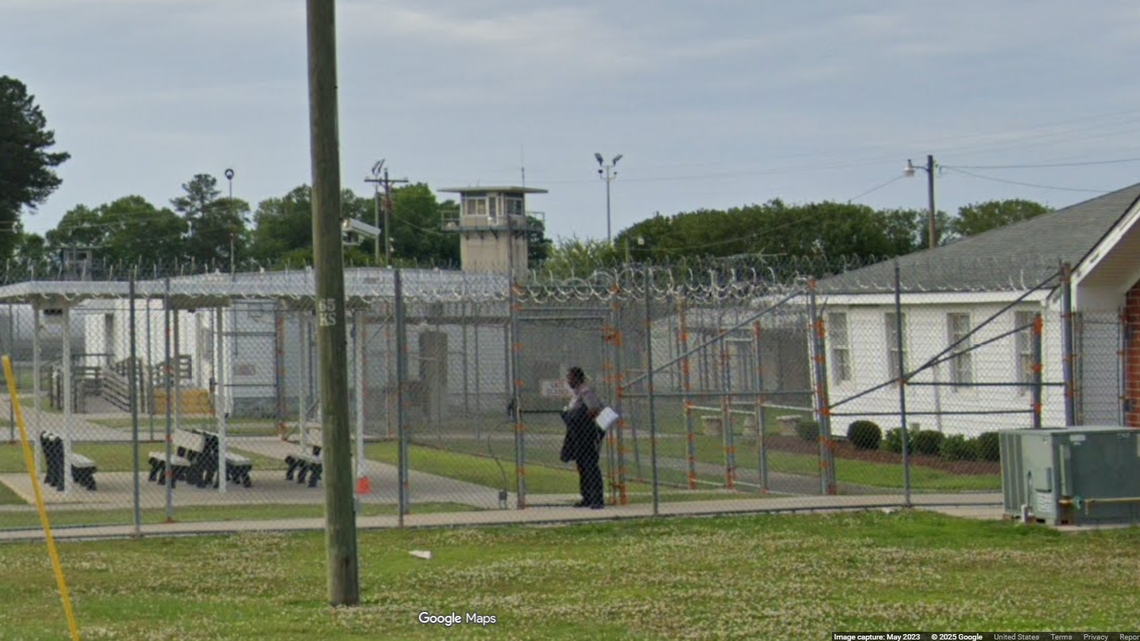
Everyone knows better. The sequencing of these events is a choreographed dance. The release of funds from South Korean accounts is expected to coincide almost perfectly with the freedom of individuals who have spent years inside Evin Prison, watching the seasons change through barred windows while their families lobbied politicians in Washington, London, and Paris.
For the families of those detained, the geopolitical arguments are mere background noise to the agonizing daily reality of waiting. A phone call that lasts three minutes. The crackle of a bad connection. The desperate attempt to pack a lifetime of love and reassurance into a few fleeting seconds before the line goes dead. For them, the success of the draft deal isn't measured in barrels of oil or enrichment percentages. It is measured in footsteps approaching the front door.
The Domestic Tightrope
The tension inside the negotiating rooms is mirrored by the tension within Iran itself. The leadership in Tehran is playing a dangerous game of balance. On one hand, they must project absolute strength to their domestic hardliners, framing any agreement not as a compromise, but as a total capitulation by the West to Iranian resilience.
On the other hand, they are acutely aware of the growing restlessness among their own population. The protests that have flared across the country in recent years may be sparked by different triggers, but they are all fueled by an underlying undercurrent of economic despair and a lack of hope for the future. The youth of Iran—highly educated, deeply connected to the global digital culture despite government filters—are tired of living in an economic fortress. They want jobs. They want travel. They want a normal life.
The draft deal represents a lifeline for the regime, a chance to stabilize the ship before the waters become completely unmanageable. But it also carries risk. If the economic relief does not trickle down quickly to the middle and working classes, if the billions of unlocked dollars are seen as funding regional proxies or enriching a corrupt elite rather than fixing the power grid and lowering food prices, the public cynicism could turn into something far more dangerous for the state.
The Ripple Effect Beyond the Borders
The consequences of this draft agreement extend far beyond the borders of Iran and the United States. In Riyadh and Tel Aviv, the developments are watched with an intensity that borders on obsession.
For regional rivals, any deal that enriches Iran is seen as a direct security threat. They argue that sanctions relief will inevitably provide Tehran with the financial resources to increase its influence across the Middle East, from Yemen to Lebanon. The regional calculus is binary: a gain for Iran is an automatic loss for its neighbors.
This regional anxiety ensures that even if the draft is signed, the peace it brings will be armed and fragile. The deal does not address Iran's ballistic missile program, nor does it touch upon its regional network of alliances. It is a narrow, specific instrument designed to solve one specific crisis—the nuclear one—while leaving the rest of the geopolitical chessboard as volatile as ever.
The Unseen Horizon
We return to Morteza in his bakery. He does not read the draft texts. He does not follow the Twitter accounts of the diplomats in Vienna. He judges the progress of world history by the price of a sack of flour and the reliability of the current flowing through his old wiring.
The true test of this diplomatic marathon will not be found in the triumphant press conferences or the analysis of think-tank experts. It will be found in whether a young graduate in Tehran can look at their future and see something other than a dead end. It will be found in whether a mother can walk into a pharmacy and find the medicine her child needs without having to choose between health and hunger.
The machinery of international diplomacy is massive, slow, and inherently unfeeling. It grinds along on the fuel of national interests and strategic ambition. But every now and then, the gears align in a way that offers a glimpse of a different path. The draft agreement currently circulating through the capitals of the world is not a guarantee of peace, nor is it a sudden outbreak of international friendship. It is simply a pause. A moment where the actors have decided that the cost of conflict has finally surpassed the cost of compromise.
Outside the bakery, the sun sets over the Alborz mountains, casting long shadows across the concrete and traffic of Tehran. The city holds its breath, accustomed to disappointment, yet stubbornly, quietly, waiting for the light to stay on.