The grease under Hans-Dieter’s fingernails is a permanent map of forty years on a factory floor in Wolfsburg. He is a master of the precision fit—the man who ensures the door of a high-end German sedan closes with that specific, muffled thud that signals engineering perfection. To Hans, that sound is the heartbeat of the European middle class.
But thousands of miles away, in a room filled with gold trim and the heavy air of geopolitical posturing, that thud sounds like a target.
Donald Trump has once again set his sights on the European automotive industry. It isn’t just a policy tweak or a minor adjustment to a trade ledger. It is a renewed offensive in a long-standing grievance. He looks at the streets of New York and sees too many Mercedes-Benzes and not enough Fords. To him, the math is simple: a 25% tariff on every car crossing the Atlantic.
To Hans, the math is a ghost that haunts his pension.
Economics is often treated as a series of spreadsheets and fluctuating line graphs. We talk about "trade imbalances" and "reciprocal duties" as if they are weather patterns we can’t control. They aren’t. They are choices. When a politician decides to hike a tariff, they are effectively placing a wall between the person who builds a machine and the person who wants to drive it.
The logic behind the move is rooted in a philosophy of "America First" protectionism. The argument suggests that by making foreign cars prohibitively expensive, American consumers will naturally pivot to domestic brands. It is a gamble on the loyalty of the wallet. If a BMW suddenly costs fifteen thousand dollars more than it did last Tuesday, the theory goes, the customer will walk across the street to the Chevrolet dealership.
But markets are rarely that obedient.
Consider the modern supply chain. It is not a straight line from point A to point B. It is a web. A car assembled in Munich might use sensors designed in California, leather sourced from Italian cattle, and software written by a team in Bangalore. When you strike at the finished product, the vibrations travel back through every strand of that web.
The invisible stakes are found in the local dealerships in Ohio and Florida. These are small businesses, often family-owned, that employ mechanics, sales reps, and administrative staff. If the inventory dries up because the price has been artificially inflated beyond the reach of the local community, the lights go out in the showroom long before they dim in the factory in Wolfsburg.
The tension between Washington and Brussels has reached a fever pitch. The European Union is not a passive observer in this drama. They have their own arsenal. For every tax placed on a German fender, there is a retaliatory strike waiting for American bourbon, Harley-Davidson motorcycles, or Levi’s jeans. It is a cycle of escalating resentment that treats the consumer as a pawn in a game of global chicken.
The irony is that these tariffs often hurt the very people they claim to protect. When competition is stifled, innovation slows down. If an American manufacturer knows their foreign rival is being taxed out of the market, the pressure to build a better, more efficient, or more affordable vehicle evaporates. The consumer ends up paying more for a product that hasn't improved.
It’s a tax on the dream of choice.
Imagine a young professional in Chicago. She’s saved for three years to buy the car she’s always wanted—a compact European hatchback known for its safety ratings. Suddenly, the price jumps. It’s no longer a matter of preference; it’s a matter of math. She settles for something else. Something she didn’t really want. That’s the emotional tax of a trade war. It’s the small, daily friction of living in a world where your options are dictated by a trade representative's bad mood or a campaign promise made in a swing state.
We are told this is about "fairness." Trump argues that Europe treats the United States unfairly on trade, pointing to the 10% duty the EU currently levies on American cars compared to the 2.5% the U.S. charges for European sedans. On the surface, the disparity looks like a smoking gun.
But the details matter. The U.S. already imposes a 25% tariff on light trucks and SUVs—the famous "Chicken Tax" from the 1960s—which are the primary exports of American automakers. The scales aren't just tipped; they’re weighted with decades of historical baggage and strategic maneuvering.
The human element gets lost in the shouting matches. We forget about the shipping clerks in the Port of Baltimore whose hours are cut when the Ro-Ro vessels arrive half-empty. We forget about the software engineers in Stuttgart who are told the "American Project" is being shelved indefinitely.
There is a specific kind of silence that falls over a factory when the assembly line stops unexpectedly. It’s a heavy, expectant quiet. It’s the sound of a thousand families wondering if their mortgage payments are still secure.
Trade wars are not fought with soldiers, but they have casualties. They are fought with pens and press releases, but the wounds are felt in bank accounts and dinner table conversations. The renewed pressure on EU cars is a signal that the era of global cooperation is being traded for an era of transactional leverage.
The world is getting smaller, yet we are intent on building higher fences. We are told these fences will keep us safe, but they mostly just keep us apart. They turn neighbors into competitors and partners into rivals.
Hans-Dieter stands by his station in Wolfsburg, his hand resting on a gleaming silver chassis. He knows every bolt, every seam, every curve. He doesn't see a "trade imbalance." He sees a piece of work that he is proud to send across the ocean. He sees a connection to a driver he will never meet, a person who will rely on his craftsmanship to get their children to school or to drive home after a long shift.
When the tariff hits, that connection is severed. The car remains on the lot. The driver stays in their old, less-safe vehicle. The grease stays under Hans’s fingernails, but the pride begins to chip away, replaced by the cold realization that in the halls of power, his life’s work is just a decimal point to be moved.
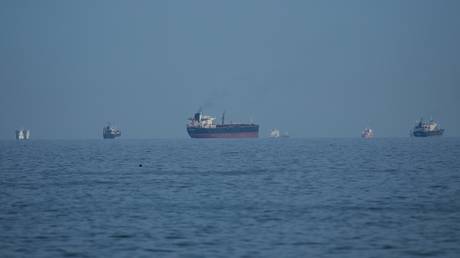
The sun sets over the Atlantic, casting a long shadow across the shipping lanes. Somewhere in the middle of that vast, grey expanse, a freighter carries thousands of cars toward a coastline that may no longer want them. The engines hum, oblivious to the signatures being dried on parchment in a distant capital, while the world waits to see if the next thud we hear is the sound of a door closing or a bridge collapsing.