The dust on my baseboards had achieved a kind of geological stratification. Living in a cramped third-floor walk-up in Manhattan means constantly negotiating with grime. It is a tax paid in friction. When an app called Shift offered to send two people to scrub my bathroom, wash my dishes, and organize my chaotic kitchen pantry entirely for free, I didn't look for a catch. I looked at my sink.
Shame is a powerful motivator. It blinds you to the oddity of a transaction until the transaction is already happening in your living room. Expanding on this idea, you can also read: The Asymmetric Cyber Threat of Frontier Artificial Intelligence Models.
Two young men arrived at my door on a Tuesday morning. They were polite, clad in matching t-shirts, and looked less like traditional housekeepers and more like tech workers who had lost a bet. They were college graduates who had bounced around the volatile startup ecosystem before landing this gig.
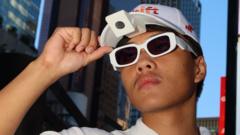
Then came the hardware. Before lifting a sponge, each man strapped a bulky camera rig to the front of his baseball cap. Observers at The Next Web have also weighed in on this trend.
The lenses pointed straight ahead, mimicking their exact line of sight. These were egocentric cameras, designed to capture the world precisely as a human eye experiences it. For the next four hours, every swipe of a rag, every discarded envelope on my desk, and every medicine bottle in my cabinet would be converted into digital code.
We are used to paying for services with money. We are increasingly used to paying for software with our personal data. But watching a living person scrub your toilet bowl while a camera beams the geometry of your private mess to a server cloud in Germany feels entirely different.
The startup behind this operation is MicroAGI. They are not a cleaning franchise. They do not care about the hygiene of New York apartments. They care about training data. Specifically, they are chasing the holy grail of physical automation: teaching a machine how to navigate the unpredictable, chaotic wilderness of a human home.
Consider the engineering problem. A digital algorithm can master chess because the board has fixed rules and sixty-four squares. It can generate text because language follows predictable patterns. But a kitchen sink is a nightmare of physics. The lighting changes as clouds pass outside the window. A ceramic mug reflects light differently than a greasy frying pan. A stack of plates is a shifting tower of fragile variables.
To a robot, my messy apartment isn't a room. It is an unsolved mathematical equation.
"Models need to learn how their hands, cameras, and environments work together," the company’s founder recently noted on social media.
To bridge that gap, the company has bypassed the laboratory. They are using human beings as flesh-and-blood marionettes, recording their movements to create an instruction manual for the machines meant to replace them. It is an intricate, slightly dystopian trade. I received a pristine apartment. The tech company received thousands of frames of high-resolution, first-person footage of manual labor.
I sat on my fire escape while they worked. The sound of running water and the scratch of a scouring pad drifted through the window. I felt a strange, creeping vulnerability. Privacy advocates frequently warn that we underestimate what in-home recordings capture. The company promises that an automated script blurs out faces, tax documents, and computer screens before any human engineer views the footage.
But a home is more than a collection of text. The objects we keep tell a story about our psychological vulnerabilities, our health, and our daily habits. By allowing those cameras inside, I had traded the digital blueprint of my private life for two hundred dollars worth of complimentary labor.
The economics of the arrangement are brutal and brilliant. The company pays these operators roughly twenty dollars an hour to wear the rigs. In the first quarter of this year alone, over ten thousand people across fifteen countries earned millions of dollars by filming themselves doing chores, fixing cars, and running errands. The free cleanings in New York are simply a clever marketing hook to scale up the pipeline.
Data is the ultimate currency. The foundation models of the digital world are becoming commoditized. In the near future, anyone will be able to download a powerful, open-source digital brain. The physical hardware—the motors, the silicon, the batteries—will be mass-produced at a low cost.
The corporate empires of the next decade will not be defined by who builds the best machine. They will be defined by who owns the proprietary, unscrapable dataset of physical reality.
When the cleaners finished, the apartment smelled faintly of pine and bleach. The counters were immaculate. The geological dust on the baseboards was gone. The two young men packed their sponges, unclipped their head-mounted cameras, and walked down the stairwell to their next appointment.
I stood in the center of my silent, sparkling living room. The air was clean, but it felt hollow. Every corner of the space had been mapped, digested, and filed away into a corporate dataset. I had a spotless home, but as I looked at the clean shelves, I couldn't shake the feeling that the room no longer belonged entirely to me.