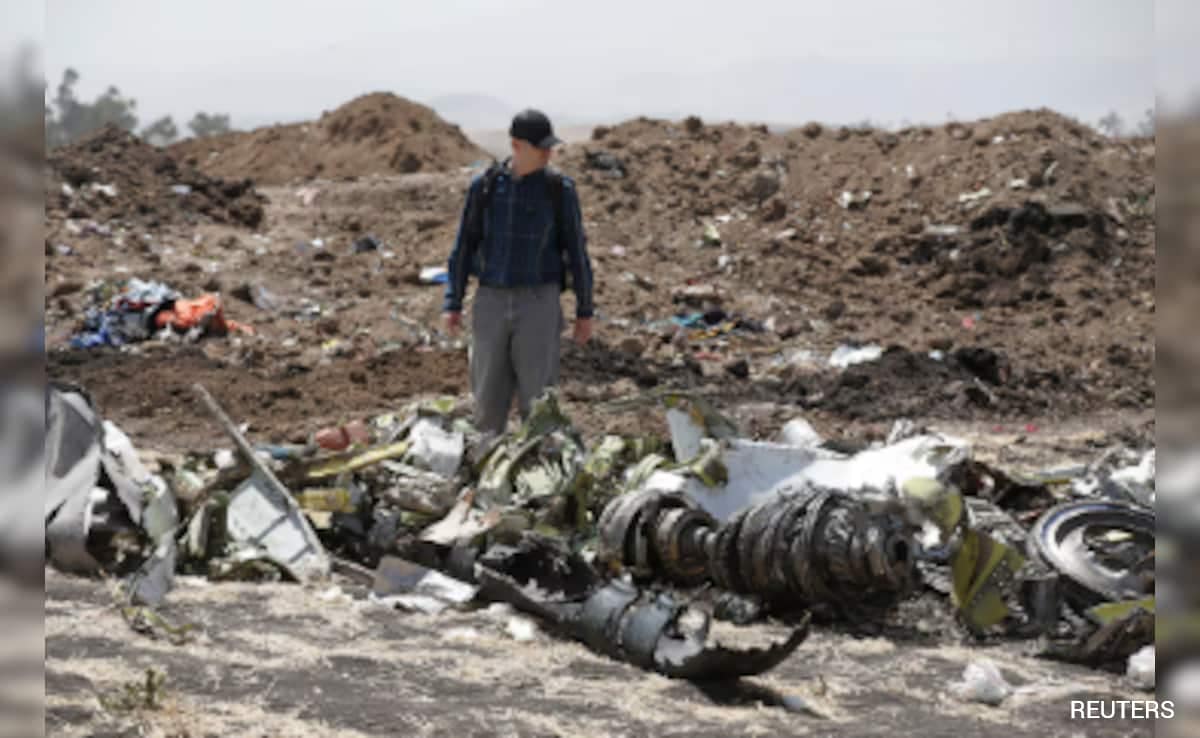
The metal doesn’t forget. In the quiet hangars where engineers pull apart the jagged remnants of what used to be a flight deck, the physical evidence of a disaster tells a story that no legal deposition can quite capture. It is a story of sensors that lied, software that took control, and a corporate culture that forgot the weight of the souls it carried through the sky.
Six years have passed since Ethiopian Airlines Flight 302 plowed into the earth outside Addis Ababa. Six years of grief, Congressional hearings, and technical fixes. Yet, for the families left behind, the air remains thick with the scent of unfinished business. A fresh legal storm is gathering, and it isn't just about money. It is about whether a corporation can truly be held accountable for the ghosts it created.
The Ghost in the Machine
A modern aircraft is a marvel of balance. It sits at the intersection of physics and faith. When you sit in 14B, sipping a ginger ale, you are trusting that the thousands of lines of code governing the plane’s flight characteristics are written with your life in mind.
In the case of the 737 MAX, that trust was intercepted by a piece of software known as MCAS.
To understand why the latest lawsuit matters, you have to understand the betrayal of the design. Boeing wanted a bigger engine on an old frame. To make it work, they moved the engines forward and up. This changed how the plane handled, making it prone to pitching its nose toward the clouds during certain maneuvers. To fix this, they didn't redesign the wing. They wrote a script.
MCAS was designed to push the nose down automatically if a single sensor—just one—suggested the plane was stalling. The pilots weren't told it existed. It was a secret guardian that turned into an executioner. When that lone sensor failed on Flight 302, the plane began a mechanical tug-of-war with the humans at the controls. The pilots pulled up. The computer pushed down.
Gravity won.
The Boardroom and the Battlefield
The new litigation centers on a grueling reality: the families argue that Boeing's previous legal maneuvers were a shield, not a solution. They are challenging the very foundation of the 2021 deferred prosecution agreement. To the lawyers in mahogany-row offices, that agreement was a tactical success—a way to avoid the stain of a criminal trial by paying a $2.5 billion fine. To a father who lost his daughter in the red dirt of Ethiopia, it felt like a payoff.
Consider the math of a corporate tragedy. $2.5 billion sounds like an astronomical sum. But break it down. The majority of that money went back to the airlines for their lost profits. Only a fraction reached the families. In the eyes of the law, a life has a price tag. In the eyes of a survivor, that price tag is an insult.
The current legal push seeks to peel back the layers of how decisions were made during the "return to flight" effort. It asks a haunting question: Did the pressure to keep the stock price buoyant outweigh the necessity of absolute transparency?
The Anatomy of Silence
Safety isn't just about redundant systems or titanium bolts. It is about a culture where the lowest-level technician feels empowered to scream "Stop" when something feels wrong. For decades, Boeing was that culture. It was an engineering firm that happened to make money.
Somewhere along the way, the polarity flipped. It became a finance firm that happened to make airplanes.
The shift was subtle at first. Tightened deadlines. Outsourced coding. A frantic race to keep up with Airbus. The 737 MAX was the byproduct of that frenzy. When the planes started falling, the initial corporate response wasn't a humble admission of failure. It was a defense of the "process." They pointed fingers at foreign pilot training. They suggested that perhaps the human element was the weak link.
But the data logs didn't lie. The pilots on Flight 302 followed the procedures. They did exactly what they were trained to do with the limited information they had. They were fighting a ghost they didn't know was in the room.
The Weight of the Evidence
What makes this new legal challenge different is the timing. Boeing is currently under a microscope unlike any other in its century-long history. Between mid-air door plugs blowing out and whistleblowers coming forward with claims of systemic quality control failures, the "MAX" brand has become synonymous with a loss of institutional integrity.
The families aren't just suing for damages anymore. They are suing for the truth. They want the internal communications that haven't seen the light of day. They want to know who knew the MCAS system was dangerous before the first crash in Indonesia, and why the planes weren't grounded immediately after.
Legal experts often talk about "willful blindness." It is a concept that suggests if you ignore a glaring danger because acknowledging it would be inconvenient or expensive, you are just as liable as if you had caused the harm intentionally. This is the mountain the plaintiffs are trying to climb. They are trying to prove that the silence in the boardroom was a choice.
A Legacy Written in the Soil
Walking the site of a crash is a sensory assault. There is a silence there that feels heavy, as if the earth itself is holding its breath. There are still small pieces of white plastic and shredded wiring embedded in the ground, years after the investigators packed up their kits.
Every time a new lawsuit is filed, those fragments are unearthed again.
The aviation industry operates on a razor-thin margin of error. We fly because we believe in the math. We believe that the people building the machines are as terrified of failure as we are. When that belief is shattered, it doesn't just hurt the company's bottom line. It changes how we look at the horizon.
Boeing argues that it has transformed. It points to new safety committees and a revised flight control system. It claims the 737 MAX is now the most scrutinized aircraft in history. And technically, they are right. The plane is likely safer now than it ever would have been without the tragedy.
But safety bought with blood is a bitter victory.
The courtroom in the coming months will be filled with jargon. Lawyers will argue over "jurisdictional standing" and "liability caps." They will use dry, technical language to describe the final six minutes of 157 lives. They will try to turn a human catastrophe into a balance sheet adjustment.
The families will be there, too. They will be holding photos of people who should have been at Thanksgiving last year. They will be the living reminders that while a corporation can settle a case, it cannot settle a conscience.
The metal remembers. The families remember. And as the gavel falls, the world is forced to remember that in the high-stakes game of global commerce, the most expensive thing you can lose isn't a contract. It's the right to be trusted.