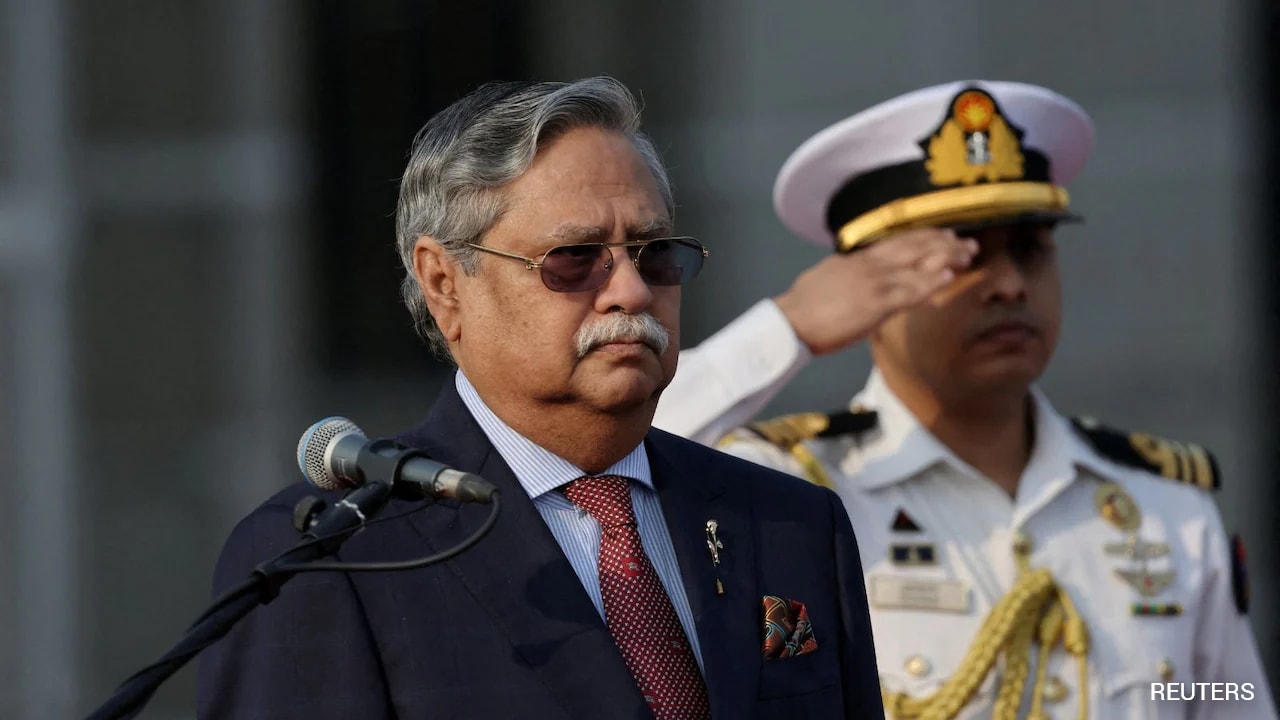
Bangladesh President Mohammed Shahabuddin has officially stepped down. His resignation, formally submitted on July 24, 2026, marks the end of a turbulent tenure as the country's 22nd head of state.
While the official reason points directly to worsening health problems, the political reality on the ground in Dhaka tells a far broader story.
Official Reason : Severe medical conditions (Autonomic Neuropathy, heart disease, kidney issues)
Constitutional Basis : Article 50(3) of the Constitution of Bangladesh
Interim Successor : Parliament Speaker Major (Retd) Hafiz Uddin Ahmed
Timeline for New Election : Within 90 days under Article 54
Health Issues Behind the Resignation Letter
The 76-year-old former judge and Liberation War veteran cited multiple severe medical conditions in his letter to Parliament Speaker Hafiz Uddin Ahmed.
In his official statement, Shahabuddin detailed a recent diagnosis of Autonomic Neuropathy—a nervous system disorder that affects involuntary bodily functions.
"Due to this illness, I sometimes lose consciousness briefly. Because of the prevalence of these diseases, I am physically and mentally incapable of discharging the responsibilities of such an important constitutional post," Shahabuddin wrote in his resignation letter.
Beyond autonomic neuropathy, the former president disclosed long-standing struggles with:
- Heart disease (including a prior bypass surgery)
- High blood pressure
- Diabetes
- Kidney complications
Under Article 50(3) of Bangladesh's Constitution, a president may resign by writing under his hand addressed to the Speaker. That formal step has now been executed.
The Political Reality Surrounding His Departure
Health reasons aside, Shahabuddin's exit was long anticipated by political observers.
Elected unopposed in April 2023 under former Prime Minister Sheikh Hasina's Awami League government, Shahabuddin was the last remaining high-ranking constitutional figure from the previous administration.
When massive student-led uprisings forced Sheikh Hasina to flee to India in August 2024, pressure immediately began mounting on Shahabuddin to vacate Bangabhaban.
Timeline of Events:
• April 2023    : Shahabuddin assumes presidency under Awami League rule
• August 2024   : Sheikh Hasina ousted; interim administration takes over
• Feb 2026      : General elections end Muhammad Yunus' 18-month interim rule
• July 2026     : Shahabuddin resigns citing medical incapacity
Political friction intensified recently amid rumors that Shahabuddin had maintained private telephone contact with Hasina in India—allegations Shahabuddin firmly dismissed as "baseless" just days before his resignation.
With the elected government led by Prime Minister Tarique Rahman consolidating authority following the February 2026 democratic transition, the political climate for an Awami League appointee had become increasingly tenuous.
What the Bangladesh Constitution Requires Now
With the presidency vacant, specific constitutional mechanisms take effect immediately.
1. Speaker Takes Over as Acting President
Under Article 54, Parliament Speaker Major (Retd) Hafiz Uddin Ahmed assumes all duties of the head of state. Ahmed cut short a medical trip to Bangkok to return to Dhaka and formally take charge.
2. The 90-Day Mandate
The Jatiya Sangsad (National Parliament) must hold a presidential election within 90 days. The newly elected president will serve out the rest of the term.
3. Selection of Candidates
Parliamentary leaders and cabinet members are expected to begin nominations shortly, with potential non-partisan and administrative figures among those being discussed in Dhaka.
Practical Takeaways for Following the Transition
If you're tracking political developments in South Asia, keep an eye on these immediate indicators:
- Parliamentary Scheduling: Watch for when Speaker Hafiz Uddin Ahmed officially calls the Jatiya Sangsad into session to schedule the presidential vote.
- Key Appointments: Pay attention to nominees floated by the ruling Bangladesh Nationalist Party (BNP) alliance, as parliamentary majority will dictate the outcome.
- Regional Stability: Watch how diplomatic missions in Dhaka react as Bangladesh fully completes its post-2024 constitutional realignment.