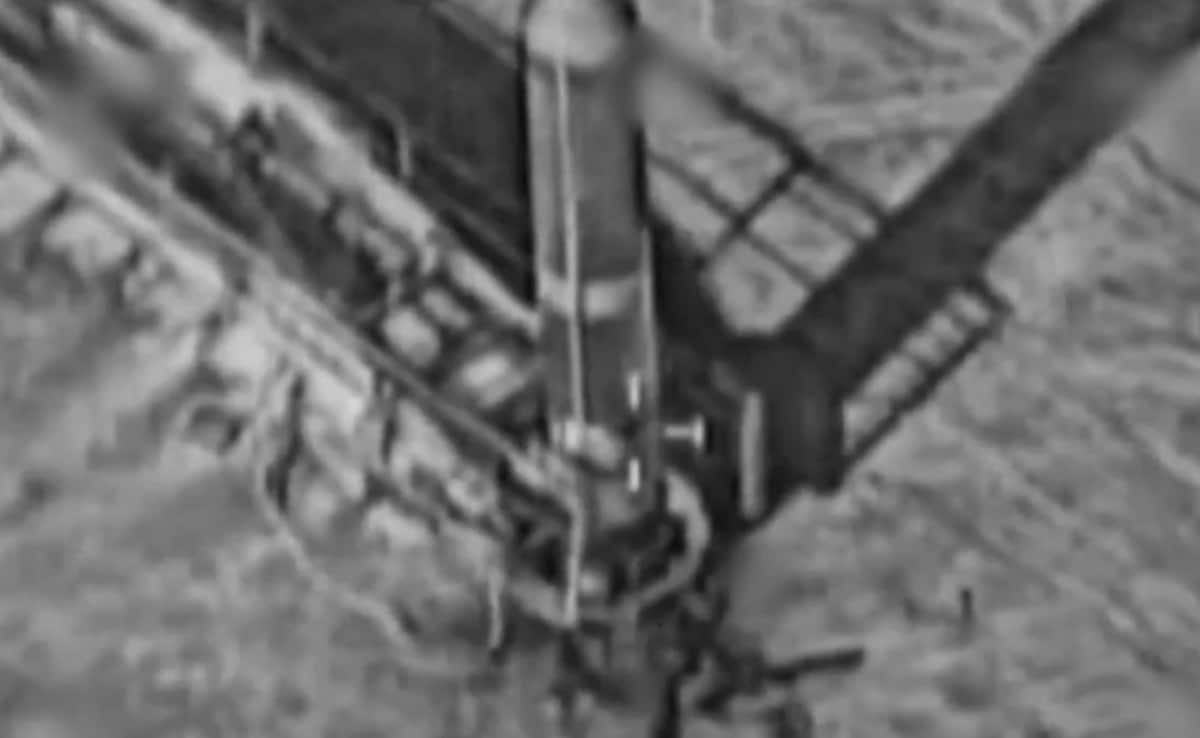
The release of cockpit footage showing Israeli F-15s and F-16s banking over the Syrian-Iraqi border marks more than just a public relations victory. It signals the end of the era of deniability in Middle Eastern shadow wars. For decades, the friction between Jerusalem and Tehran existed in a "gray zone" of maritime sabotage, cyberattacks, and unattributed assassinations. That period is over. By broadcasting high-definition visuals of munitions striking Iranian missile production facilities and air defense batteries, Israel has moved the conflict into a transparent, high-stakes phase where the hardware is the message.
This transition is not about the mere destruction of targets. It is about demonstrating a massive gap in technical capability. While hundreds of sites were purportedly mapped, the selection of specific hits—concentrating on S-300 air defense systems and solid-fuel mixers for ballistic missiles—reveals a calculated effort to strip Iran of its "shield" while simultaneously crippling its "sword." The footage serves as a diagnostic report for the world to see, proving that the multi-layered defense networks purchased from Russia can be systematically dismantled by Western-integrated electronics and long-range standoff munitions.
Strategic Blindness by Design
The strikes targeted the eyes and ears of the Iranian military. By focusing on the S-300 radar arrays, the Israeli Air Force (IAF) did not just destroy expensive equipment; they created a persistent state of strategic blindness. Modern air defense relies on a networked "kill chain" that begins with long-range detection. When those sensors are removed, the remaining batteries become isolated islands, unable to communicate or coordinate.
The technical reality of these engagements is brutal. An S-300 system is designed to track dozens of targets simultaneously, but it struggles against small-diameter bombs and electronic warfare suites that mimic the radar signature of the environment. The visuals released show a surgical level of accuracy, often hitting the specific command vehicle rather than the launchers themselves. This is a deliberate choice. A launcher can be reloaded; a highly trained radar crew and their specialized vehicle are far harder to replace in the middle of a sanctions regime.
The "how" of this operation involved a complex choreography of aerial refueling and electronic suppression. To reach targets deep within Iran, the IAF had to navigate the airspace of multiple sovereign nations, likely utilizing advanced "stealth" tankers or flying in low-altitude corridors where radar coverage is weakest. This was a logistical marathon disguised as a sprint. It proved that the geographical distance between the two nations is no longer the protective barrier it was in the 1980s.
The Solid Fuel Bottleneck
While the media focused on the explosions, the real story lies in the specific buildings targeted at the Parchin and Khojir complexes. Intelligence suggests these sites housed planetary mixers used to create solid fuel for long-range missiles. These mixers are massive, highly specialized pieces of industrial equipment. They cannot be bought off a shelf; they are often custom-built and subject to intense international export controls.
By destroying these mixers, the IAF has effectively frozen Iran's ability to mass-produce its most effective weapons. Liquid-fueled missiles are cumbersome. They require a long preparation time before launch, making them easy targets for pre-emptive strikes. Solid-fuel missiles, however, can be stored ready-to-fire and moved on mobile launchers. They are the backbone of a credible deterrent. Without the ability to mix the fuel, the Iranian missile program faces a multi-year setback that money alone cannot fix.
This is the "Brutal Truth" of modern industrial warfare. You do not need to level a city to win a campaign. You only need to destroy the unique, irreplaceable nodes in the production chain. The released footage shows these precise hits, sending a clear signal to Tehran's leadership: we know exactly which room holds your most valuable machines, and we can reach them whenever we choose.
The Limits of Air Power
Despite the technical success, airpower has inherent limitations. It can delay a nuclear or missile program, but it cannot delete the knowledge held by the scientists and engineers. History shows that when a nation feels its conventional defenses are failing, it often doubles down on unconventional or asymmetric options.
- Subterranean Hardening: Future Iranian facilities will likely move deeper underground, beyond the reach of conventional "bunker busters."
- Proxy Recalibration: With its domestic defenses bruised, Tehran may lean more heavily on its regional allies to create a "ring of fire" that complicates Israeli security.
- Cyber Escalation: If the skies are closed to Iranian jets, the digital front becomes the primary theater for retaliation.
The risk of this transparency is that it forces an opponent's hand. When an attack is secret, the victim can pretend it didn't happen to avoid a wider war. When the footage is on every smartphone on the planet, the pressure to respond in a visible, escalatory way becomes almost unbearable for a regime that prizes its image of strength.
The Russian Connection
A silent loser in this exchange is the Russian defense industry. The S-300 was once marketed as an impenetrable wall. Its failure to stop, or even significantly challenge, the Israeli strike packages has massive implications for global arms markets. Countries that have invested billions in Russian hardware are now watching these grainy cockpit videos with growing concern.
The software integration between Israeli-made "Spice" bombs and American-made airframes creates a synergy that Russian systems seem unable to counter. This isn't just a local skirmish; it is a live-fire demonstration of the technological gap between Eastern and Western military philosophy. The West prioritizes data-linking and precision; the East has historically prioritized mass and durability. In the clear skies over Iran, mass proved insufficient against precision.
Mapping the New Conflict
What happens when the "Red Lines" are erased? For years, analysts debated whether Israel would ever strike the Iranian mainland directly. Now that it has happened, the new red line is the intensity and duration of such strikes. We have moved from "if" to "how often."
The logistical feat of the IAF cannot be overstated. Operating over $1,500$ kilometers from home base requires a level of coordination that few air forces in the world possess. It involves a massive "back-end" of intelligence analysts, satellite operators, and maintenance crews working in a high-pressure environment. Every minute an F-15 spends over hostile territory is a minute where a single mechanical failure could lead to a geopolitical catastrophe.
The visuals released weren't just for the public; they were for the Iranian military command. It was a "battle damage assessment" delivered via the internet. By showing the world exactly what they hit, the IAF is telling the Iranians: "We know you know we were there, and now everyone else knows too." This eliminates the face-saving option of downplaying the damage.
The Economic Impact of Precision
Wars are won by budgets as much as by bullets. The cost of a single S-300 battery is roughly $150 million. The cost of a flight of precision-guided munitions is a fraction of that. When a defender spends hundreds of millions on a system that is defeated by a few million dollars worth of bombs, the economic math of the war shifts.
Iran is currently grappling with severe economic sanctions and internal pressures. Replacing high-tech military infrastructure is a crushing burden on a dwindling treasury. Israel, while also feeling the strain of a multi-front war, has the advantage of a defense industry that exports its battle-tested technology to the rest of the world, effectively subsidizing its own military costs.
This asymmetry is the defining feature of the current struggle. It is a war between a nation that is an integrated part of the global tech economy and a nation that has been largely siloed from it. The results of that isolation are now being broadcast in 1080p.
Intelligence as a Weapon
The accuracy of the strikes suggests a deep penetration of the Iranian security apparatus. To hit specific mixers inside specific buildings requires "human intelligence" (HUMINT) or incredibly advanced "signals intelligence" (SIGINT). It implies that Israel has eyes inside the room.
This creates a climate of paranoia within the Iranian ranks. If every site you think is secret is already on a target list in Tel Aviv, whom do you trust? The psychological impact of these visuals is perhaps more damaging than the physical destruction. It shatters the illusion of internal security.
The move from the shadows to the spotlight is a gamble. It assumes that the threat of further, more devastating strikes will deter a major Iranian counter-attack. But in the Middle East, logic is often secondary to honor and domestic survival. The footage has set a new baseline for the conflict. The shadow war is dead. What follows will be louder, faster, and much harder to control.
The hardware has spoken, and the message is that the geography of the Middle East has shrunk to the size of a targeting pod's screen.