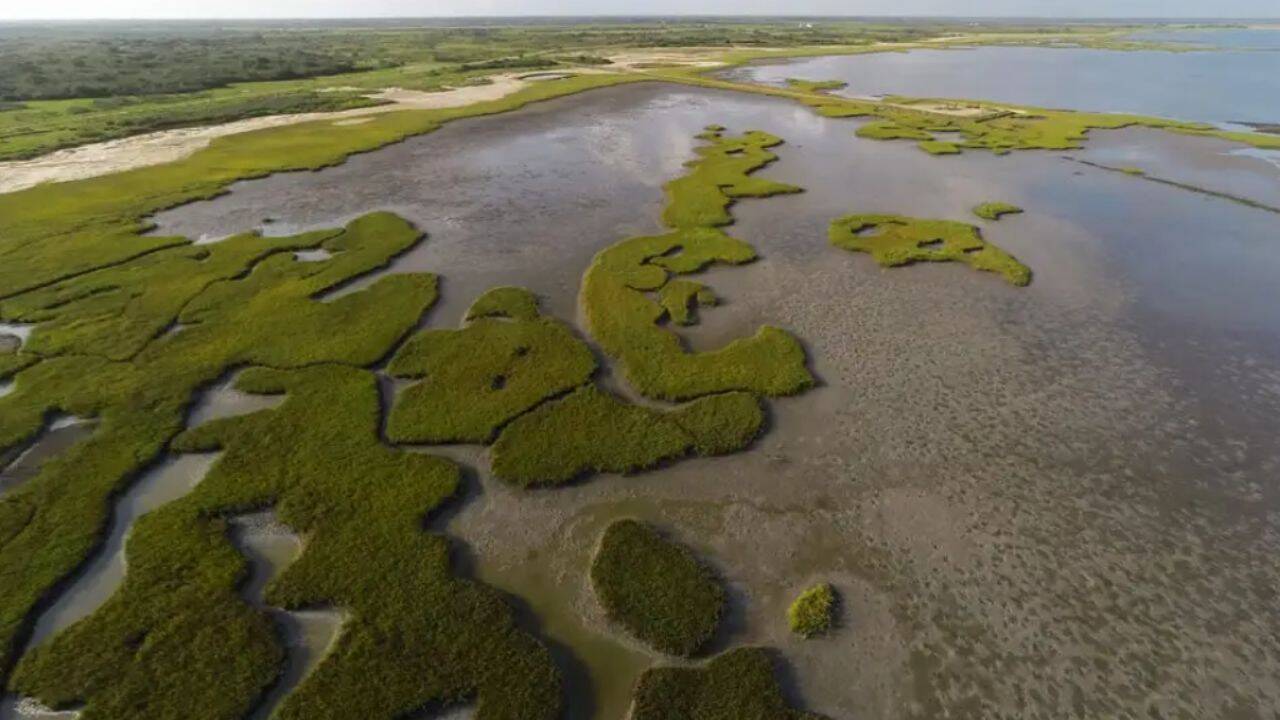
Most massive land deals end up as subdivisions or industrial parks. Back in 2014, a coalition of conservation groups did something radically different in Calhoun County, Texas. They dropped $37.7 million on the 17,351-acre Powderhorn Ranch, securing one of the last truly unspoiled tracts of coastal prairie left on the Gulf Coast.
If you have ever driven down the flat, unassuming stretches of the Texas coast, you know how rare untouched land has become. Most of it has been paved over, subdivided, or heavily altered. Powderhorn Ranch was different. It featured over eleven miles of tidal bay frontage along Matagorda Bay, dense live oak forests, freshwater wetlands, and salt marshes that acted as a natural sponge for storm surges. Buying it wasn't just about saving grass. It was a calculated move to protect a vital ecosystem from disappearing entirely.
Where the Money Actually Came From
People often wonder how a conservation project of this scale gets funded without draining public tax coffers. The reality is that the financial blueprint behind Powderhorn Ranch relied heavily on corporate accountability payouts rather than state taxes alone.
A major portion of the funding—about $34.5 million—came from the National Fish and Wildlife Foundation using money tied to the Deepwater Horizon oil spill restoration fund. At the time, this transaction stood as the single largest land acquisition in the United States financed by BP spill recovery dollars.
Private philanthropy bridged the remaining gap. Organizations like the Texas Parks and Wildlife Foundation, The Nature Conservancy of Texas, and The Conservation Fund stepped up with millions in interim funding and grants. The sellers, representing the descendants of past owners who had watched the original ranch acreage shrink by half over the decades, agreed to part with the property below market value to ensure its long-term survival.
Transforming a Private Ranch Into a Public Treasure
Buying the land was only half the battle. Managing a sprawling coastal ecosystem requires heavy lifting, active restoration, and deep pockets.
In October 2018, more than 15,000 acres of the property were officially transferred to the Texas Parks and Wildlife Department to operate as a wildlife management area. The remaining portions stayed under specific conservation easements to guarantee strict environmental protections.
If you visit the area today, you will notice that the management objectives aren't about turning it into a manicured tourist trap. Field crews focus on brutal, essential work:
- Eradicating aggressive invasive species that choke out native flora.
- Restoring historical freshwater hydrology to revive dried-up wetlands.
- Replanting native grasses and savannahs to support local wildlife.
- Protecting critical habitats for rare species like the endangered whooping crane.
Protecting the Coastline From Real Threats
Texas lost more than 200,000 acres of coastal wetlands between the 1950s and the early 1990s. That loss wasn't just an ecological tragedy; it was an economic vulnerability. Healthy wetlands and intact coastal prairies absorb the brunt of hurricane storm surges, protecting inland communities far cheaper than concrete seawalls ever could.
Powderhorn serves as a massive ecological buffer right next to the Aransas National Wildlife Refuge. For migratory birds crossing the Gulf of Mexico, the ranch acts as an essential sanctuary to rest and refuel. For local fisheries in Matagorda Bay, the adjacent tidal flats provide a crucial nursery ground for redfish, shrimp, and blue crab.
Protecting land like Powderhorn takes decades of patience, massive cross-sector coalitions, and heavy financial commitment. Look past the press releases and you will find a blueprint for how large-scale conservation actually survives in a booming state. Check local access guidelines before planning a trip, as public entry to the wildlife management area is strictly regulated to protect fragile restoration efforts.


