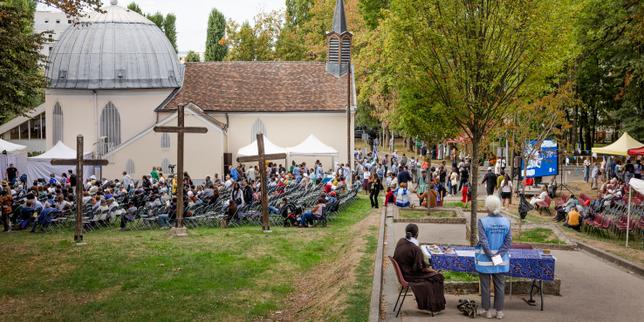
When a sovereign pontiff touches down in Paris, nobody stays neutral. The recent arrival of Pope Léon XIV didn't just trigger standard diplomatic handshakes at the Élysée Palace; it threw open a window into an institution wrestling with its own survival, soul, and fierce internal fractures. If you look past the official pomp, the reality on the ground is stark. The Catholic Church in France isn't experiencing a simple resurgence. It's caught in a high-stakes tug-of-war between old guard traditionalists, progressive reformers, and a secular republic that watches every move with suspicious eyes.
Let’s be honest about what's happening. The French model of strict secularism—laïcité—means that religion occupies a very specific, fenced-off corner of public life. Yet, whenever a pope visits, politicians trip over themselves to secure a meeting, while commentators dissect every line of the papal speeches for hidden political codes. Why? Because the church in France remains a cultural barometer. Even in one of the most secularized nations in Europe, packed pews in certain urban parishes contrast sharply with empty rural churches.
The Battlegrounds of Modern Faith
You can't understand modern French Catholicism without looking at the ideological trenches. On one side, you have a vibrant, often youthful movement of traditionalists who gravitate toward Latin masses, strict liturgy, and counter-cultural orthodoxy. They view the church as an island of certainty in a chaotic modern sea. They're vocal, organized, and growing in visibility.
On the flip side, progressive Catholics are fighting to keep social justice, interfaith dialogue, and institutional reform at the forefront. They look at declining priest numbers and parish closures with alarm, arguing that survival depends on adaptation, openness, and decentralization.
When major papal events happen, these two camps read entirely different messages into the gestures of the Vatican. A single phrase about migration, authority, or European roots gets weaponized by opposing political factions trying to claim the moral high ground ahead of upcoming national elections.
The Political Spectacle and Laïcité
Politicians love a papal visit, but they also fear it. Right-wing figures often try to frame the church through the lens of national identity and heritage, leaning heavily on the idea of France as the "eldest daughter of the Church." Meanwhile, left-wing leaders rush to wave the banner of the 1905 law on the separation of churches and state, warning against any creeping clericalism in public policy.
This dynamic puts the local clergy in an impossible position. Bishops and priests have to navigate a society where faith is intensely scrutinized. They aren't just guiding souls; they're managing public relations in a media landscape that pounces on every scandal, institutional misstep, or ideological divide.
What Comes Next for French Catholicism
The idea that the church in France is simply on a straightforward path to reconquest is a myth. The reality is messier, smaller, but in many ways more intense. Communities that survive today do so because they are deeply committed, not because of cultural habit. Sunday mass isn't a social default anymore; it's a deliberate, counter-cultural choice.
If you want to understand where Western Christianity is heading, look closely at how France handles this tension. It's a laboratory where secularism and sacred tradition hammer against each other daily. Whether this friction leads to a revitalized, resilient minority or further isolation depends entirely on how the church chooses to face an increasingly skeptical public.
Louis Hausalter on Pope Leo XIV's visit to France
This video provides a valuable political analysis of how the recent papal visit shifted dynamics and influenced key political figures in France.