Religion and politics are a messy mix, but we've hit a whole new level of tension in 2026. Pope Leo XIV, the first American-born pontiff, isn't playing the quiet diplomat role people expected. Instead of avoiding the friction with the Trump administration, he’s leaning directly into it. He isn't interested in being a political rival, yet he's refusing to let the White House define his mission. It's a clash of worldviews that's bigger than just a few social media posts or headlines.
The core of the issue is simple. Leo thinks the Church’s job is to preach peace, no matter who is sitting in the Oval Office. President Trump, meanwhile, sees this as a personal betrayal and a political attack. This isn't just about two leaders who don't like each other. It’s about the very soul of international diplomacy and whether "blessed are the peacemakers" still has a place in a world on the brink of war.
The Peace Mission vs Political Reality
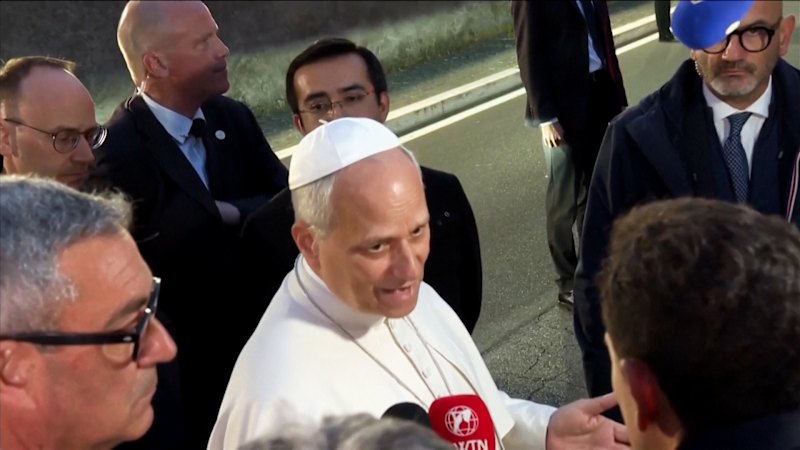
Pope Leo XIV spent early May 2026 making one thing crystal clear. He has no fear of the current U.S. administration. While traveling back from Castel Gandolfo to the Vatican, he told reporters that his job is to announce the Gospel, and that includes the uncomfortable parts about avoiding war. He isn't trying to win an election or pass a bill. He's trying to stop people from dying in conflicts that he views as morally indefensible.
The friction skyrocketed when the President claimed the Pope was "weak on crime" and "terrible on foreign policy." Trump even went as far as to say that the only reason Leo was elected was because he's American—a move the President claims was a failed attempt to "deal" with him. It’s an unprecedented level of public hostility between a U.S. President and a Pope. Usually, these disagreements happen behind closed doors with lots of polite language. Not this time.
Leo’s response was surprisingly blunt for a man in white robes. He basically said that if someone wants to criticize him for preaching the Word of God, they should at least stick to the truth. He's not interested in a "he-said, she-said" debate, but he won't be silenced by threats or social media rants. He sees the "delusion of omnipotence" in world leaders as a major threat to global stability. Honestly, he’s calling out the ego that often drives modern conflict.
Fact Checking the Nuclear Claims
One of the wildest parts of this feud is the claim that Pope Leo XIV supports Iran having nuclear weapons. Let’s get the facts straight. The Catholic Church has held for years—and Leo has doubled down on this—that the mere possession of nuclear weapons is immoral. There is zero evidence he wants Iran, or anyone else for that matter, to have them.
The President’s narrative that the Pope is "OK" with a nuclear-armed Iran is a total misrepresentation. Leo’s actual stance is that dialogue is better than bombs. He wants everyone at the negotiating table, not because he likes the Iranian regime, but because he believes war is a "last resort" that we haven't actually reached yet. He’s looking at the humanitarian cost—the kids, the elderly, and the sick who get caught in the crossfire.
Why Being American Matters in This Fight
It’s ironic that the first American Pope is the one having the biggest public brawl with an American President. You’d think there’d be some common ground, but it’s actually the opposite. Leo understands the American political machine. He knows how the rhetoric works, which makes him harder to ignore or push around. He isn't a distant figure who doesn't understand the "America First" mindset; he just thinks the Gospel comes before any national identity.
This creates a unique problem for the White House. Usually, the Vatican can be dismissed as a "European institution" that doesn't get the U.S. reality. You can't say that about Leo. He speaks the language. He knows the culture. When he talks about "multilateralism" and "international law," he’s speaking as someone who knows exactly what he’s up against.
The Moral Weight of the Just War Theory
The Vatican isn't just saying "peace is good." They're using a specific framework called Just War Theory to judge what's happening in Venezuela and Iran. For a war to be "just," it has to meet strict criteria:
- It must be a last resort.
- There must be a serious prospect of success.
- The use of arms must not produce evils graver than the evil to be eliminated.
Leo argues that the current military escalations fail these tests. He’s pointing at the "chaotic, critical situation" in the Middle East and saying that more violence isn't resolving anything. It’s just creating a cycle. He’s basically telling the most powerful military in the world that they’re losing the moral high ground. That’s a bold move, and it explains why the response from Washington has been so vitriolic.
What This Means for You
You don't have to be Catholic to see why this matters. This is about whether moral leaders have a seat at the table when the world is deciding to go to war. If a Pope can be bullied into silence by a President, then the "moral voice" in international politics is basically dead.
Leo is asking regular people to get involved too. He isn't just talking to bishops. He’s told ordinary citizens to contact their leaders and advocate for peace. It’s a call to action that bypasses the usual diplomatic channels.
If you're watching this unfold, don't just see it as a celebrity feud. Look at the underlying arguments. One side is pushing for national strength and military dominance; the other is pushing for "fraternity" and "authentic dialogue."
Keep an eye on the upcoming meetings between Vatican officials and the State Department. If those go south, expect the rhetoric to get even sharper. For now, Leo isn't backing down. He’s already planning more peace vigils and international trips to push his message. He’s proving that being a "peacemaker" isn't a passive role—it’s a fight.
Stop waiting for the news to tell you what's moral. Read the statements for yourself. Look at the humanitarian data coming out of the conflict zones. If you believe there's a "better way" to handle global tension, now is the time to say so. The Pope is leading the charge, but he's making it clear he can't do it alone.